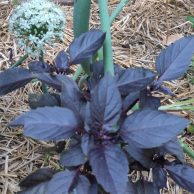
 Basil is one of the great culinary pleasures of summer, and it’s definitely NOT TOO LATE to plant Basil and enjoy a good crop! Basil plants are beautiful, grow equally well in the ground or in pots, thrive in hot weather, provide a continuous, bounteous crop, and Basil’s many different flavors are essential to a variety of distinctive cuisines. It can be used fresh, dried, or frozen in oil or as pesto. Though basil leaves lose most of the aromatic oils when dried, we have still found that basil dried from your garden is so much more flavorful than commercial dried basil.
ALL of our Basil plants are organically grown! [Read More]
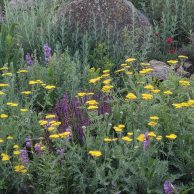 We’re excited that the City of Boulder is gathering feedback from the community about how we use our yards, preferences for landscaping and interest in a citywide effort to create pollinator habitat patches and pathways. Pollinator pathways connect safe, pesticide-free native plant patches of habitat for bees, birds, butterflies, and other wildlife to provide food and nesting sites. Native pollinators are vital to our ecosystems and pathways support pollinator populations, as well as safe passage for movement across the city.
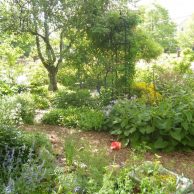 ‘Tis the season of mailboxes stuffed with seed and nursery catalogs, and we know all too well the temptations therein! Our gardens may be dormant, but our plant lust is not, and haven’t we all been sucked in by glossy photos of sexy new must-have plants, even though we haven’t a clue where we’ll put them? We recommend that you try to resist, at least long enough to evaluate your existing garden.
 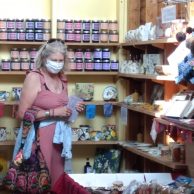 The Front Range is a hotbed of innovation and passion for quality food with real flavor and real nutritional value. Whether it’s the micro-brews, coffee, chocolate, heirloom vegetables, pasture-raised meats, or ancient grains, or the gluten-free, paleo, keto, or vegan diet, Front Range Coloradans have shown great support and enthusiasm for slow, locally-grown, organic, fair-trade and creative, locally hand-crafted foods.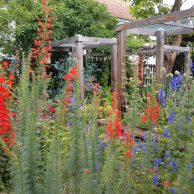
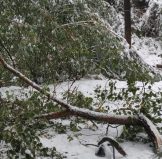 October 2020 went from record high temperatures in the 80s to record lows, 19 degrees by October 25. May 2021 also made some shocking temperature changes. These rapid and dramatic changes can cause woody plants to die back, lose branches or die completely.
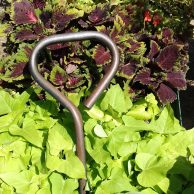 Our best selection of plants for the 2021 season is here now! Our selection of plants for shade and part shade has never been better, including Hosta (many kinds!), Ferns (5 kinds!), Bergenia, Hellebore, Foxglove, Geranium (many), Coral Bells (many), Monkshood, Persicaria, Pulmonaria, Golden Wood Poppy and Clematis (lots!), and some new selections, like Solomon’s Seal (2 kinds)!
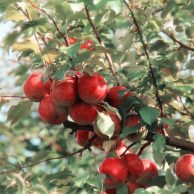
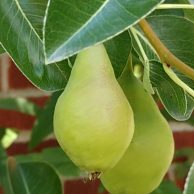 First, let’s count our blessings: the cool and wet spring has been great for plant growth (and of course, weeds galore!). The profusion of wildflowers this spring has been glorious, the foothills are still green going into July, and conditions for gardening are now quite pleasant. And we will have fruit on most of our fruit trees! Don’t forget to thin them to keep branches and trunks from breaking.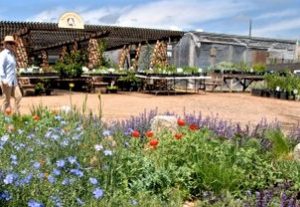
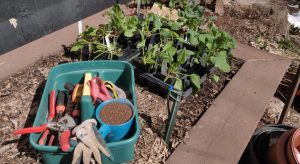
 We know Mother Nature teases Coloradans with delightful warm weather days in between snow and cold spells, and while they give us hope for the warm spring days ahead, this is a pattern that will continue through March, and into April.
 Keep it Covered: Exposed soil is vulnerable to water loss, microbial die-off, erosion and degradation. Use mulch or cover crops to protect it.
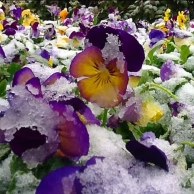 Just as we were beginning to think that Spring was here to stay, a brief return to a winter that never was! It is always wise to prepare for a potential cold snap in the Front Range! According to BoulderCast weather, a strong cold front arrives Friday; a colder Canadian trough with potential for accumulating wet snow at ALL elevations.
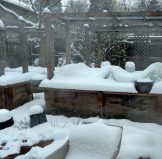 We were just getting comfy and confident in the progressing spring weather, when Mother Nature reminds us that She is in control!
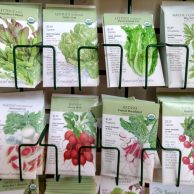
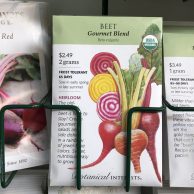
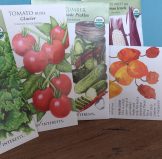 This year we continue to offer a wonderful selection of seeds from our local BOTANICAL INTERESTS for tried-and-true vegetables, herbs, flowers, and sprouts, microgreens and cover crops, and local BEAUTY BEYOND BELIEF (BBB) seeds for individual and mixed wildflowers. And from SEED SAVERS EXCHANGE, preserving and sharing heirloom varieties, we offer some of our favorite time-tested veggies and flowers.
 We hope you will celebrate Earth Day, maybe all week. It is good to acknowledge that we have a planet and that it has been supportive of life and human life for a long time. Unfortunately, we humans have not treated Her well, Gaia, our Mother Earth. We were told the story that we humans are the masters of the earth and that all the creatures and resources are here for our use and glory. Not everybody believed that story. Chief Joseph told our ancestors: “The Earth does not belong to us; we belong to the Earth.”
 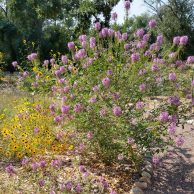 In mid-August, Mikl and Eve had the pleasure of visiting the beautiful, newly created and planted
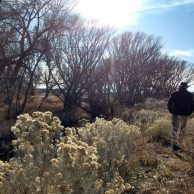
 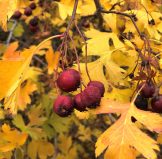 Very tough and xeric, grows 15’ high and wide, white flowers and red berries, loves Colorado conditions!
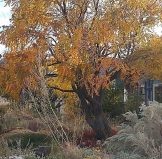 25′ xeric tree with golden flowers in July, orange lantern-like pods, orange fall color, seeds abundantly.
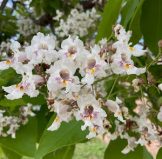 WESTERN CATALPA
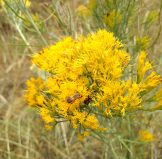 This includes Amorpha, Manzanitas, Mt. Mahoganies, Big Sage, Fringed Sage, Sand Sage, Lilacs, Butterfly Bushes, Pea Shrubs, Gambel Oak, Viburnums, Spireas, Potentillas, Sand Cherry, Rabbitbrush, Fernbush, Mountain Ninebark, Cliff Rose, Lewis Mockorange, Mikl’s Pick Mockorange, Boulder Raspberry, Boxwoods, Cotoneasters, Honeysuckles, New Mexican Privet, Flowering Quince, Ephedra, Euonymus, Sumacs, Currants, Yuccas, and many more!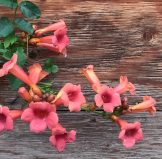
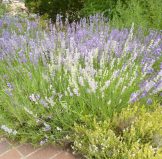 MANY LAVENDERS
 One of our specialties is
  Our
Our 
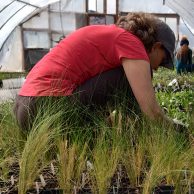 We’ve been in high-gear this season, propagating more plants and stocking more soil products than ever so we wouldn’t be vulnerable to supply-chain disruptions caused by the pandemic and extreme weather events. So now we have a wonderful selection, and most of them are on sale!
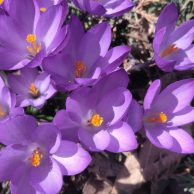 Do you have plants that you like, but that need to be moved to a different location in your garden? Or has your clump of Shasta Daisy, Daylily, Hardy Geranium, etc. become too wide and now needs to be divided? By dividing your mature perennials, you get free plants to expand your garden, to give to neighbors, or pot up and donate to a fund-raising event like KGNU FM Community Radio’s Spring Plant Sale! The next couple of weeks bring the very best opportunity to accomplish these moves without stressing your plants too much. Search the web for instructions from a trusted source for dividing the specific plant you’re working with.
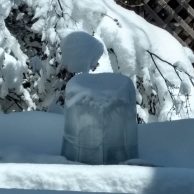 Unexpected cold snaps can still occur even after the last average frost date (around May 9). Just as we need to add another layer of clothing during cold snaps, our warm-season veggie starts also need additional insulation as the spring season and soil slowly begin to warm up. This layering can come in several forms, each with their own advantages and applications: low-tech
  THANK YOU TO ALL OUR MEMBERS!!!
 Little
 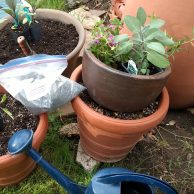 Q: Can I plant now?
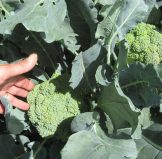 COOL SEASON VEGGIES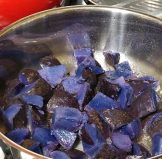
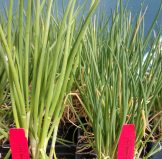
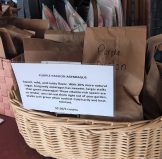
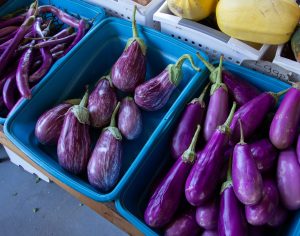 EGGPLANTS
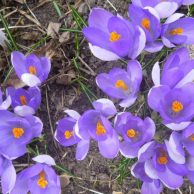 How did we possibly get this far? When we first opened in 1992, we had 2 acres a half mile down a dead-end gravel road, a dry well, a barn and a little greenhouse, and a few tables with plants. But we had a vision of a plant nursery that could serve Colorado’s Front Range and do it ecologically. We did have a country atmosphere and a great view. We had a lot of heart, but we only succeeded because an ever-increasing number of you found us and told your friends.
  Can we have human health if our domesticated animals, wildlife, plants, and all nature are unhealthy, polluted, poisoned, weak and struggling? The answer seems to be NO. Climate Change “…coupled with a species-extinction crisis, habitat and soil degradation, pollution, extensive destruction of forests and coral reefs…” are all leading to our current health crisis.
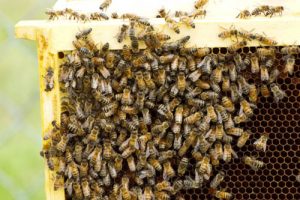 We might ask ourselves: Why does the USA, the richest country in the world, lead the world in coronavirus cases and deaths? With only 4% of the world’s population, we have 25% of all cases and 20% of all deaths. This cannot be blamed on mismanagement alone. Our government has for years favored business profits over public health and environmental health. For example, the EPA website warns that glyphosate (active ingredient in Roundup) at 700 parts per billion can cause “problems with kidneys or reproductive difficulties” and yet 700 ppb is the permitted level in U.S. tap water. Only .1 ppb is allowed in European Union tap water. Roundup also causes many problems with fungi, bacteria (like in our guts), kills insects, birds and in general undermines the health of our planet. It shows up in baby food and beer. This is one example of a poison in our ecosystem that is leading to the poor health in our nation and in our world.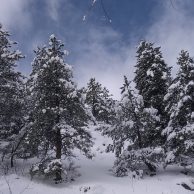
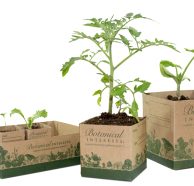 Even though we are about to receive our biggest snowstorm of this winter thus far, you can still make great progress on your garden by starting seeds indoors or even outside if your garden is prepared and you’re quick and can sow them tomorrow morning! You can also plant our hardy perennials, vines, shrubs and trees that have overwintered outdoors ahead of the storm. And our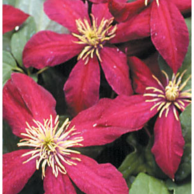
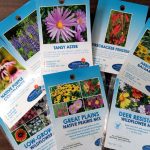 BBB’s specialties include individual wildflowers (many locally native!), wildflower seed mixes, and pollinator-supporting mixes specific to honeybees, butterflies or hummingbirds. Many of their offerings are hard to find elsewhere.
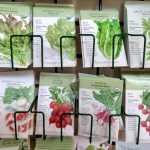 Botanical Interests goes to great lengths to provide all the information you need, and more (like an illustration of what the seedling looks like when it emerges), on both the outside and the inside of the packet, plus stunning, botanically accurate illustrations by highly skilled local artists adorning the front of each packet! We have carefully selected varieties from their catalog that will thrive in Colorado’s short season, early heat, cool nights, etc.
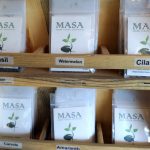 AND – NEW THIS YEAR! from MASA Seed Foundation, a wonderful line of locally-adapted seeds from master seedsman Rich Pecoraro and colleagues! Their seeds have been trialed, selected and reselected over the years to succeed in Front Range Colorado growing conditions. In our experience, these seeds have high germination rates and great seedling vigor, and develop into healthy plants, often with superior drought, heat and cold tolerance and disease resistance.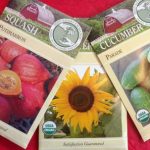
 Attractive Evergreens for Colorado Gardens