• Skip to primary navigation
  • Skip to main content
  • Skip to primary sidebar
  • Skip to footer
Harlequins Gardens

Harlequins Gardens

Boulder's specialist in well-adapted plants

We’re currently open Thurs-Sun, 9-5, with our annual Holiday Gift Market!

Read our latest e-newsletter

Check out our educational content on our YouTube page!

  • Home
  • About
    • About Us
    • Staff
    • Display Gardens
    • Why the Name “Harlequin’s” Gardens?
    • Support Our Mission
    • Sustainability
    • Policy on Pesticides Including Neonicotinoids
    • Careers
  • What We Offer
    • Products
    • Plants
    • Gift Certificates
    • Membership
  • Plants
    • Annuals
    • Bulbs
    • Fruits
    • Groundcovers
    • Herbs
    • Natives
    • Ornamental Grasses
    • Perennials
      • Plants for Pollinators List
    • Roses
    • Vegetables
      • Tomato Starts
      • Pepper Starts
      • Other Vegetable Starts
      • Fall Vegetable Starts
      • Garlic
    • Xeriscape
  • Resources
    • Recommended Gardeners & Landscapers
    • Mikl’s Articles
    • Plant and Cultivation Information
    • Newsletters
    • Links
  • Garden Tours
  • Events
  • Classes
  • Blog
  • Wholesale
    • Wholesale Sales
    • Who Qualifies
    • Wholesale Pricing & Sizes
    • Wholesale Terms and Conditions
  • Contact
Home | Plants | Natives | Mother Nature’s Dryland Natives

Mother Nature’s Dryland Natives

September 1, 2020

On our hikes, it seems we’re often exclaiming, “What a beautiful plant combination!”.  Mother Nature’s inherent beauty and functional placement provide an amazing guide and inspiration for what we can create in our home garden or ecosystem. Mother Nature also helps guide us on how we can best support our pollinators.

In the new Harvest 2020 issue of Colorado Gardener (with a striking mushroom cover photo!), Mikl writes in ‘Blooming Without a Care’ about a selection of wonderful lesser-known dryland native wildflowers that can also be very successful garden plants in our semi-arid climate. Many of these plants can be found at Harlequin’s Gardens, including Blazing Star, Mentzelia decapetala, and Showy Milkweed, Asclepias speciosa.  Please note that collection of plants or seeds on public land is illegal unless you have been granted a permit by the managing agency.
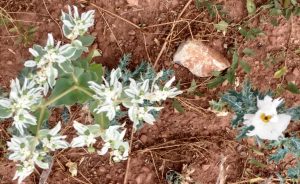
Euphorbia marginata and Argemone polyanthemos at Heil Ranch

As Mikl notes in his article, it’s very important to site dryland plants in the appropriate location with  full sun, low water (after established), with plants of similar cultural needs, and to strive for large groupings of plants to help pollinators maximize their food intake, and gives us the visual impact of massed color!  Read more in Mikl’s article!

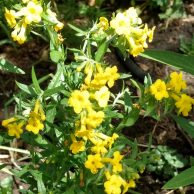
Pictured above, left: Lithospermum multiflorum
(Many-flowered Puccoon)

Categories: Natives, Blog, Mikl's Articles, Natives, Xeriscape, OLD-Blog

sidebar

Blog Sidebar

Sign-up for E-Newsletters!

Sign-up HERE for our weekly e-newsletter to receive ecological insights, Colorado gardening tips, and to keep up on happenings at Harlequin’s Gardens. We never share customer’s addresses!

We do not ship plants!

Our plants are for sale ONLY at our Boulder location. We DO NOT ship plants or any other products.  Come visit us!

Footer

Contact Us

303-939-9403 (Retail)
staff@harlequinsgardens.com
720-534-9063 (Wholesale)
wholesale@harlequinsgardens.com

WE DO NOT SHIP PLANTS — Our plants are for sale only at our Boulder location. We do not ship plants or any other products. Come visit us!

Sign-up for E-Newsletters!

Sign-up HERE for our weekly e-newsletter to receive ecological insights, Colorado gardening tips, and to keep up on happenings at Harlequin’s Gardens. We never share customer’s addresses!

Map

4795 N 26th Street, Boulder, CO 80301

Our Hours

Mondays, CLOSED

JANUARY-FEBRUARY:
Friday-Saturday, 10AM-4PM

MARCH:
Thursday-Sunday, 9AM-5PM

APRIL-SEPTEMBER:
Tuesday-Sunday, 9AM-5PM

OCTOBER:
Thursday-Sunday, 9AM-5PM

NOVEMBER-DECEMBER:
Friday-Saturday, 10AM-4PM

The plants we grow are organically grown. All the plants we sell are free of bee-killing neonicotinoid pesticides.