

Sledge Hammer
Yucca glauca is our local native yucca. The common name is Soapweed, because native Americans used the roots to make soap. Harlequin’s Gardens has been using an extract of Yucca schidigera, Mojave Yucca, in our plant production for 30 years. Yucca roots are high in saponins which are plant chemicals that are both water and fat soluble. In nature, the saponins enhance nutrient absorption and serve as antifeedants to reduce pest damage.
The yucca product that we carry for our customers has the terrible name ‘Sledgehammer’, because it breaks down salts from high fertilizer use. We offer it for its natural function to release the surface tension of water which greatly helps water absorption into the soil and into the roots and through the cell walls of plants. These effects are particularly useful in helping seeds to germinate and helping drought-stressed plants absorb water and more quickly recover from dehydration.
The label says that Sledgehammer is just yucca. Use it at two teaspoons per gallon of water in normal watering.
We routinely use yucca extract as an emulsifier and ‘sticking’ agent whenever we are applying any kind of spray to plant foliage. This includes foliar feeding, horticultural oil sprays for pest management, or liquid kelp spray for toughening the leaf cuticle to block disease spores.
Mikl figured that if yucca helps with water absorption, then it could help with dehydration that comes with working outside and forgetting to drink water, so he takes one yucca capsule (made by NOW) a day. Yucca has the added benefit of improving nutrient absorption and reducing joint pain. It is said to improve digestion and support gut health.
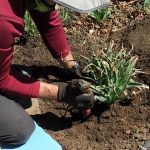


 Our compost tea will be ready this week, hopefully by Friday. Our tea has always been good, but this year we are working on making it even better. Please let us know if you can see good results from using it, and if it seems to be more effective.

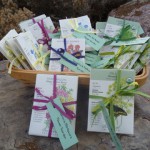 Botanical Interests goes to great lengths to provide all the information you need, and more (like an illustration of what the seedling looks like when it emerges), on both the outside and the inside of the packet, plus stunning, botanically accurate illustrations by highly skilled local artists adorning the front of each packet! We have carefully selected varieties from their catalog that will thrive in Colorado’s short season, early heat, cool nights, etc.
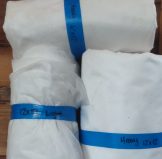 We know Mother Nature teases Coloradans with delightful warm weather days in between snow and cold spells, and while they give us hope for the warm spring days ahead, this is a pattern that will continue through March, and into April.
 Unexpected cold snaps can still occur even after the last average frost date (around May 9). Just as we need to add another layer of clothing during cold snaps, our warm-season veggie starts also need additional insulation as the spring season and soil slowly begin to warm up. This layering can come in several forms, each with their own advantages and applications: low-tech
 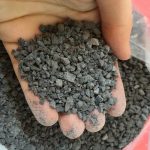 Harlequin’s blend of certified organic fertilizer, humate, rock minerals, dry molasses, land: sourced coral calcium and mycorrhizae. Great for veggie gardens and all plants. Increases root mass, top growth, soil life, and productivity naturally. This is not just a fertilizer. The combination of ingredients and mycorrhizae act synergistically to support fertility.
 We are making compost tea with a biodynamic compost, a mineral concentrate, kelp extract, molasses, etc., and it is being made in a Vortex brewer. Compost tea increases the soil life (beneficial micro-organisms), which can bring more nutrients and water to the plants and make them stronger and better able to cope with stress. It can be used full-strength as a mild organic fertilizer, or it can be diluted in water up to 3 times as a soil inoculant. It can also be used to inoculate compost piles to make materials break down faster. We have observed some very good results and received positive reports from customers who have tried it. Bring your own jugs, or use ours for a $1 deposit (refundable upon return).
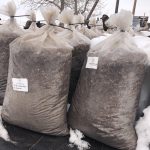 Fine Woodchip Mulch: Mats tight to prevent blowing by the wind, and lets less light get to weed seeds, has more nutritive potential than cedar or redwood, decomposes rapidly against the ground.
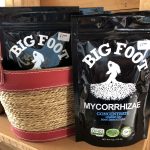 The Soil Food Web is an important component for healthy plants. This concentrate has not only outstanding Mycorrhizae but also carriers of Biochar, kelp and worm castings. Improve water and nutrienet uptake, root growth and plant growth while reducing transplant shock and drought stress.
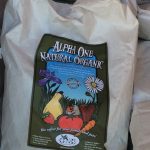 A locally made organic fertilizer: 7-2-2. It is an alfalfa-based product with a high organic matter content, very high humic acid value, low pH for Colorado alkaline soils, and is non-burning. It also contains blood meal, cottonseed meal and bone meal. Excellent for vegetable gardens and lawns. Slow releasing over a long time. Feeds soil microbes.
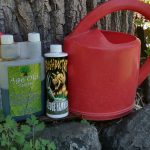 encourages water movement through soil and soilless media. High fertilizer use can compromise plant growth over time due to concentrated mineral salt deposits. This product is a unique rinse formula designed to remove fertilizer buildup which may relieve nutrient lockout. Derived from saponin, an extract of the Yucca schidigera plant. Can be used for both hydroponic and soil applications
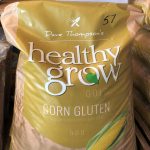 A non-toxic, weed-and-feed with 9% nitrogen. It inhibits seed germination, but is harmless to plants with root systems, people, worms, and microorganisms. The effect can last up to 6 months and is especially useful in lawns.
 Mined south of Boulder, then fired. A superior clay buster, loosens and aerates clay soils, holds water & air, and supports microorganisms. Excellent for Roses and Fruit Trees. Used at Texas A&M and recommended by Joan Franson, Rosarian.
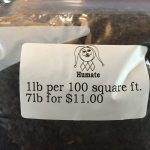 this is a mined carbon concentrate that multiplies microorganisms and has the effect of making nutrients in the soil available. We have been using this for years in our potting mixes and gardens.
 This is a water-absorbing gel that absorbs 200-400 times its density in water. It is used as a soil amendment to increase the water-holding capacity of soils, reducing watering frequency by 20-40% in the ground and 50-75% in containers and hanging baskets. It greatly aids establishing of young plants, and improves soil structure, staying effective for 8 years. It has been used to help trees in drought and to reduce the water requirements of lawns. I have used this product for 12 years in producing plants from seed and found it very useful, needing very little in the soil. It is a synthetic polyacrylamide polymer that has been determined nonhazardous by OSHA, but has not passed organic standards by OMRI.
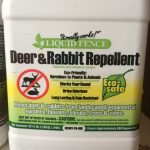 100% Guaranteed to work to repel deer and rabbits with once a month application. If they are really hungry, or if it rains more than 1″ per week, spray more often. It does not have a strong odor after it dries, is environmentally safe and also stimulates growth. NOW there is a formulation for moles and voles.
 Myke has two different blends of mycorrhizae to help when transplanting. One for vegetable gardens in the green bag and one for tress and shrubs in the blue box. Both stimulate root development and phosphorous uptake while reducing watering needs.
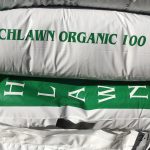 a 100% organic product made in Platteville from dehydrated poultry manure and beetle-kill wood wastes. Excellent for shrubs and trees and is recommended for raspberries and other small fruits. Economical and is effective for fertilizing lawns. Listed by OMRI for organic use. Ideal for lawns, trees, shrubs, annuals, perennials, vegetables and roses. Covers 2,000 sq. ft. for turf. 5-3-2.
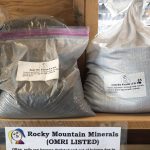 This is a rock dust product containing over 30 trace minerals. When there is not a proper balance of trace minerals, deficiencies will cause problems with plant growth. In heavy clay soils, movement of these minerals is difficult. Therefore it is good to add Planters II when doing your soil prep. It can also be broadcast around established plants every two years. Very beneficial for vegetables, native plants, cacti and succulents and for supporting a healthy soil life.
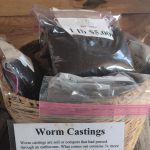 Worm castings are soil or compost that had passed through an earthworm. What comes out contains 5x more nitrogen, 2x more calcium, 7x more phosphorus and potassium and many minerals and beneficial microorganisms all in water-soluble and plant-available forms. Worm “manure” will not burn and is safe for all plants, including houseplants. Worm castings support growth, root development, and disease resistance.