
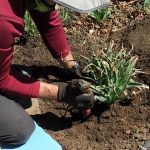
How To Plant in July And Keep Your Gardens Alive!
1) Before planting , prepare the soil by adding 2″ of compost and dig it into the to top 6″-8″ of soil OR Add 1″-2″ of expanded shale with the compost, then dig it in. This will open clay soil, increasing both porosity (aeration) and water holding capacity. Set the prepared soil aside.
2) Before you backfill the planting hole, fill the hole with water and allow all the water to be absorbed. Place the amended soil back in the hole. Wet the plant roots with a solution of mycorrhizae (symbiotic fungi), or dust the moistened roots with the powdered mycorrhizae. Mycorrhizae bring water and nutrients to plant roots, and improve success in getting plants to establish.
3) It is helpful to create a ‘saucer’ of soil around the planting hole to help hold water. Build a continuous ‘ridge’ of soil 1″ – 2″ high around the outside of the newly back-filled planting hole. Apply mulch. It’s okay if these little structures disappear after the plants get well-rooted.
4) In hot weather, plant after sundown.
5) Plant smaller projects and check plants daily.
6) Summer plantings (even xeric plants) in sunny locations will need frequent watering for the first summer. In shade, the soil will hold moisture longer.
7) To water thoroughly, give plantings a thorough soaking by hand, then come back in 10 minutes and repeat. Drip systems can be programmed to run a second time 20 minutes after the first run.
8) However you water normally, double that amount in July.
9) Water long and deep. Frequent light waterings waste water because much of it just evaporates; it also encourages plant roots to be shallow, making them more vulnerable to drought. To know if you are watering enough or too much (too much water drives out the oxygen), use the 2-4-6 method: dig just outside the root system (ball) 2″ down. Is it dry, moist or soggy; then 4″ down, dry? moist? or soggy?, then 6″ down, dry? moist? or soggy? Do this before and again after watering. If it is dry on top and soggy on the bottom, you are over-watering; if it is soggy on top and dry on the bottom, you are under-watering. Soggy is OK the first day.
10) If new plantings start turning yellow or look wilted all the time, you are probably watering too much. Erect some temporary shade to help them recover.
11) In established plants, wilting is a strategy to conserve water, so don’t panic if plants wilt on hot days. Letting leaves hang vertically reduces the surface area exposed to the sun. They should perk up after sundown.
12) Mulch over the planting area with a 1″ – 2″ layer of fine wood chips, fine bark, straw or dried grass clippings. Note that Cedar and Redwood mulches repel microorganisms and therefore do little to add nutrition for plants. Green material, like fresh grass clippings or leaves can burn small plants. Don’t use weed-barrier fabric, as it prevents adding compost and organic granular fertilizer, and prevents earthworms from aerating and adding their rich castings. Mulch herbaceous dryland plants with fine gravel (squeegee) 1″ – 2″ deep. This will hold moisture without rotting
the crowns of penstemons and other dryland plants.
13) Don’t use chemical fertilizers on trees, shrubs, perennials or lawns in July! Stimulating rapid growth will lead to stress and plants will need more water. You can use organic, slow-release fertilizers to side-dress vegetables that are ‘heavier feeders’, such as squash, peppers, eggplant, tomatoes, broccoli, and cauliflower.
14) Really care for your new plants; Don’t plant them and then go on vacation. If you keep them alive for 4 weeks, the hard part is over.