
Why grow your own strawberries? Unfortunately, commercially-farmed strawberries are one of the crops most heavily sprayed with toxic pesticides. In addition, you will probably never taste truly delicious, sweet, fully ripe strawberries unless you grow them yourself. So, if you’re tired of paying high prices for unripe, bland, oversized strawberries with white flesh, maybe it’s time to do just that.
June-Bearing varieties provide a concentrated crop with large harvests throughout June, good for making preserves, strawberry shortcakes, etc. Ever-bearing and ‘day-neutral’ varieties produce small but more continuous crops through the summer, good for snacking.
Why plant them now? This might surprise you: strawberry plants set their buds in the winter for flowering and fruiting the following summer. So the plants you put in now will bear fruit sooner than if you wait until spring to plant. Each strawberry plant can bear fruit for five or six years if properly managed. Planting new strawberry plants now can give you an excellent berry crop in 2027 if you follow a few basic instructions.
1. Plant 6 to 8 weeks prior to average first hard freeze.
2. Choose a location that receives 6 to 8 hours of full sun.
3. Prepare planting bed: Soil should be loose, well-drained, rich and moist, with compost mixed in. If using composted manure, make sure it does not have a highly alkaline pH. Strawberries thrive best in slightly acidic soils with pH of 5.5 to 6.5, which is hard to achieve here (our native soils and our water tend to be alkaline). The addition of soil life through mycorrhizal inoculation, compost and compost tea, helps mitigate the negative
effects of alkalinity by making minerals available to plants. Compost also helps with moisture retention. Adding some Worm Compost will increase phosphorus and potassium, and to improve soil moisture retention and aeration and enhance beneficial microbe habitat, incorporate a 1” to 2” layer of expanded shale along with the compost.
4. Do not fertilize strawberry plants at planting time.
5. Remove all runners from plants by snipping off with clean pruners. As plants grow, continue to remove runners as soon as they appear. In about their fifth year, you can allow a few runner to develop and replace older plants.
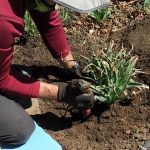
6. Strawberry roots are shallow and lateral, requiring only about 6” soil depth. Set plants 18” to 24” apart. Do not bury the crown or set it too high. The crown is the point from which all of the leaf stems emerge. It should be right at the level of the soil prior to mulching.
7. Mulch with straw or dried, seed-free grass clippings.
8. Fertilize June-bearing strawberries like ‘Early-Glow’ in early autumn with a balanced, granular, slow-release organic fertilizer such as Happy Frog All-Purpose (6-4-5), Down ToEarth Vegetable Garden fertilizer 4-4-4), or their Acid Mix. Fertilize ever-bearing and day-neutral varieties when their fruiting season has ended.
9. Be sure to water strawberry plants in winter. Dig down 2” to check for moisture.
10. While fruiting, protect your strawberry bed from critters like deer, squirrels, raccoons and birds.
11. Top-dress in fall with a thin layer of compost.

 Solidago ptarmicoides
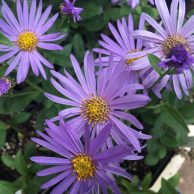 The end of summer doesn’t mean the end to color in the garden, on the contrary, you can plan and plant now for a vibrant wave of color, and habitat for our insects and birds, that continues all the way to hard frost! From native and water-wise perennials and shrubs, to trees (including fruit trees) and grasses, the selection is vast.
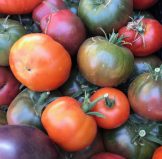 HARLEQUIN’S GARDENS 2025 TOMATO STARTS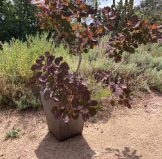
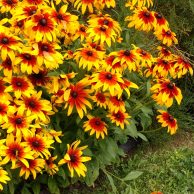 Fall is among the best times to plant perennials. While we may begin to wilt from late summer heat, many plants rise to the occasion and burst into bloom! As days begin to grow shorter, perennials spend the next few months developing root systems or taproots that delve well below the hot, dry surface soil. Pollinators depend on finding pollen and nectar sources through the entire summer, so it’s important to include late-summer and autumn bloomers in your garden.
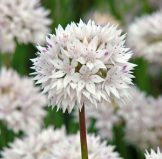 Circa 1857, this delicate-looking yet easy-growing North American native has composite 3″ globes of star-shaped, sparkling white flowers with pale lavender stamens tipped with purple anthers and sturdy stems.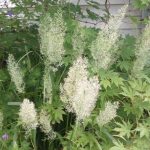
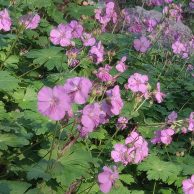 Hardy Geraniums are some of the most versatile an adaptable perennials for our area! Available in many colors and habits, they can be useful in sun and shade, moist and dry, as individual specimens, companion plants and ground covers.
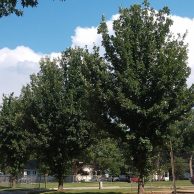 Bur Oak (Quercus macrocarpa) is a majestic, slow-growing tree reaching 60 to 70’ in height and spread, and is typically very long-lived (think 200, 300+ years!). It’s the sort of tree you plant for the benefit of the generations to come. Many oak species don’t thrive in Colorado’s alkaline soils, but Bur Oak is a happy exception. It is also drought-tolerant once established, even in dry clay, and can handle city conditions quite well. Bur Oak’s strong wood and strong, almost right-angled branch connections resist breakage in wind and snow.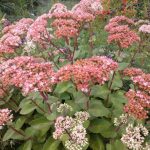
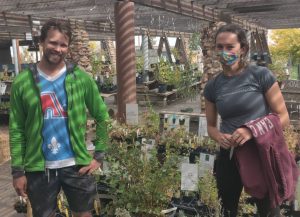 Our 2022 Fall Members-Only Sale has finished, and now our Big Fall Sale has begun, with 20% off for everyone! Plants included in this week’s sale are:
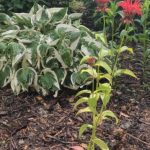
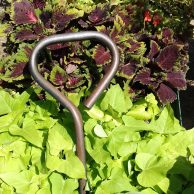 Our best selection of plants for the 2021 season is here now! Our selection of plants for shade and part shade has never been better, including Hosta (many kinds!), Ferns (5 kinds!), Bergenia, Hellebore, Foxglove, Geranium (many), Coral Bells (many), Monkshood, Persicaria, Pulmonaria, Golden Wood Poppy and Clematis (lots!), and some new selections, like Solomon’s Seal (2 kinds)!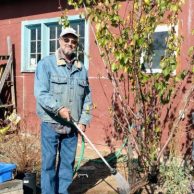
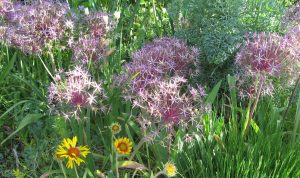
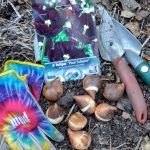
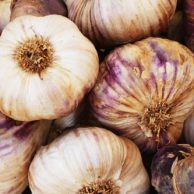 It’s time to buy your ‘seed’ garlic, which you should store in a cool, dry, well-ventilated place until planting time, from mid-October to mid-November. Seed garlic bulbs are specifically chosen for planting because they are the healthiest bulbs with the largest cloves, and they are intact. By planting the largest cloves, you’ll be rewarded with a harvest of big, juicy bulbs.
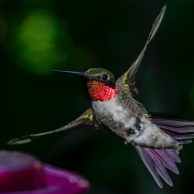 Hummingbirds are zipping and humming and sipping around our gardens, partaking of the summer’s bounty of nectar-rich flowers, many of which are ‘color-coded’ specifically to attract them. And you’ll want hummers in your garden, not only because they’re beautiful, not only because some plants depend on them for pollination, not only because migratory birds are imperiled, but also because they eat prodigious numbers of small flying insects like mosquitoes! And did you know, some hummingbird have been known to live up to 25 years!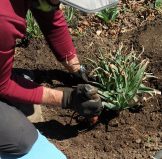
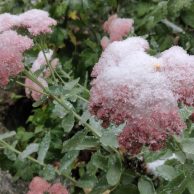 As Colorado gardeners, we’ve come to expect snow in October (last year it was October 10), but September?! In the past 24 hours, we saw a temperature swing of more than 60 degrees, going from record-breaking heat to one of the earliest recorded snow falls in the state (the earliest recorded area snowfall was in 1961 when Denver received over 4″ of snow on Labor Day).