
We have a limited number of choice Peonies in 2-gallon pots, ready to make a long-lived presence in your garden! These varieties are different from the ones we will have in stock in a couple of weeks, which will be in 1-gallon pots.
Peonies are classic garden plants that add a lot of charm and beauty to the garden, increasing in size and beauty for many decades. Their gorgeous, fragrant blooms and lush foliage have made them popular for many years. When a peony is finished blooming, the attractive foliage mound makes a great seasonal ‘shrub’. And, of course, the sensuous flowers make stunning bouquets. Cut them when the buds have swelled and are beginning to open slightly. [Read More]
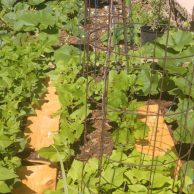 Okay, you prepared your soil and planted your vegetable garden with all kinds of wonderfully flavorful, nutritious foods, you’re watering and watching them grow, and wondering ….. When can I start to eat them, how do I harvest them, and how do I get the most out of these plantings? Here are some tips on vegetable crops harvest timing and techniques that may not be self-evident. Even if you’re a seasoned gardener, you may not be aware of some of these procedures!
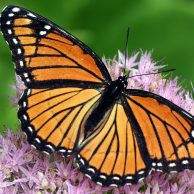 Monarch butterflies previously considered Threatened, have now been classified as Endangered by the International Union for Conservation of Nature, the world’s most comprehensive scientific authority on the status of species. Two major driving factors are habitat loss (and thus, food loss), and climate change.
 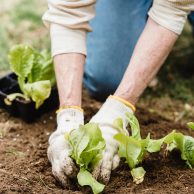 We are here for you! You’re in the high desert/steppe now, with short growing seasons, sudden temperature changes, unpredictable precipitation, low humidity, drying winds, alkaline soils that are low in organic matter and nitrogen, hot summers and cold winters. Despite these challenges, gardens can thrive here, and be productive, rewarding and beautiful!
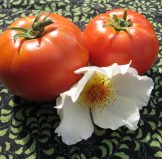 The bad news is that last week’s small delivery of tomato starts froze when the wind blew open the back door of our greenhouse in the middle of the night.
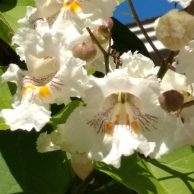 So they can support us!
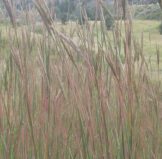 Native! Big Bluestem is taller and has a wider blade than Little Bluestem and is somewhat upright but also arching. It also has attractive reddish and purple fall colors. Big Bluestem is one of the dominant components of the Tallgrass Prairies across the Great Plains, where it can reach 8’ in height. Here it can range from 2 to 5’ tall, depending on water and nutrients available. In late summer, Big Bluestem’s purplish red flowers appear in groups of three or six, which look like a turkey foot – hence the nickname: “Turkey Foot Grass”. The root system can extend down more than 10 feet. Each year, a third of these roots die, feeding soil microorganisms and opening up channels for water. This plant is drought tolerant once it’s established. Attracts birds and butterfly larvae.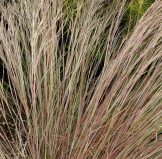
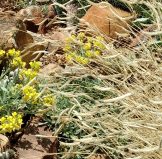
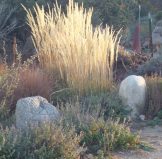 The most popular and over-used ornamental grass, for good reason. Medium sized (to 4’ tall), very erect form, easy to grow and highly adaptable to everything but shade, very durable flower/seed heads remain attractive all summer, fall and winter. No fall foliage color. Cut down in early February. Try to avoid plantings that look like rows of soldiers standing at attention!
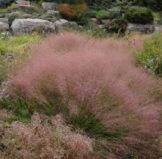
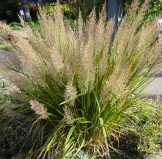 To 3’ or 4’ tall, with a graceful fountain-like or mounded shape, and waits until the end of the summer to flower. Can take some shade. Very pretty, with pinkish plumes that dry tan. No fall color. Plant Select. Should be used more.
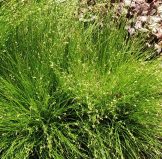 A small fountain-like clumping sedge, 6-10”h x 10-12” w, very fine-textured, bright light green and very attractive. Native to woods in Eastern N. America, it grows well in dry shade or part shade. It mixes well with perennials and serves as a neat groundcover or edger. Its tenacious roots will prevent erosion on shady slopes, and it can grow among tree roots. Very small, attractive blooms occur in spring, supporting beneficial insects.
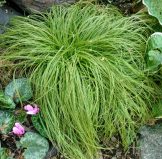 This petite sedge is rhizomatous and spreads. Its long glossy blades are slightly variegated yellow and green, and curve to the ground, giving it a mop-headed look. Makes an excellent groundcover or small ‘lawn’ (just to look at, not to step on) in shady gardens, especially Asian-styled gardens. Almost evergreen.
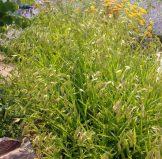 A US native, though not native here, this grass grows well in part shade. The wide, bright green blades emerge from the stems at many heights, giving it a slightly bamboo-like look. The pendulous seed clusters in late summer are composed of very attractive flat, plaited spikelets, starting out pale green, later turning tan. Foliage stays green until fall, when it turns yellow. It will self-sow but is not difficult to control.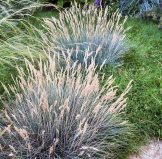
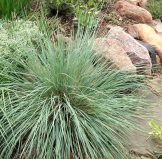 A much sought-after modest-sized evergreen grass with powder-blue blades, and that has some shade tolerance. It forms an open, symmetrical mound of foliage from 12” to 24” high, and a bit wider, looking like the ‘big brother’ of Blue Fescue. Bloom stalks add another 12 to 18”, and provide interest for several months.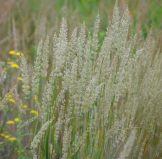
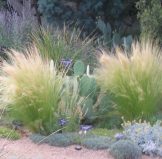 Also known as Ponytail Grass, this small grass, to 14” tall, has very fine-textured blades that make a ‘fountain’ of green. It can sometimes be evergreen. This grass may not be very long-lived, but will replace itself with seedlings, which can be relocated when small.
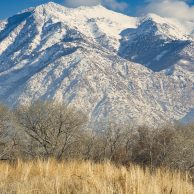 Historically February is one of Colorado’s snowiest months, and finally we’re beginning to see evidence of that this year! Additionally, the forecast indicates more to come. It remains to be seen how some of our marginally hardy garden plants have suffered from the below zero temperatures.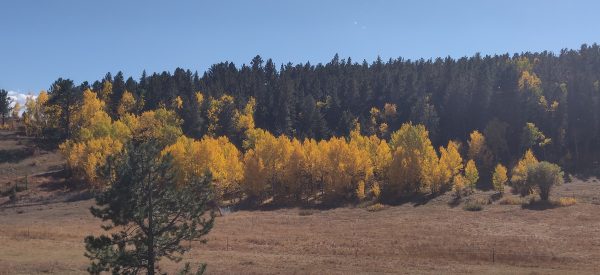
 Our 2022 Fall Members-Only Sale has finished, and now our Big Fall Sale has begun, with 20% off for everyone! Plants included in this week’s sale are:
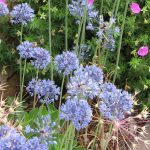 Allium caeruleum (syn. A. azureum) (Blue Globe Onion)
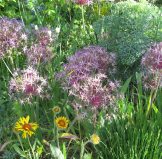 A most surprising, outrageous flower for xeriscapes! The giant globes, to 10” diameter or more, are held on fairly short stems, 8”-18” tall, blooming in mid-spring. The hundreds of starry, silver-lavender florets each have a green ‘eye’ are arranged so that their petal-tips touch to form a perfect sphere. This easy naturalizer has been highly successful in our xeriscape display gardens, eliciting lots of interest. Also spectacular in large flower arrangements, fresh or dried.
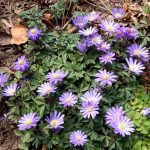 An enchanting, early-blooming member of the Buttercup family that grows from a tuber. Where happy, it spreads to form a carpet-like groundcover with ferny deep green foliage and 1”- wide open-faced sky-blue daisy flowers with yellow eyes. Provides a long-lasting display in early spring.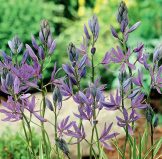
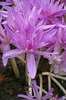 Waterlily Autumn Crocus
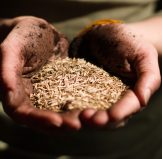 “The less biodiverse any system is, the greater the potential for its collapse.” Janisse Ray, from The Seed Underground: A Growing Revolution to Save Food.
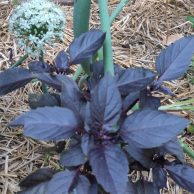 Basil is one of the great culinary pleasures of summer, and it’s definitely NOT TOO LATE to plant Basil and enjoy a good crop! Basil plants are beautiful, grow equally well in the ground or in pots, thrive in hot weather, provide a continuous, bounteous crop, and Basil’s many different flavors are essential to a variety of distinctive cuisines. It can be used fresh, dried, or frozen in oil or as pesto. Though basil leaves lose most of the aromatic oils when dried, we have still found that basil dried from your garden is so much more flavorful than commercial dried basil.
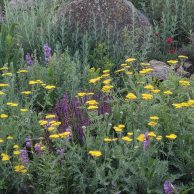 We’re excited that the City of Boulder is gathering feedback from the community about how we use our yards, preferences for landscaping and interest in a citywide effort to create pollinator habitat patches and pathways. Pollinator pathways connect safe, pesticide-free native plant patches of habitat for bees, birds, butterflies, and other wildlife to provide food and nesting sites. Native pollinators are vital to our ecosystems and pathways support pollinator populations, as well as safe passage for movement across the city.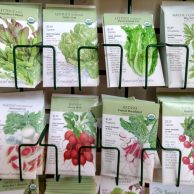
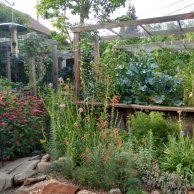 Yes, you can still plant many vegetables and annual flowers, now at greatly reduced prices! If you are lucky enough to have a greenhouse, you can grow most peppers, eggplants and tomatoes year-round. In the open garden, look for vegetable varieties that mature the fastest – cucumbers and summer squash, tomatoes, and peppers at 75 days or less. And Kale can still be planted in locations with afternoon shade.