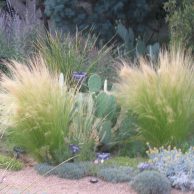
We often recognize grasses for their ornamental attributes – dynamic, flowing movement in the breeze, reflecting the dancing light, screening of unsightly areas, as well as their value in providing food and habitat for wildlife. But the grasses are the plant family with the greatest economic value, and it’s interesting to think about grass-based agriculture, the oils derived from grasses, their role in making beverages such as sake, wine, beer, and whiskey, their importance in construction (think thatch roofs, basketry, furniture, fencing, bamboo framing, scaffolding), and of their use in reed instruments.[Read More]
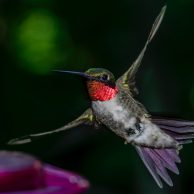 Hummingbirds are zipping and humming and sipping around our gardens, partaking of the summer’s bounty of nectar-rich flowers, many of which are ‘color-coded’ specifically to attract them. And you’ll want hummers in your garden, not only because they’re beautiful, not only because some plants depend on them for pollination, not only because migratory birds are imperiled, but also because they eat prodigious numbers of small flying insects like mosquitoes! And did you know, some hummingbird have been known to live up to 25 years!
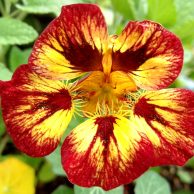 Incorporating edible flowers in your cuisine not only adds visual appeal, but also can offer high nutritional value and great flavors. Edible flowers have been used for millennia in many cultures to enhance everything from salad to beer and wine. A quick internet query on “ancient edible flower recipes” revealed many results. It could be a fun family event to recreate a heritage recipe!