
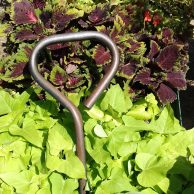
 Our best selection of plants for the 2021 season is here now! Our selection of plants for shade and part shade has never been better, including Hosta (many kinds!), Ferns (5 kinds!), Bergenia, Hellebore, Foxglove, Geranium (many), Coral Bells (many), Monkshood, Persicaria, Pulmonaria, Golden Wood Poppy and Clematis (lots!), and some new selections, like Solomon’s Seal (2 kinds)!
Plants
Simple Ways we can Respect our Soil
 Keep it Covered: Exposed soil is vulnerable to water loss, microbial die-off, erosion and degradation. Use mulch or cover crops to protect it.
Amend Responsibly: Improve soil quality by adding compost or decomposed organic matter, rather than relying solely on chemical fertilizers.
Minimize Disturbance (No-Till): Avoid unnecessary tilling or digging, which disrupts the soil microbiome and structure.
Avoid Compaction: Never walk on, drive on, or store items on garden beds. Compacted soil prevents air and water from reaching plant roots.
Harlequin’s has all your soil needs so that you can maintain and increase your soil’s health and potential.
Prepare your garden for a Cold Weekend!
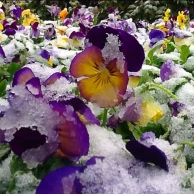 Just as we were beginning to think that Spring was here to stay, a brief return to a winter that never was! It is always wise to prepare for a potential cold snap in the Front Range! According to BoulderCast weather, a strong cold front arrives Friday; a colder Canadian trough with potential for accumulating wet snow at ALL elevations.
A Friday night freeze is likely, with lows in the 20s for the Plains and teens in the Foothills. Another freeze may occur Saturday night. Since it is still early in the season, you have have not planted many tender plants yet, but Harlequin’s has both the protocol and the tools that you need to protect your plantings. From in-stock row covers to time-tested strategies, Harlequin’s can help.
Cold Snap Alert!
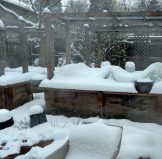 We were just getting comfy and confident in the progressing spring weather, when Mother Nature reminds us that She is in control!
According to the NOAA extended forecast for Boulder, CO, there is a Hazardous Weather Outlook for northeast and north central Colorado later this week. Our weather is expected to shift beginning Thursday night into Friday when a cooler and wetter pattern moves in. Night temperatures Thursday are forecast to drop to about 40˚F, and day temperatures will hover in the low 50s. Friday and Saturday could bring even lower temperatures, with highs of only 45 and lows of 33, possibly accompanied by strong winds, rain, snow and/or H_ _L! It appears that this weather pattern could continue through Sunday / Monday. Temperatures in your garden will depend on your elevation and exposure, and could drop below freezing.
What this means for your plant care, especially tender vegetables, and annuals, is that it’s time to prepare to bundle them up later in the week before the cold snap arrives. Here’s how you can best do so. [Read More]
Boulder County’s First Botanic Garden!
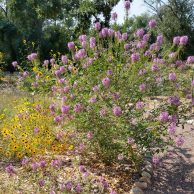 In mid-August, Mikl and Eve had the pleasure of visiting the beautiful, newly created and planted Rocky Mountain Botanic Gardens in central Lyons, CO. Envisioned and designed by herbalist, botanist, and educator Garima Fairfax (a beloved former Harlequin’s staffer!) and brought to fruition with a team of dedicated volunteers and grant money, the non-profit botanic garden is a delightful and educational display of native annuals, perennials, shrubs, vines, and trees. It is easily accessed along popular walking and cycling trails. [Read More]
TREES – 2022 Newsletter
The TREES we sell are smaller than ball & burlap trees that are dug in the field, leaving at least 75% of their roots in the ground. Ours are grown in a container so they have a complete root system and begin growing immediately and are not stressed. Here is a sample of some of our selection.
RUSSIAN HAWTHORN
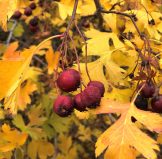 Very tough and xeric, grows 15’ high and wide, white flowers and red berries, loves Colorado conditions!
ROCKY MT. MAPLE
Native to our foothills, likes to grow in the protection of other trees, red fall color, 10’-15’.
GAMBEL OAK and WAVYLEAF OAK
Both natives that grow 10’-15’, with little water and poor soil, support birds.
HACKBERRY
Good shade tree to replace an ash, a fast-growing hardwood, the most drought tolerant shade tree.
WHITE MULBERRY
The hardiest mulberry, 25-30’ tall and wide, very xeric, white fruit is tasty and does not stain. Brings Western Tanagers, Orioles to your garden!
GOLDEN RAIN TREE
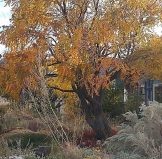 25′ xeric tree with golden flowers in July, orange lantern-like pods, orange fall color, seeds abundantly.
CHOKECHERRY
Native, suckering tree to 15′-25′ with white flowers, edible fruit; great for birds and butterflies.
SUCKER PUNCH CHOKECHERRY
Leaves start green then turn red all season, non-suckering, white flowers, berries.
SILVER BUFFALOBERRY (Shepherdia)
10′ native small tree with edible red fruit on female plants,, silver leaves, very xeric, few thorns.
MAYDAY TREE (Prunus padus)
20′-30′ with clusters of white flowers, then bird fruit, fast screen.
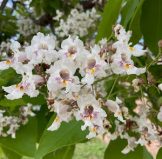 WESTERN CATALPA
40′-50′ with vertical habit, fragrant orchid-like flowers, huge heart-shaped leaves, 12″ beans, xeric and special.
ARIZONA CYPRESS
20′-30′ hardy evergreen, blue foliage is fragrant, not scratchy, quite fast growing, bird favorite.
Plus, Honeylocust, Crab Apples, Silver Maple, Bur Oak, Thornless Cockspur Hawthorn, Aspen, Ptelea, Kentucky Coffee Tree, Ohio Buckeye, Autumn Brilliance Serviceberry, Hot Wings Maple, Alder, Native Birch, Bigtooth Maple, and More!
We have to suck carbon out of the atmosphere naturally — by planting trillions of trees…
– Senior Climate Scientist Brenda Ekwurzel
SHRUBS & VINES – 2022 Newsletter
We have a large selection of natives and non-natives Shrubs AND Vines
 This includes Amorpha, Manzanitas, Mt. Mahoganies, Big Sage, Fringed Sage, Sand Sage, Lilacs, Butterfly Bushes, Pea Shrubs, Gambel Oak, Viburnums, Spireas, Potentillas, Sand Cherry, Rabbitbrush, Fernbush, Mountain Ninebark, Cliff Rose, Lewis Mockorange, Mikl’s Pick Mockorange, Boulder Raspberry, Boxwoods, Cotoneasters, Honeysuckles, New Mexican Privet, Flowering Quince, Ephedra, Euonymus, Sumacs, Currants, Yuccas, and many more!
VINES
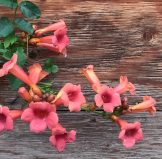
Honeysuckle, Trumpet Vine, Wisteria, Silver Lace, Clematis, Euonymus and MORE!
Unless someone like you cares a whole awful lot, nothing is going to get better. It’s not.
– The Lorax (Dr. Seuss)
Self-sowing Hardy Annuals
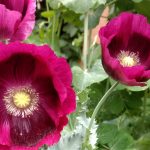
Papaver ‘Lauren’s Grape’
Some customers wonder why we are selling starts of self-sowing hardy annuals like Larkspur, Rocky Mt. Beeplant, California Poppy, Peony-flowered Poppy, Pheasant’s Eye, Sweet Alyssum, Nodding Dragonshead, Bee’s Friend, and Desert Bluebell. Shouldn’t they be grown from seed sown directly in the garden? The answer is Yes, they certainly can be, and if you find a source for the seeds and sow them at the optimal time, usually in the fall, you can get great results. But some gardeners report having little or no success with direct sowing: their timing is off, the seeds are watered in and then dry up and are no longer viable, critters eat the seeds, etc. [Read More]
PERENNIALS – 2022 Newsletter
Harlequin’s huge choice of pollinator-supporting Perennials. Including:
NATIVES
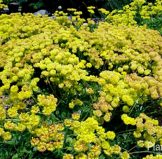
Eriogonum umbellatum var. aureum ‘Psdowns’ (Kannah Creek® buckwheat). Photo Credit: Plant Select
SULFUR FLOWER KANNAH CREEK
Mahogany fall color. Eriogonum allennii – 3′ wide, very xeric, yellow flowers, a winner. Eriogonum umbellatum – yellow blooms cover xeric native mat, feeds butterflies, bees.
ASCLEPIAS INCARNATA
1′-3′ Full Sun, Attracts butterflies, native and honeybees, hummingbirds.
ASCLEPIAS TUBEROSA
Butterfly Weed, orange flowers, 1’-2’ high, essential Monarch food and nectar.
NATIVE PUSSYTOES, ASTER, Arnica, Skyrocket Ipomopsis, Blazing Star, Navajo Tea, Prairie Sundrops (Calylophus serrulatus)
NATIVE BEE-BALM
–Monarda fistulosa: Showy purple blooms bring bees, hummers, butterflies; deer-resistant.
MANY PENSTEMONS INCLUDING P. VIRENS
2”x 8”, short spikes of blue flowers; shiny, dark evergreen leaves.
MANY COLUMBINES INCLUDING
Rocky Mt., Denver Gold, Western Red, Barneby’s
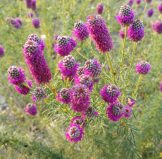
Dalea purpurea (Purple Prairie Clover)
PURPLE PRAIRIE CLOVER
Long lived xeric native loved by many bee species, bright purple-pink, nitrogen-fixing.
GAILLARDIA ARISTATE – BlanketFlower
LIATRIS PUNCTATA – Gayfeather
OENOTHERAS – Evening Primroses
CHOCOLATE FLOWER
12″ x 24″ wide, yellow daisies with chocolate fragrance, very xeric native.
SPHAERALCEA MUNROANA
Hardy, 18” vivid orange blooms all spring, bee-loved, low-water, silver leaves, rare.
ERYSIMUM WHEELERI/WHEELER’S WALLFLOWER
Tall, long-blooming biennial, vivid burnt-orange flowers, exclusive!
GEUM TRIFLORUM/PRAIRIE SMOKE
Colorado native, handsome foliage, reddish flowers, feathery seedheads, sun/part shade.
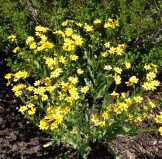
Engelmannia peristenia (Engelmann Daisy)
ENGELMANNIA PERISTENIA/ENGELMAN DAISY
Plant Select, neat golden daisies all summer, 18”h low water beauty
TOWNSENDIA HOOKERI & KIN
Native ‘Easter Daisies” grow dry, begin bloom super-early in neat little clumps.
ECHINACEA ANGUSTIFOLIA/NARROW-LEAF CONEFLOWER
Premier immune herb, large pink or white summer blooms.
PLUS, MANY GREAT NON-NATIVES INCLUDING:
MANY AGASTACHES
Blue Fortune, Coronado, Black Adder, A. rupestris.
SAGE
Culinary, Purple, Berggarten, Blue Hill, May Night, Caradonna, Furman’s Red, Mojave, S.azurea, S. argentea.
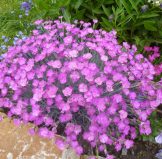
Dianthus gratianopolitanus ‘Firewitch’
DIANTHUS
Tuscan Honeymoon – grassy foliage, 2’-3’ stalks of pink flowers late summer D. gratianopolitanus – very tough groundcover. very fragrant pink flowers, durable. D. Blue Hills – the bluest foliage, fragrant flowers, 12” diam. D. Firewitch – fragrant; D. petraeus noeanus – Jasmine Dianthus, powerfully fragrant.
HARDY GERANIUMS
Biokovo, Splendens, St. Ola, Crystal Rose, Cambridge, Ballerina,G. macrorrhizum, G. sanguineum
ECHINACEA
purpurea, Magnus, White Swan, E. tennesseensis, E. pallida, E. paradoxa, Cherokee Sunset
ROSEMARY
Arp, Madeline Hill, Tuscan Blue, Prostrata.
HARLEQUIN’S SILVER GERMANDER, T. rotundifolium, T. chamaedrys
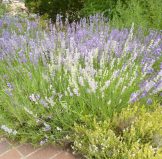 MANY LAVENDERS
Royal Velvet, Grosso, Twickle Purple, Munstead, Hidcote, Thumbalina Leigh, Vera, Wee One.
ORNAMENTAL OREGANO
Kent’s Beauty, Amethyst Falls, etc, cascading groundcovers, long blooming, bee-loved.
PLUS
Scabiosa Fama, Sedum nevii, Corsican Violet, Limonium gmelinii, Lallemantia canescens, Firefly Coralbells, Fancy Heucheras, many Hostas, and many, many more!
TOUGH ANNUALS
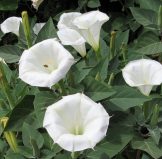
Datura meteloides
Snapdragons, Zinnia, Lauren’s Grape Poppy, Petunias, Datura, Pansies, California Poppy, Nicotiana, Salvias, Larkspurs, Peony-flowered Poppies, Swan River Daisy, Sweet Alyssum, Calendula, Kiwi Blue Honeywort, Cleome, Cuphia, Dahlia, Sacred Datura, Gomphrena, Marigolds, Nasturtiums, Baby Blue-Eyes, Love-in-a-Mist, Sun Rose, California Bluebells, Wax Begonia, Blackeyed Susan Vine, Annual Periwinkle, Canterbury Bells, and more!
Tips for Root Vegetable Success
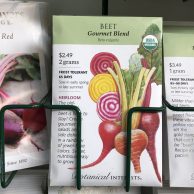
Some veggies seem to shy away from the limelight, flourishing underground to provide a surprising, beautiful, and nutritious surprise later in the season. Growing root vegetables is generally easy, and can be a fun way to engage children in gardening. In addition, mountain gardeners often find that root veggies thrive in their cooler conditions.
Once planted, root veggies do not like to be disturbed and therefore are best planted by seed. (We do sell Bull’s Blood Beets as a starts, but these are generally grown for their greens.) We have Botanical Interests, Masa, and Seed Savers Exchange seeds for many root veggies including: [Read More]
Fruit for Colorado
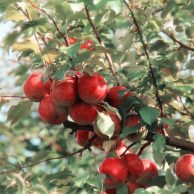 One of our specialties is fruiting plants that are adapted to Colorado conditions. All the apples we carry are resistant to fireblight and good tasting. And the cherries we sell are all proven successful in Colorado. Our grapes are the hardiest of any you will find, delicious fresh, in juice and a few are good for wine. And we have productive & good tasting currants, gooseberries, blackberries, strawberries, raspberries including: [Read More]
CACTI & SUCCULENTS – 2022 Newsletter
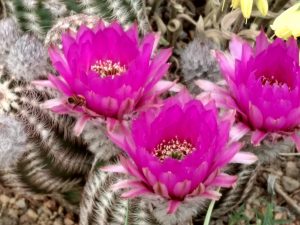
Harlequin’s Gardens has many winter-hardy cacti: chollas, ball cacti and prickly pears.
Succulents: Hardy Agave, Yucca, Hesperaloe, Ice Plant, Sedum and more.
At least 14 countries have now given legal rights to rivers and other ecosystems.
– The Sierra Club
Get your Plants Moving!
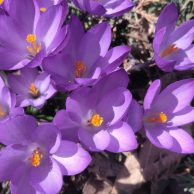 Do you have plants that you like, but that need to be moved to a different location in your garden? Or has your clump of Shasta Daisy, Daylily, Hardy Geranium, etc. become too wide and now needs to be divided? By dividing your mature perennials, you get free plants to expand your garden, to give to neighbors, or pot up and donate to a fund-raising event like KGNU FM Community Radio’s Spring Plant Sale! The next couple of weeks bring the very best opportunity to accomplish these moves without stressing your plants too much. Search the web for instructions from a trusted source for dividing the specific plant you’re working with.
Q: Can I plant now?
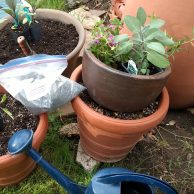 Q: Can I plant now?
A: It depends!
Yay! For those of us gardening at about a mile high, the threat of frost is nearly gone! If you’re planting hardy perennials, shrubs, vines, grasses or trees, you’re good to go now (as long as your soil isn’t too wet to work), and we have a remarkable selection! Our stock of seeds and starts for tomatoes, peppers, eggplants, cucumbers, summer & winter squash, melons, pumpkins, and watermelons are excellent. We also have plenty of seeds for beans – bush, pole, runner, and dry. A hint about bean seeds: white-seeded beans are more tolerant of cool soils, so they can be planted sooner. [Read More]
COOL SEASON VEGGIES & HERBS – 2022 Newsletter
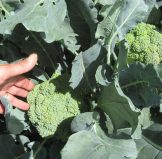 COOL SEASON VEGGIES
We have a Fantastic Selection, too many to list!
ARUGULA
Wild Arugula, Astro, (spring), Ice-Bred (fall)
BROCCOLI
Fiesta, Nutribud, Leaf Broccoli, Spigariello di Liscia Leaf Broccoli, Aspabroc
OTHER VEGGIE STARTS – 2022 Newsletter
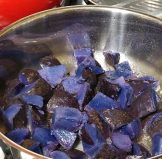
Purple Majesty when cooked
POTATOES
Yellow Finn, Purple Majesty, Harvest Moon, and Norland Dark Red.
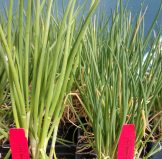
Heirloom Tohono O’odham Multiplier Onion plants
ONIONS
Patterson Red, Redwing, Walla Walla, Ailsa Craig, Red Long of Tropea, Red Geneva, Gladstone, Borrettano, Dakota Tears, Bianco di Maggio.
ALSO, Leeks and Shallots.
ASPARAGUS
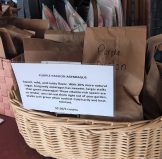
JERSEY KNIGHT (roots, 5 per bundle)
All male hybrid with big spears. Does not make seed, so doesn’t become weedy. Best selection for dense clay soils. Very productive and disease resistant. Hardy to Zone 2.
PURPLE PASSION (roots, 5 per bundle)
Beautiful deep burgundy-colored spears with high sugar content, delicious, tender, less fibrous, great in raw salads.
EGGPLANT OFFERINGS – 2022 Newsletter
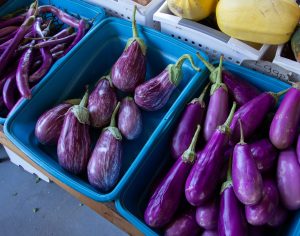 EGGPLANTS
GALINE
72 days, F-1 hybrid
Early, dependable Italian-style eggplant, mild, creamy-fleshed fruits averaging 1 lb., with glossy black skin.
GOLDEN TREASURE Sweet Pepper
80 days, Open-pollinated
Golden Treasure is a very tasty and sweet Italian heirloom frying/stuffing pepper, growing to 9” long, with juicy flesh and thin skin. It is also delicious roasted, or raw as a snack or salad pepper. Golden Treasure peppers ripen from green to a glossy golden yellow on very productive plants 2-3’ tall
Ready, Set, Plant!
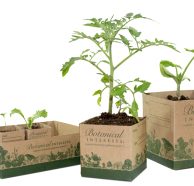 Even though we are about to receive our biggest snowstorm of this winter thus far, you can still make great progress on your garden by starting seeds indoors or even outside if your garden is prepared and you’re quick and can sow them tomorrow morning! You can also plant our hardy perennials, vines, shrubs and trees that have overwintered outdoors ahead of the storm. And our Onion plants – they’re very cold-hardy, and the earlier they’re planted, the larger their bulbs at harvest time! And, if you can plant in a cold-frame, or under a low tunnel of sheet plastic or Row Cover Fabric, you can plant our spring vegetable starts! Heading varieties like Broccoli, cabbage and cauliflower will give you [Read More]
Sporobolis heterolepis (Prairie Dropseed) | Warm Season
Native! A lovely small grass found here in the foothills and eastward across the Western prairies. Growing to 1-2’ tall and wide, it makes an elegant, fine-textured, emerald green fountain, suitable in many garden styles. The fine-textured plumes that rise above the foliage clump are attractive in bloom and in seed, and are favored by songbirds. The inflorescences are pleasantly fragrant – some say they smell like burnt buttered popcorn. Plains Indian tribes ground the seeds to make a tasty flour.
Prairie Dropseed is also drought tolerant and turns a nice russet brown in fall. Hardy to Zone 4.
Sporobolis wrightii (Giant Sacaton, Wright’s Sacaton) | Warm Season
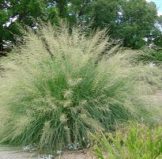
Photo Credit: Plant Select
Native! Comes up earlier in spring than most other warm season grasses. It also flowers earlier than most other warm-season grasses. This huge S.W. native grass grows to 6-10’ tall and 4-6’ wide, tolerates most soils and is very drought-tolerant. Huge airy flower/seed panicles are ornamental well into winter.
Hardy to Zone 5. Cut back to 2-3” in late winter.
Clematis Pruning Groups
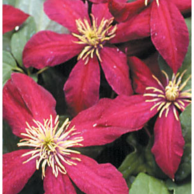
Despite the access we have right now to our snow-free gardens, in general it’s not time to begin garden clean up. Undoubtedly (hopefully!) we will receive more snowfall in February and March and it is beneficial to keep leaves on the ground and last-year’s stalks on our perennials because this cover provides habitat for overwintering beneficial insects and it helps to keep the plant roots and crowns warmer.
In late February and early March it will be time to cut back certain Clematis vines, depending on their category. Here is an in-depth guide to the three Clematis Pruning Groups. [Read More]
Solstice Cheer from the Garden
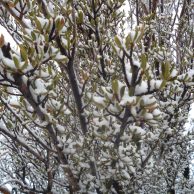 Attractive Evergreens for Colorado Gardens
At the time of the Winter Solstice, we can be grateful for the evergreens in our Colorado gardens. Not every region of the temperate northern hemisphere can grow so many different beautiful plants with year-round presence.
There are so many evergreen (and eversilver, everblue, red and purple) hardy perennials, groundcovers, shrubs, herbs, and trees (and not just conifers!) we can grow here. They go above and beyond in their service as ornamental plants in all four seasons. [Read More]
Crocus sativus, Corsinii (Saffron Crocus, fall flowering)
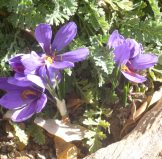 This fall-blooming crocus emerges as a cheery surprise in October or November with bright violet-purple open cupped petals and brilliant orange stigmas, the source of the precious spice, saffron. The blooms are accompanied by short blades of dark green, grass-like foliage which elongates after the flowers have finished and may re-appear in spring.
Wonderful in the sunny rock garden, and among low, xeric groundcovers such as Turkish Veronica or ‘Tough-as-Nails’ (Paronychia kapela). Saffron Crocus prefers a location that is warm, sunny and dry, with very good drainage and only wants moisture when it is in flower and active growth.
PLANT THESE AS EARLY AS POSSIBLE to enjoy flowers this fall! Plant 2-4″ deep, 3″ apart. Zone 6. 4”-5” tall
Crocus chrysanthus ‘Blue Marlin’
Blue Marlin Crocus
Bulb. Z3. 2-4” tall. Blooms late winter/early spring. Compost-improved soil.
The Blue Marlin species crocus is one of the earliest to flower. Pale lilac blossoms with a small golden-yellow center. It is quite hardy, surviving very cold weather and heavy snowfall. Good for forcing indoors. Deer and rabbit resistant. Lovely in rock gardens and along pathways or on borders. Early fodder for hungry bees. May interplant in lawns. In a perennial garden, best planted in drifts of 20 or more. Lovely with iris reticulate.
Crocus x luteus ‘Golden Yellow’

Crocus x luteus ‘Golden Yellow’, courtesy Missouri Botanical Garden
Crocus x luteus ‘Golden Yellow’
The 4” – 6” tall fragrant flowers of ‘Golden Yellow’ Giant Crocus are a rich buttercup hue. The corms are incredibly floriferous, producing 4 to 12 flowers per corm the first-year, in April. Plant in a sunny or partly sunny area, 4” apart. This excellent heirloom variety has been a garden favorite since 1600. The corms multiply rapidly and naturalize beautifully. Cold-hardy to Zone 4.
Crocus Specie – Snow Crocus ‘Aqua’
Crocus Specie – Snow Crocus ‘Aqua’
This charming new crocus can begin blooming as early as February here in sunny Colorado. With a shade of blue-violet blooms quite different from typical ‘purple’crocus, ‘Aqua’ is a heavy bloomer and exceptional naturalizer, and it attracts early pollinators to the area. Low growing (4-6″ tall), it is versatile enough to add color and style to front borders, containers, rock gardens, between deciduous trees and shrubs. Plant in full to part sun, 3-4” deep and 3-4” apart. Cold-hardy to Zone 3
Crocus Specie ‘Snow Mix’
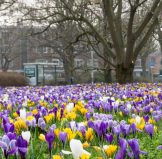 Crocus Specie Mixed
A lovely mix of ‘snow crocus’, spring’s earliest jewels, so cheery and so welcomed by gardeners and honeybees! Colors range from pure white to rich purple, with bright yellows, lavenders, bicolors and stripes included. Depending on their location, they can begin to bloom as early as the beginning of February! Tuck them into rock gardens and under deciduous shrubs and trees, edge a shrub or perennial border, plant large drifts, or force them in pots for indoor pleasure! Mostly native to the Balkans and Turkey, these diminutive gems are hardy to Zone 3. Plant in full to part sun, 4” deep and 3-4” apart in well-drained soil.
Crocus sieberi ‘Tricolor’
Crocus sieberi ‘Tricolor’ (‘Tricolor’ botanical Crocus)
One of the most striking and earliest crocuses to flower, Tricolor’s graceful, 4”-tall blooms have a big garden impact. The fragrant flowers have rich purple petals and golden throats beautifully edged with a prominent pure white band. The golden anthers and orange stigma are prominent in the center. Born in March or early April on sturdy stems, the blooms open with the narrow, dark green leaves. Plant 4″ deep and 3″ to 4″ apart in a sunny or lightly shaded location.
Crocus speciosus (Autumn Crocus)
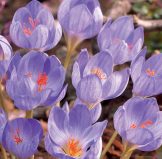 The superb blue Autumn Crocus, blooms in early to mid-autumn, arriving to brighten the garden at a time when many other plants have finished blooming. Autumn Crocus has large, sky-blue to purple flowers with golden-orange stigmas and anthers. They stand 4” tall and emerge without the narrow grassy foliage that will follow bloom. They will naturalize, and over the years, the clumps increase in size and duration of bloom.
Autumn Crocus provides a stunning surprise rising out of a mass of perennial groundcover such as Plumbago, Evergreen Candytuft, ‘Harlequin’s Silver’ Teucrium, or any of the Geranium x cantabrigiense selections!
Average soil and moisture, full to part sun, most soils except heavy clay, cold hardy to Zone 4.
PLANT THESE AS EARLY AS POSSIBLE to enjoy flowers this fall! For drifts, plant 10 bulbs per square foot.
Crocus Specie Blend
Photo and description coming soon!
Crocus vernus Giant Blend/Mixed
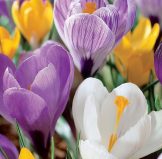 Giant Mixed Crocus Blend
Bulb. Z3. 4-6” tall. Blooms early spring. Compost-improved soil.
A random mix of large-flowering purple, white, pale blue and yellow crocuses that make a lovely mosaic of color in early spring gardens. Grows well in containers. Deer and rabbit resistant. Gorgeous mix under deciduous trees and in mass plantings in lawns and perennial beds. Also good for indoor forcing. Rapidly naturalizes in your garden.
Crocus vernus ‘Golden Yellow’
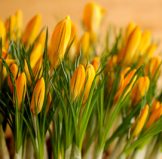
Golden Yellow Crocus
Bulb. Z3. ½-1” tall. Blooms late winter / early spring. Compost-improved soil.
Deep golden yellow color of this crocus brightens up your early spring garden atop slender, olive-green striped leaves. Almost always the first flower in the garden each year. Naturalizes easily. Bees appreciate this in your garden for early season fodder! Mass plant in perennial borders or in lawns for showy displays. Plant with snowdrops and other early-blooming bulbs.
Fritillaria imperialis ‘Sunset’

Fritillaria ‘Sunset’
Fritillaria imperialis ‘Sunset’
A show-stopper in the early to mid-spring garden, ‘Sunset’ Crown Imperial’s large, bright orange florets are suspended below a topknot crown of bronze-burgundy spiky foliage. The statuesque flowers shoot skyward on 40” to 48” burgundy stems for additional dramatic impact. Great in full or part sun in most soils that drain well. Fritillaria bulbs dry out very quickly so plant them soon after getting them home, 12” apart and 10” deep. The bulb has a depression on the top, so to avoid water accumulating and rotting the bulb, plant it at an angle to prevent water collecting and rotting the bulb. After bloom, don’t trim back the foliage until it has withered away entirely in summer. Crown Imperials are tough and drought-tolerant plants and can persist for many years. Hardy to -30 degrees Fahrenheit.
Galanthus nivalis (Snowdrop)
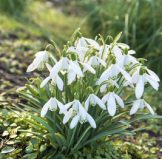 Pendant, bell-shaped white flowers with green-tipped petals are a classic harbinger of spring. They look wonderful planted in groups and may bloom as early as February. Commonly called snowdrop, this bulbous perennial is native to Europe and southwestern Asia.
Snowdrops will naturalize where happy. thrives in rich garden loam in part shade, making it perfect under deciduous trees and shrubs.
Zone 3, 3” tall.
Hyacinth ‘Delft Blue’
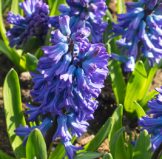 All these highly fragrant Dutch Hyacinth varieties are perfect for spring gardens and for forcing indoors in pots or hyacinth glasses. They are long-lived in the garden if fertilized after blooming, and after the first year they will produce more flower spikes that are less densely packed and more natural-looking. Hyacinths are quite easy to grow in a sunny or partly shaded spot.
Hyacinth ‘Peter Stuyvesant’
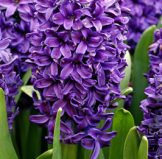 All these highly fragrant Dutch Hyacinth varieties are perfect for spring gardens and for forcing indoors in pots or hyacinth glasses. They are long-lived in the garden if fertilized after blooming, and after the first year they will produce more flower spikes that are less densely packed and more natural-looking. Hyacinths are quite easy to grow in a sunny or partly shaded spot.
Iris reticulata ‘Alida’

Iris reticulata ‘Alida’
A recent introduction, ‘Alida’ is a lovely, 4-6”- tall dwarf Iris with exceptionally large mid-blue flowers, beautifully adorned with intricate butter-yellow and white markings on the falls. Blooming in March, or early April, the bulbs quickly produce offsets that multiply into large clumps of blue. The slender, grass-like, gray-green leaves rise to the same level as the blossom, but elongates after flowering is finished. Delightful in rock gardens, pots, borders, and xeriscapes. Plant 4″ deep and 4″ to 5″ apart. Be sure to bend down and smell their fragrance! Hardy to Zone 5.
Iris reticulata ‘Harmony’
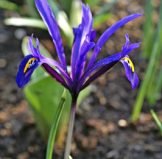 An irresistible little iris that grows no more than 5-6″ tall. Its dazzling, royal blue petals have showy white and yellow markings and the flowers are sweetly fragrant! Perfect for rock gardens or along a walkway where the soil is well-drained and relatively dry. Blooms in late winter along with the crocuses.
5-6” tall clumps can grow to 12” across. Deer-resistant. Plant 4” deep and 4-5” apart. Hardy to Zone 4.
Ixiolirion pallassii (syn. Ixiolirion tataricum) Blue Mtn Lily
 Native to rocky hillsides from SW and Central Asia (Syria to Afghanistan), this lovely wildflower in the Amaryllis family bears umbels of starry violet-blue flowers with darker midveins above grass-like foliage for 3 to 4 weeks in late May and early June.
Perfect for the well-drained xeriscape garden, this delightful bulb will thrive in a dry, sunny spot where it receives some spring moisture, followed by hot, dry conditions in summer, and will self-sow and naturalize where it’s happy.
Some added bonuses are its resistance to browsing by deer and rabbits and its great performance as a cut flower. Hardy to Zone 5. 10” – 16” tall. Deer-proof! Plant 5” deep, 4” apart.
Narcissus Blend, ‘Mother & Daughter’
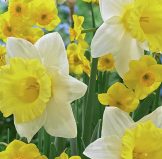
Mother and Daughter Daffodils
Bulb. Z4. 6-8” or 12-14” tall. Blooms early spring. Compost-improved soil.
This blend includes large, white “mother” daffodils with yellow cups and pure yellow miniature “daughter” daffodils. This joyful mix is a sight for winter-weary eyes bringing sunshine and joy into the early spring garden. Plant 6-7 bulbs together per square foot for best effect. Grows well in containers. Deer and rabbit resistant. Intermix with garden herbs such as thyme and winter savory.
Narcissus ‘Altruist’ (Short-cup)
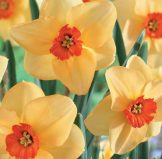 While ‘Altruist’ Narcissus has the classic daffodil look, the colors are anything but ordinary! This striking award-winner has a 3″ coppery golden-orange perianth that pales as it matures, the perfect background for the shallow, bowl-shaped crimson-orange cup. Altruist is long-lived and floriferous, and its unusual and gorgeous coloring make it a stand-out in the garden and as a cut flower. Pest-proof!
14-18” tall, Hardy to Zone 3, blooms mid-spring (April-May).
Narcissus ‘Golden Echo’
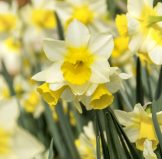
Narcissus Golden Echo
Golden Echo Jonquilla Daffodil
Bulb. Z3. 8-12” tall. Blooms mid-spring. Compost-improved soil.
A vigorous miniature daffodil supporting several flowers with extra-long, bright and buttery cups in the center of creamy white petals. Nicely fragrant. Deer and rabbit resistant. Attracts native bees. Sturdy daffodil perfect for the front of a flower bed or in a container. Flowers are extra long-lasting and lovely as a cut flower. Plant with basket-of-gold or grape hyacinths.
Narcissus ‘Jetfire’
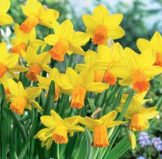 An old favorite for naturalizing, and another Cyclamineus daffodil. Bright and cheerful in the garden, with reflexed vivid yellow petals and orange-red trumpet. ‘Jetfire’ is early blooming, and increases rapidly to form showy colonies. Very long-blooming, tough and adaptable. Also good for forcing indoors.
Plant 3 times height of bulb, 4-6″ apart. Zone 3, 8-10” tall, Deer and rodent-proof!
Mother Nature’s Dryland Natives
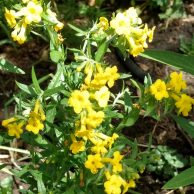 On our hikes, it seems we’re often exclaiming, “What a beautiful plant combination!”. Mother Nature’s inherent beauty and functional placement provide an amazing guide and inspiration for what we can create in our home garden or ecosystem. Mother Nature also helps guide us on how we can best support our pollinators.
In the new Harvest 2020 issue of Colorado Gardener (with a striking mushroom cover photo!), Mikl writes in ‘Blooming Without a Care’ about a selection of wonderful lesser-known dryland native wildflowers that can also be very successful garden plants in our semi-arid climate. [Read More]
Garlic – German Porcelain (organic, hard-neck)
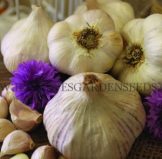
Credit, Irish Eyes Garden Seed
One of the best hard-neck garlics for flavor and keeping, this robust and extra-hardy heirloom variety in the Porcelain group offers large, impressive 2.5 to 3” bulbs with 4-6 easy-to-peel jumbo cloves for easy kitchen use. Beautiful well-formed bulbs are wrapped in thick white luxuriant parchment-like skins with inner layers splashed red-purple, almost too beautiful to eat. Cloves are usually striped with purple.
Flavor is rich, garlicky, and medium hot. Grows well in any climate. Stores at least 6 months, up to 8 to 9 months when stored properly (in a cool dark place).
Garlic – Inchelium Red (organic, soft-neck)
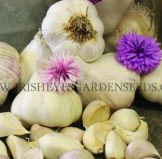
Photo Credit, Irish Eyes Garden Seed
Large 3″ + bulbs produce 8-20 cloves of good size. Mild, but lasting flavor, with a hint of hot! Dense cloves store extremely well. Flavor can get stronger in storage. This vigorous soft-necked variety won a Rodale taste test of 20 garlic strains – named “Very Best of the Soft-Necks”. Inchelium Red is also exceptionally healthy, easy to peel, and easy to grow!
Wake up and smell the garlic!
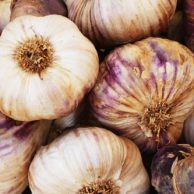 It’s time to buy your ‘seed’ garlic, which you should store in a cool, dry, well-ventilated place until planting time, from mid-October to mid-November. Seed garlic bulbs are specifically chosen for planting because they are the healthiest bulbs with the largest cloves, and they are intact. By planting the largest cloves, you’ll be rewarded with a harvest of big, juicy bulbs.
Garlic has been cultivated since very ancient times. The varieties that developed in different areas express the terroir of their locale, greatly influencing the local cuisines.[Read More]
Ornamental Grasses – the flexible plant!
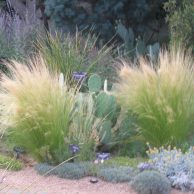
We often recognize grasses for their ornamental attributes – dynamic, flowing movement in the breeze, reflecting the dancing light, screening of unsightly areas, as well as their value in providing food and habitat for wildlife. But the grasses are the plant family with the greatest economic value, and it’s interesting to think about grass-based agriculture, the oils derived from grasses, their role in making beverages such as sake, wine, beer, and whiskey, their importance in construction (think thatch roofs, basketry, furniture, fencing, bamboo framing, scaffolding), and of their use in reed instruments.[Read More]
Great Hummingbird Plants for Your Garden
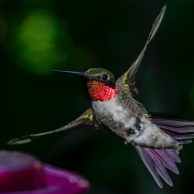 Hummingbirds are zipping and humming and sipping around our gardens, partaking of the summer’s bounty of nectar-rich flowers, many of which are ‘color-coded’ specifically to attract them. And you’ll want hummers in your garden, not only because they’re beautiful, not only because some plants depend on them for pollination, not only because migratory birds are imperiled, but also because they eat prodigious numbers of small flying insects like mosquitoes! And did you know, some hummingbird have been known to live up to 25 years!
Here are some of the plants we sell that attract and support these flying jewels. [Read More]