 XERISCAPE TREES AND SHRUBS for SUN
Harlequin’s Gardens 303-939-9403 www.harlequinsgardens.com
Note: plants listed in bold are native to our region
TREES
Acer ginnala / Amur maple
Acer ginnala ‘Compacta’ / Dwf. Amur Maple
Acer grandidentatum / Bigtooth Maple
Acer negundo / Boxelder
Acer negundo ‘Sensation’ / ‘Sensation’ Boxelder, male selection
Acer tataricum ‘Hot Wings’ / Hot Wings Tatarian Maple
Aesculus glabra / Ohio Buckeye
Amelanchier utahensis / Utah Serviceberry
Catalpa speciosa / Western Catalpa
Celtis occidentalis / Western Hackberry
Celtis reticulata / Netleaf Hackberry
Crataegus ambigua / Russian Hawthorn
Crataegus crus-galli / Cockspur Hawthorn
Crataegus mollis / Downy Hawthorn
Crataegus monogyna / Singleseed Hawthorn
Crataegus phaenopyrum / Washington Hawthorn
Cupressus arizonica / Arizona Cypress
Gleditsia triacanthos inermis / Honeylocust
Gymnocladus dioica / Kentucky Coffeetree
Juniperus monosperma / One-seed Juniper
Juniperus scopulorum & selections / Rocky Mt. Juniper
Koelreuteria paniculata / Goldenrain Tree
Malus species / Flowering Crabapple selections
Morus alba / White Mulberry
Pinus aristata / Bristlecone Pine
Pinus cembroides edulis / Pinyon Pine
Pinus contorta v. latifolia / Lodgepole Pine
Pinus flexilis / Limber Pine
Pinus ponderosa / Ponderosa Pine
Prunus americana / American Wild Plum
Prunus padus / Mayday Tree, Bird Cherry
Prunus virginiana / Native Chokecherry
Prunus virginiana ‘Shubert’ / Canada Red Chokecherry
Prunus x virginiana ‘Sucker Punch’ / Non-suckering Chokecherry
Pseudotsuga menziesii v. glauca / Rocky Mt. Douglas Fir
Ptelea trifoliata / Wafer Ash, Hop Tree
Pyrus ussuriensis / Ussurian Pear
Quercus bicolor / Swamp White Oak
Quercus gambelii / Gambel Oak
Quercus macrocarpa / Bur Oak
Quercus muehlenbergii / Chinkapin Oak
Quercus undulata / Rocky Mt. Scrub Oak
Robinia neomexicana / New Mexico Locust
SHRUBS
Agave parryi ssp. neomexicana
Amelanchier alnifolia / Saskatoon Serviceberry
Amelanchier aln. ‘Regent’ / Regent Serviceberry
Amelanchier canadensis / Shadblow Serviceberry
Amelanchier laevis / Allegheny Serviceberry
Amorpha canescens / Great Plains Leadplant
Amorpha nana / Dwarf Leadplant
Artemisia cana / Silver Sagebrush
Artemisia filifolia / Sand Sagebrush
Artemisia tridentata / Tall Western Sagebrush
Artemisia versicolor (canescens) / Seafoam Sage
Atriplex canescens / Four Wing Saltbush
Atriplex confertifolia / Spiny Saltbush
Buddleia alternifolia ‘Argentea” / Silver Butterfly Bush
Buddleia dav. nanhoensis cultivars / Compact Butterfly Bush
Buddleia davidii cultivars / Butterfly Bush
Caragana arborescens / Siberian Peashrub
Caragana pygmaea / Pygmy Peashrub
Caryopteris x clandonensis cultivars / Blue Mist Spirea
Ceanothus fendleri / Mountain Lilac
Ceratoides lantana / Winterfat
Cercocarpus brevifolius / Little-flowered Mt. Mahogany
Cercocarpus intricatus / Littleleaf Mountain Mahogany
Cercocarpus ledifolius / Curl-leaf Mountain Mahogany
Cercocarpus montanus / Common Mountain Mahogany
Chamaebatieria millefolium / Fernbush
Chrysothamnus n. ssp. graveolens / Tall Grn. Rabbitbrush
Chrysothamnus naus. ssp. albicaulis / Tall Blue Rabbitbrush
Chrysothamnus naus. ssp. nauseosus / Dwf. Blue Rabbitbrush
Chrysothamnus viscidiflorus / Dwf. Grn. Rabbitbrush
Cotinus coggygria / Smoke Tree
Cotinus coggygria ‘Royal Purple’ / Royal Purple Smoke Tree
Cotinus x ‘Grace / ‘Grace’ Smoketree
Cotoneaster divaricatus / Spreading Cotoneaster
Cotoneaster lucidus / Peking Cotoneaster
Cotoneaster multiflora / Big-flowered Cotoneaster
Cowania mexicana (Purshia stansburyana) / Cliffrose
Cytissus purgans ‘Spanish Gold’ / Andora Broom
Cytissus scoparius ‘Moonlight’ / Moonlight Broom
Ephedra americana / American Ephedra
Ephedra viridis / Mormon Tea
Fallugia paradoxa / Apache Plume
Forestiera neomexicana / New Mexico Privet
Genista lydia / Lydian Broom, Dwarf Broom
Genista tinctoria / Woadwaxen
Hesperaloe parviflora / Red Yucca
Hippophae rhamnoides / Sea Buckthorn
Holodiscus dumosus / Rock Spirea
Ligustrum vulgare ‘Cheyenne’ / ‘Cheyenne’ Privet
Ligustrum vulgare ‘Lodense’ / Lodense Privet
Lonicera k. v. floribunda ‘Blue Velvet’ / Blue Velvet Honeysuckle
Lonicera syringantha v. wolfii / Tiny Trumpet Honeysuckle
Lonicera tatarica selections / Shrub Honeysuckle
Mahonia aqu. Compactum / Compact Oregon Grapeholly
Mahonia aquifolium / Oregon Grapeholly
Mahonia fremontii / Fremont’s Mahonia
Mahonia haematocarpa / Desert Holly
Opuntia species / Cholla Cactus
Perovskia atriplicifolia / Russian Sage
Philadelphus lewisii / Lewis Mockorange
Physocarpus opulifolius cultivars / Ninebark
Juniperus communus/Common Juniper selections
Prunus besseyi / Western Sandcherry
Prunus besseyi ‘Pawnee Buttes’ / Pawnee Buttes Sandcherry
Prunus besseyi ‘Boulder Weeping’ / Boulder Weeping Sandcherry
Prunus tenella / Dwarf Russian Almond
Purshia tridentata / Antelope Bitterbrush
Pyracantha coccinea / Firethorn
Rhamnus smithii / Smith’s Buckthorn
Rhus aromatica / Fragrant Sumac
Rhus glabra / Smooth Sumac
Rhus glabra v. cismontana / Rocky Mt. Sumac
Rhus trilobata / Threeleaf Sumac
Rhus typhina / Staghorn Sumac
Rhus typhina laciniata / Cutleaf Staghorn Sumac
Ribes aureum / Native Golden Currant
Ribes cereum / Wax Currant
Ribes odoratum / Golden Currant
Robinia neomexicana / New Mexico Locust
Rosa ‘Alba Maxima’
Rosa ‘Alba semi-plena’
Rosa ‘Alba Suaveolens’
Rosa ‘Felicite Parmentier’
Rosa ‘Fruhlingsgold’
Rosa ‘Golden Wings’
Rosa ‘Harison’s Yellow
Rosa ‘Henry Kelsey’
Rosa ‘John Cabot’
Rosa ‘John Davis’
Rosa ‘Konigen von Danemark’
Rosa ‘Lawrence Johnston’
Rosa ‘Maiden’s Blush’
Rosa “Banshee”
Rosa arvensis
Rosa ‘Complicata’
Rosa eglanteria / Sweetbriar
Rosa foet. Persiana / Persian Yellow Rose
Rosa foetida bicolor / Austrian Copper Rose
Rosa glauca (rubrifolia) / Redleaf Rose
Rosa hugonis / Father Hugo’s Rose
Rosa woodsii / Wood’s Rose
Rosmarinus officinalis ‘Arp’ / Arp Rosemary
Shepherdia argentea / Silver Buffaloberry
Robinia neomexicana / New Mexico Locust
Spiraea ‘Cheyenne Snowmound’
Spiraea jap. ‘Goldflame’ / Goldflame Spirea
Syringa patula ‘Miss Kim’ / Miss Kim Dwf. Korean Lilac
Syringa prestoniae cultivars / Canadian Lilacs
Syringa vulgaris cultivars / Common Lilacs
Yucca baccata / Banana Yucca
Yucca filamentosa / Adam’s Needle
Yucca glauca / Native Soapweed, Narrowleaf Yucca
Yucca harrimanii / Harriman’s Dwf. Yucca
 An article in the Guardian caught our eye with the alarming headline ‘Vegetables are Losing Their Nutrients’. It begins with the findings in a 2004 University of Texas study showing dramatic declines in the nutrient content of 43 foods, mostly vegetables, between the mid and late 20th century: green beans have seen a nearly 50% drop in calcium, while asparagus has lost almost half its Vitamin A content.
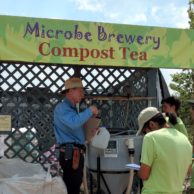
 Our compost tea will be ready this week, hopefully by Friday. Our tea has always been good, but this year we are working on making it even better. Please let us know if you can see good results from using it, and if it seems to be more effective.
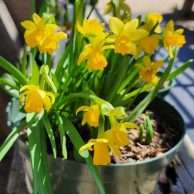 Miss planting bulbs last fall? No worries, we’ve got you covered. Choose from miniature daffodils, chionodoxa, hyacinth, tulips and more.
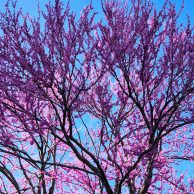 The fields and the foothills are turning green! So many trees are blooming or beginning to leaf out! There is so much energy bursting forth everywhere I look! After the lovely rain last weekend we emerged from our Sunday class to be greeted by the singing of frogs in a big puddle in the parking lot! How can they develop that fast???
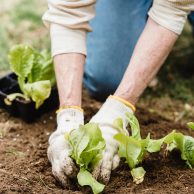 There’s much to do in the garden in April, from finalizing your garden plan, attending to your tools, to the annual spring clean up and pruning and lawn and vegetable garden prep, and PLANTING, DIVIDING and TRANSPLANTING!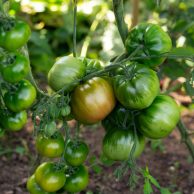
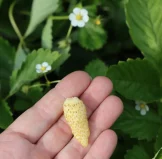
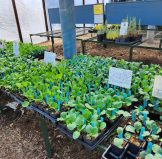 VEGETABLES

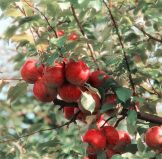 Lots of Fruit Trees: the best cherries, plums and apples for the Front Range!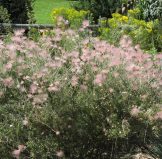
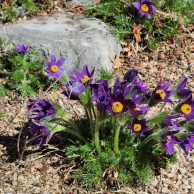
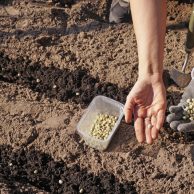 March is bringing us a characteristic tilt of the see-saw that this month always brings. Tank tops can go back in the drawer for a little while, as this week we will see night-time temperatures dipping into the mid-20s. We are expecting rain (~1.6 inches in Boulder, ~3 inches in Denver!), and heavy, wet snow, too. We’ve been here before; no need to panic. And we need the moisture!
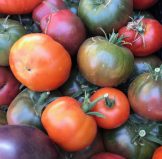 HARLEQUIN’S GARDENS 2025 TOMATO STARTS
 Dear Friends and Fellow Gardeners,
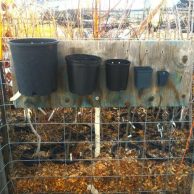 At Harlequin’s Gardens, we’ve been reusing and recycling black plastic nursery pots since day one. It is very important to us that we minimize our plastic waste. We have always encouraged our customers to bring back to us the nursery pots that came with the plants you purchased from us, and you have responded with enthusiasm, which we appreciate!
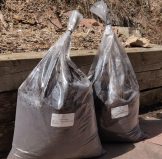
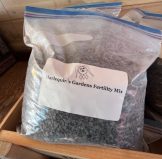
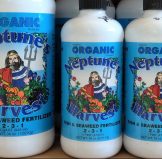 Neptune’s Harvest Organic Fertilizers
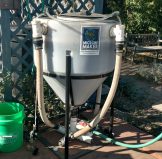 Compost Tea
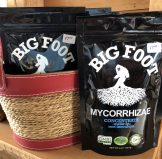 Big Foot Mycorrhizae
 Fort Vee
 Expanded Shale
 So even though there is nothing you can do at the moment, very soon, before it’s warm enough to plant, you can start making your bed sexy. Sexy soil sprouts seeds, grows roots and leaves, builds strength, makes flowers and fruit, and defends against pests.
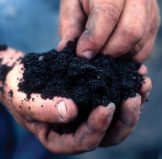 Let the biology do a lot of the work. It’s not hard to add more later; it’s very hard to correct too much. Keep the soil covered with mulch or living plants. Even native plants appreciate some compost to hold moisture and provide a light feeding when they are young. One more thing: avoid poisonous pesticides, fungicides and herbicides, like the plague. They kill or undermine the health of your allies—the soil life. Toxic pesticides are the opposite of sexy; they are like inviting the Grim Reaper into the bedroom. There are effective, non-toxic alternatives.
 What about no-till? Not turning the soil makes sense once you’ve got the soil life in a good environment. Then you don’t want to disturb the symbiotic networks. Then you can feed from the surface; good tilth and worms will take the food down.
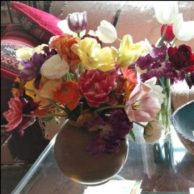 In our culture today, Valentine’s Day immediately brings to mind Romantic Love, Flowers, Gift-giving and Chocolate. And though this very old Saint’s Day has now been commercialized to the Nth degree, it’s still one of the happier occasions we celebrate, so why not enjoy it in our own way? Romance, Love, flowers, gifts and chocolate are all very positive and uplifting. And we have some recommendations for all of those categories except Romance (you’re on your own there!).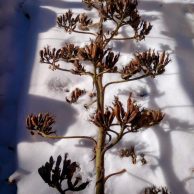

 Well, that was a false alarm!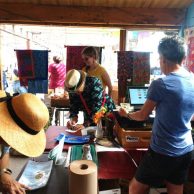
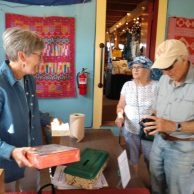
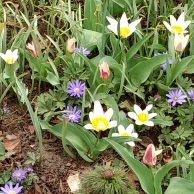
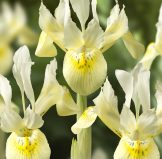 We go the extra mile to bring you special bulbs that other nurseries just don’t offer. Many of them are delightful smaller beauties at home in the front of the border, under deciduous trees and shrubs, and in the rockery. They are selling quickly, so be sure to come in to be sure of the best selection. Here is a list, and descriptions, of the fall and spring-blooming treasures for your home garden!
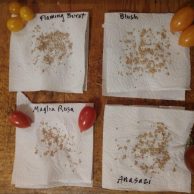 SAVING YOUR TOMATO SEEDS
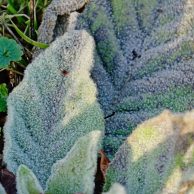
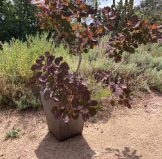
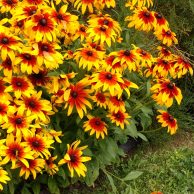 Fall is among the best times to plant perennials. While we may begin to wilt from late summer heat, many plants rise to the occasion and burst into bloom! As days begin to grow shorter, perennials spend the next few months developing root systems or taproots that delve well below the hot, dry surface soil. Pollinators depend on finding pollen and nectar sources through the entire summer, so it’s important to include late-summer and autumn bloomers in your garden.