Designing a garden or planting bed can be a daunting project without the knowledge of where to start. These steps can help you develop a successful planting design for your garden the first time around. And if you’ve taken these steps, we can give you optimal assistance when you come to Harlequin’s for your plants, soils and products. Please note that larger spaces, new builds or landscapes that need full renovations will need more preliminary work to determine placement of areas for people moving through the yard, retaining or screening views, hardscape design (patios & walkways) and other important planning steps.[Read More]
Blog
A Tough Year in the Garden, and Lessons Learned

Vilma Tomato courtesy Sara’s Kitchen Garden
It’s been a tough summer for my garden. I had the best of intentions; in early spring I was going to broadcast organic fertilizer (Yum Yum Mix in native and xeric areas, Alpha One elsewhere) and top-dress with compost (EKO lawn topdressing). It snowed whenever I had time. I was going to amend and prepare the raised vegetable garden beds, but couldn’t get myself to tear out the self-sown alpine strawberries, miner’s lettuce, wild arugula and parsley that had proliferated and offered ‘free food’. So I missed my window of opportunity to plant my usual greens and onions, and planted only tomatoes (late), which I amended and fertilized only in their individual planting holes. I don’t recommend this approach! Those tomatoes are seriously sub-par, only Anasazi and Maglia Rosa doing well.[Read More]
Special Selection of Native Shrubs – Available Now!

Native Currant
Normally, we would hold onto these beautiful, hard-to-find native shrubs through the winter, and offer them for sale in spring. But we looked around at our Native Shrubs sales area, and the few plants still there looked a little lonesome. So we decided to bring out our fresh, new crop of native shrubs to join them! Most are in easy-to-plant “2-gallon” pots. Not discounted.
Good Golly, Great Bulbs of Garlic! (and Shallots)
We’ve got both Hard-neck and Soft-neck varieties! Get your garlic ‘seed’ bulbs NOW for planting from mid-October to mid-November!
SOFT-NECK Varieties:
If you’d like to be eating your own home-grown organic garlic for 9 months (or more!) after harvesting, you should be growing some of our excellent Soft-Neck varieties. All of them are very flavorful without being excessively hot, they are cold-hardy and easy to grow here, and produce large, easy-to-peel outer cloves. [Read More]
What to Plant Now for Fall Garden Color!
The end of summer doesn’t mean the end to color in the garden, on the contrary, you can plan and plant now for a vibrant wave of color, and habitat for our insects and birds, that continues all the way to hard frost! From native and water-wise perennials and shrubs, to trees (including fruit trees) and grasses, the selection is vast.
Our Fall sale is a great opportunity to extend color and interest well into autumn.
Support our Pollinators – Even When it Hurts!
A grove of Rocky Mountain Bee Plant, four to six feet tall, has grown up alongside my driveway, where I almost never water, and is now in its full glory. From dawn to dusk, the buzz of pollinators at work is intense; honeybees, bumblebees large, medium and small, plus sweat bees, hoverflies, little tiny bees and wasps, constantly trading places, collecting pollen and sipping nectar. Yesterday, as I made my way slowly and carefully past the grove to get to my car door, one of the abovementioned made a wrong turn and found herself between my capri pants and my thigh, and panicked. The sting was painful for a few minutes, no big deal, but may have been fatal for the unwitting trespasser.
The moral of the story is: Cleome serrulata supports an amazing diversity of pollinators, and gets big, so park on the street in August![Read More]
Rose of Sharon, available now

The hardy and drought-tolerant Rose of Sharon – Hibiscus syriacus – is an easy shrub for Colorado, and August is a great time to plant one.
Rose of Sharon are large upright shrubs to 8’-12’ tall and 6′ wide, blooming in mid and late summer with large, tropical-looking flowers in various colors that draw bees, butterflies and hummingbirds in July and August. The ‘Goddess’ series have large, tropical single flowers that are longer blooming than old varieties, and sterile, eliminating unwanted seedlings. We offer 3 dependable varieties.
What Can You Plant in the Middle of a Heat Wave?

Claret Cup Cactus
The answer is: Our local and regional native cold-hardy ‘succulent’ plants!
So-called ‘succulents’ are plants that store water in their above-ground stems and/or foliage, and some in swollen roots. They may be from unrelated plant families, but what they all have in common is that they evolved with similar environmental pressures. Some, like barrel cactus, have forgone leaves altogether, and their fat stems function essentially as water-storage tanks. Their spines and structural characteristics give them sculptural and geometrical features that function as built-in shade mechanisms. And on top of all that amazing adaptation, cacti bloom in brilliant Technicolor, with stunning, silky flowers that are loaded with pollen and draw native bees of many kinds.[Read More]
Plant Now for Your Fall Veggie Garden
Your Fall Vegetable Garden Starts Here!
Hard to believe we’re just over 60 days from the average first frost in Boulder County! It’s the perfect time to get your fall vegetable garden in. We have the seeds, and seedlings you’ll need (seedlings expected to be available this weekend or early next week).
Choose from Botanical Interest seeds like beets, radish, greens, and more. Choose plants with 45 – 50 ‘days to harvest’ to ensure a harvest before the first hard frost. Or, be prepared to extend the season with ‘Ensulate’ row-cover fabric.
Some Very Special Trees Available Now!

Wavyleaf Oak, courtesy Colorado Springs Utilities
We don’t want you to miss the opportunity to buy these exceptional trees, which are very hard to find, and when you can find them, they are in short supply.
Wavy Leaf Oak (Quercus x undulata)
These small, xeric, native oak trees are natural hybrids between native Gambel Oak and the less common evergreen Turbinella Oak.They were propagated from seed collected by the late, remarkable explorer of native plants, Alan Taylor in SE Colorado, NE New Mexico and the Oklahoma panhandle.[Read More]
Yotam Ottolenghi Cucumber Summer Salad
The pickling and slicing cucumber starts from Harlequin’s Gardens are now producing a bounty of cucumbers in community gardens! This salad is easy to make and great for a hot summer day!
INGREDIENTS
2 large cucumbers, quartered lengthways
2 garlic cloves, peeled and crushed
2 tsp rice-wine vinegar
3 tbsp lime juice
3 tsp flaked sea salt
3 tbsp sunflower oil
2 spring onions, trimmed and finely sliced on an angle
½ tbsp black sesame seeds
FOR THE DRESSING
1/3C tahini
2 tbsp soy sauce (or tamari, to make the dish gluten-free)
1½ tbsp mirin
1½ tbsp rice-wine vinegar
PREPARATION
Scoop out and discard the seeds from the cucumber quarters, then cut the flesh widthways into chunky pieces. Put the cucumber in a bowl with the garlic, vinegar, lime juice and three teaspoons of flaked sea salt, then mix with your hands, lightly crushing the cucumber pieces as you do so.
Gently heat the oil in a small saucepan until warm – about two minutes – then pour over the cucumber and leave to marinate on a counter for two hours.
Whisk all the dressing ingredients and two tablespoons of water until you end up with a very
smooth sauce (it will seize up a bit to start with but persevere and it will come together smoothly).
Pour the tahini mixture on to a large plate with a lip, so it naturally pools into a circle in the middle.
Drain the cucumbers very well, discarding the liquid, then pile on top of the sauce. Scatter over the sliced spring onion and the sesame seeds and serve at once.
This recipe was adapted from Yotam Ottolenghi’s recipe which was featured in The Guardian on Red Hill Medical Center’s website, along with a great collection of additional fresh, healthy recipes.
https://www.theguardian.com/food/2019/jul/13/yotam-ottolenghi-tomato-cucumber-freekeh-tabbouleh-
summer-salad-recipes
Our Favorite Time to Plant!
As a gardener and as a person with very limited heat tolerance, I am thrilled that the autumnal equinox is just a few weeks away! Late summer through November is my favorite and most successful time to plant nearly all types of perennials and woody plants. As heat, sun and evaporation are reduced, the new transplants can establish more quickly and with less stress. They don’t need as much water and shade, so in the fall I can plant in the most exposed, hot and challenging parts of my garden. And thank goodness, because I’ve got dozens of plants still in pots, waiting for gentler planting conditions. And at Harlequin’s, we have a steady stream of late ‘newcomers’ arriving on our tables – beautifully grown plants that are just now ready for sale – and on sale – so come take a look![Read More]
A Ramble in the Woods

Argemone hispida, courtesy Kelly Manley
There’s nothing like temperatures in the 90s and higher to inspire an escape to the higher elevations. Mikl and I did just that last week, checking out Golden Gate Canyon State Park for the first time. Along the 15-mile canyon road leading to the park, the rocky slopes were rich in flowers, mostly a yellow-flowered buckwheat (Sulphur Flower, Eriogonum sp.) and lots of prickly poppy (either Argemone polyanthemos or A. hispida). On arrival, we chose the Horseshoe Trail, [Read More]
“Dirty Dozen” Pears and a Better Alternative
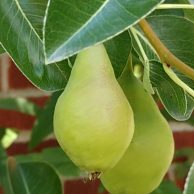
The Environmental Working Group (EWG) publishes an annual ‘Dirty Dozen’ report on toxic residue on non-organic produce, and in the 2024 report PEARS are called out as among the most dangerous to eat. 95% of pears had pesticide residues, and more than 6 of 10 non-organic pears tested by the Department of Agriculture have traces of five or more pesticides, a dramatic jump from earlier tests.
At Harlequin’s Gardens we grow plants naturally, without pesticides [Read More]
Summer Everyday Herbal Tea Blend, by Mitten Lowe
Boulder herbalist and wellness coach Mitten Lowe offers this cooling tea blend. Read more at her website Journey to Wellness.
This is my Summer and late Spring everyday Herbal Blend.
Every time I make it I’m just blown away by how beautiful and delicious it is. My family says that it “tastes amazing” and I was just thinking that I couldn’t agree more.[Read More]
2025 Fall Sale Information & Newsletter!
Dear Friends and Fellow Gardeners,
Welcome to Autumn and to Harlequin’s Gardens 2025 Fall Plant Sale!
Fall is a very good time to plant and establish trees, shrubs and perennials. Planting now gives time for roots to establish while sunlight and heat are decreasing. At this time of year, the energies in plants are being shifted from reproduction and growth, to the roots and to storing energy for the winter. Plants that go into the ground now will be strong and well-rooted by spring, and will be able to take advantage of spring moisture to grow before the weather turns hot and dry.[Read More]
2024 Fall Sale Information & Newsletter!
Dear Friends and Fellow Gardeners,
Welcome to Autumn and to Harlequin’s Gardens 2024 Fall Plant Sale!
Whether we call it xeriscape, water-wise or Western Gardening, it is smart for us to water sparingly in our gardens. Water is a very limited resource, especially here in the West. In May it rained .44” in Boulder and 1.7” in Denver; in June .27” in Boulder, .36” in Denver. And it has been a dry July and hot. If (when) there is a drought and we have trained our gardens for low-water, they will survive. When we have ample rainfall (usually not more than 20”-22” in a year), our gardens will be full of flowers and fruit. Can we really train our gardens for hotter, dryer conditions? Yes. But it’s not as easy as turning on the sprinkler.
[Read More]
What to do with all the Cherries? Make a Pie!
We’re seeing cherries everywhere we go this summer! There were so many on the trees in the Harlequin’s Wholesale area that our Retail Manager Beth just had to make a pie for our co-workers.
We love the pie she made, and we’re sharing the recipe with you.
Celebrating Inter-dependence Day!

It has been almost 250 years since the USA declared its independence from Great Britain, and it IS good that we are no longer a British colony. We could say that that battle was clearly won a long time ago. In 2024 we might see that our current challenge as human beings, and as Americans, is the recognition and realization that we are not separate from our environment or from each other; that we are inter-dependent.
Focusing on our inter-dependence with pollinators and other insects, bacteria and fungi, birds and other creatures, might help us to be better farmers and gardeners. Focusing on our inter-dependence with our air and water might help us to take care of our planet so our children will have a decent place to live. [Read More]
What’s In a Name

Eriogonum umbellatum var. aureum – Kannah Creek® buckwheat, courtesy Plant Select
native, ‘nativar’, variety, subspecies, selection, hybrid, and why you might care
Eriogonum umbellatum. Eriogonum umbellatum var. aureum ‘Kannah Creek’. Aquilegia chrysantha. Aquilegia chrysantha ‘Denver Gold’. Physocarpus monogynus ‘Greylock’. Prunus besseyi ‘Pawnee Buttes’. Shepherdia argentea ‘Silver Totem’. Gaillardia aristata. Gaillardia aristata ‘Meriwether’. Gaillardia aristata BoCo. Gaillardia x grandiflora “Mesa Yellow’. Asclepias incarnata. Asclepias incarnata ‘Cinderella’.
What are gardeners to think when they encounter these plant names? What do the names mean? How can you tell if this plant is the same as its kind that grows in the wild? Is it a native or a “nativar”? [Read More]
Special Plants Now Available

Acantholimon litvinovii
This week we’re featuring a few SPECIAL PLANTS now available in limited quantities.
Prickly Thrift – Acantholimon sp.: a rare xeric steppe native from Turkey to Iran; prickly evergreen mounds 4”-6” high, 12”-24” diameter; very hard to propagate, we almost never have them, and neither does any other nursery. 3 varieties; wonderful, we’ve grown them in our gardens for years.

Yucca nana
Yucca nana: an 8”-12” miniature yucca! Seed rarely available, so we may never have them again. [Read More]
Watering in July
We generally agree that the term “Xeriscape” (water–conserving landscape) applies to plantings watered deeply one a week. However, in July it’s safer to water twice a week. At Harlequin’s Gardens, some of our shrubs and trees are only watered once a month, and twice in July. One of our gardens of mostly native shrubs and trees is never watered.
What does that mean, “water deeply“? It means that when you irrigate by hand or sprinkler or drip, the soil should be moist to a depth of at least 4″. Moisture meters and the old ‘screwdriver test‘ are not as accurate as digging a small hole 4 to 6” deep and feeling the soil. If it is dry at 4″ just after watering, you will need to water longer.
You can water less frequently if:
1-You have added compost to your soil
2-You have added expanded shale (10-20% by volume) to your soil
3-You have inoculated your plant roots (especially at planting time) with beneficial mycorrhizal fungi 4- you have covered your soil with mulch, or if your plants cover and shade the soil.
Do not:
1-Water lightly every day (except if temperatures exceed 95 degrees); it encourages shallow rooting and evaporates rapidly.
2-Water deeply more than twice a week, creating saturated soil that excludes air (plants and beneficial soil life need air as much as they need water).
3-Plant too close together, creating competition for water. It’s better to mulch the gaps between plants while you wait for them to fill in.
4-Mix plants with high and low water needs in the same planting bed.
When you plant in July:
1-Prepare the soil well, incorporating 30% compost (a 1-2” layer spread on top and then dug in to a depth of 6“)
2-Inoculate the roots of the new plants with mycorrhizae, which will vastly improve transplanting success of most species
3-Treat your new ‘babies‘ as if you’d just brought them home from the hospital, i.e. water them frequently, shield them from hot sun with shade cloth or another source of shade until you see new growth. Then you will know that their roots have reached into the surrounding soil.
4-Place a ‘flag‘ next to every new plant so you can quickly see which plants need the most attention. 5- If your soil is very dense clay (a 10“-deep hole holds water for 30 minutes or longer, add expanded shale (10-20% by volume) along with compost.
6-If you’re leaving town, even for just a few days, give your special watering jobs to someone you would trust with your life.
Fire-Wise Landscaping
Fire-wise landscaping should focus on creating a ‘defensible space’ around your home. In “Firewise Plant Materials,” a fact-sheet for the CO Cooperative Extension, F. C. Dennis defines this: “Defensible space is the area between a structure and an oncoming wildfire where nearby vegetation has been modified to reduce a wildfire’s intensity,” and therefore, reduces risk to property.
These modifications could be accomplished by: increasing moisture content, choosing the most fire-resistant plants, spacing plants in smaller, disconnected groups, and proper maintenance and clean-up.
Some specific suggestions:[Read More]
Featured Plant of the Week – Acantholimon
Acantholimon Ready for Sale!
What is Acantholimon, you ask? As a group, their common name is Prickly Thrift, but this genus is anything but common! They are native to the Steppes from Turkey to Central Asia, in conditions similar to ours. Highly prized gems of the rock garden, and especially of the water-wise garden, they form evergreen perennial mounds, cushiony mats or hummocks of evergreen, tightly packed, pointed linear leaves that look downright pettable. Not. Acantholimon are fairly difficult to propagate and are rarely offered by nurseries, even specialty mail-order growers. [Read More]
The Rich Colors of Summer
It’s officially Summertime. We are struggling with an unprecedented June heat-wave and very low precipitation. But along with the heat, sun and lack of significant rainfall, there are some wonderful things happening that we can appreciate and be grateful for, like the bold, stand-out colors of summer blooms! Of the summer-blooming perennials we grow, both native and non-native, many are in bud or starting to bloom, are looking great and are ready now to bring out for sale. They ALL provide important sustenance for our pollinators, from tiny native bees, wasps and flies, to bumblebees, butterflies, and hummingbirds! And most are in 4” ‘deep pots’, easier to establish in the heat of the summer!
Some that we’re adding this week:
Tall Garden Phlox varieties ‘Nikki’, ‘Starfire’ and ‘Laura’
Monarda (Beebalm) ‘Balmy Purple’[Read More]
Grasshoppers, Japanese Beetles, Flea Beetles, Slugs..oh My!
There are plenty of insects that eat plants and these can be damaging. At Harlequin’s we usually recommend supporting plant and soil health, creating diversity and allowing some insect damage before acting. With some pests, it is good to be prepared to act quickly, and sometimes there isn’t a good solution. Even poisons, which we never recommend, can be ineffective.
Here are some safe methods and products we have found helpful.[Read More]
Summer Solstice!
Welcome to Summer! Experientially, summer began last week with several days of intense heat that were challenging for people, pets, other critters, and plants. But in terms of hours of sunlight, the longest day of the year in the Northern Hemisphere will occur this Thursday, June 20 at 2:50 pm here in Colorado, officially beginning our summer season. Mikl has some thoughts on one of the interesting opportunities the Summer Solstice offers for gardeners with trees and shrubs. [Read More]
Summer Pest Management
With Summer come pest problems. Eggs hatch and spores germinate, and plants are food for all of us folks that don’t photosynthesize. So, what can we do? Share and defend, intelligently.
We have been taught to respond to these pest problems with a war-like attitude: point and shoot, poison and kill. At Harlequin’s we do resort to killing when necessary and we do provide non-toxic products that will kill pests, but first, let’s look at a bigger picture.
Harlequin’s Gardens has not used toxic chemical pesticides, fungicides and herbicides in its 32 year history and we have grown and supplied hundreds of thousands of plants to satisfied customers. [Read More]
June is Pollinator Month!
We’re celebrating all month, and we’d love to encourage you to support pollinators in your gardens.
Pollinator Month is a special time for Harlequin’s Gardens – a time when we celebrate the hard work of bees (honeybees, solitary bees, bumblebees) wasps, ants, flies and bee flies, butterflies and moths, beetles, some bats and birds, and some mammals. They’re all around us, connecting the dots between flowers and food.
Come check out our special pollinator display, which is our whole facility! The descriptive signage for most of our plants is marked with bee, hummingbird, and butterfly icons.[Read More]
High Spring Walks on the Wild Side

Yesterday we managed to sneak away from work and visit a couple of the fabulous Open Space parks in the foothills. We were too late to see the Pasque Flowers in bloom, but we were surrounded by botanical treasures, nonetheless. A picture is worth a thousand words, so this will be mostly a photo essay of most of the species we encountered. However, you might want to know that in spite of being difficult or impossible to find in nursery production, quite a few of these native treasures have been offered or are currently offered at Harlequin’s Gardens this year.
June’s Garden To-Dos

Planting, weeding, mulching, watering and amending soil are your key June garden tasks.
The soil is warm enough now for final annual seed sowing and transplanting. Edible crops that need warm soil to germinate (and to keep from rotting), like beans, corn and squash (the Three Sisters!) and okra can be sown direct now.
Nasturtium, marigold, zinnia, sunflower, scarlet runner beans and morning glory seeds can be
sown directly in the soil – for August flowering. For earlier flowers, consider transplanting Cypress Vine, Spanish Flag Vine and Black-eyed Susan Vine (while supplies last).
Great Selection of Dwarf Native Conifers
We finally got a chance to bring out our excellent and unique selection of Native Conifers! Most of them are special dwarf forms that can easily fit in a home garden. These accent plants can give structure and winter interest to elevate your garden design in all seasons.
What’s special about our dwarf conifers? First of all, most of them are Colorado and regional (CO, UT, NM) native species. This makes them easy to grow in Colorado gardens.
Second, most are selections made by the late, great plantsman Jerry Morris, who devoted his career to searching out the dwarf forms of conifers in our forests.
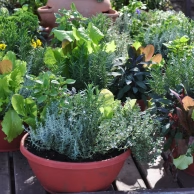
Get Big Results in Small Spaces with Container Gardening

We know that not all of customers live in a house with a yard. Many of you live in apartments or condominiums or townhomes and have only a balcony or a very small patio on which to grow anything outdoors. We would love to help you make the most of your outdoor space, even if it’s tiny.
Many vegetables, ornamental annuals, and most culinary herbs can be planted in almost any kind of container as long as there’s sufficient width and depth to accommodate the roots and enough soil mass to hold sufficient water.
How to Plant in the Heat
It’s not ideal, but sometimes you have to plant in the middle of a heatwave. Fortunately, it can be done successfully, even here in the high, windy and dry zone. High temperatures, wind and strong sunlight cause water to evaporate from plant leaves faster than the roots can take up water.
The key to survival of new plantings is shade – for the plant and for the soil. Here are some tips:[Read More]
A Penstemon Primer, by Mike Kintgen

Penstemon virgatus
Few genera are as synonymous with Western North America as penstemons or beardtongues. The genus is almost entirely native only to North America with the center of diversity falling west of the 100th meridian. Over 250 species are found in North America with one outlier in
Japan. The outlier is often placed in its own genus. Penstemons are native to every state in the union except Hawaii and almost every Canadian province besides Nunavut.
A Few Sought-After Native Plants
Right now, we have our biggest selection of highly desirable plants for the season. Some of them are unusual and available in limited quantities. This includes a number of very choice native perennials that are very hard to find and will sell out fast, like:
Scrophularia macrantha (Red Birds In A Tree) – This rare New Mexico wildflower was first brought into cultivation, and given its delightful common name, by the late, great plantsman David Salman, only a couple of decades ago. Subsequently promoted by the Plant Select program, it won the hearts of native plant gardeners and pollinator gardeners, and is a great favorite of hummingbirds. [Read More]
You’re Invited to Trial Rare Dwarf Tomatoes

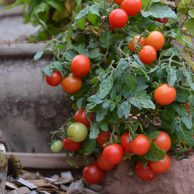
Vilma Tomato courtesy Sara’s Kitchen Garden
A Special Tomato Offer! 2 half-price plants in return for your evaluations!
We know that many of our customers need to grow small but bountiful vegetables in containers.
So we searched out and grew a group of very special, rare varieties of tomato that are specifically intended for growing in containers – Dwarf, Micro dwarf and even hanging tomatoes! They are ready this week, but quantities are limited – only 25 to 60 plants of each variety.[Read More]
Our Community is Special!
So many very special experiences!
We were delighted with the turnout for our May Day festivities and sales, and loved seeing and helping old friends and new, first-time customers and loyal Harlequin’s supporters. The live music and gentle weather kept us all smiling and we so appreciate everyone’s cheerful patience in the check-out line. The Mothers’ Day weekend was equally exciting and heartwarming, and it was preceded by a rare and thrilling display of the Northern Lights on Friday night. We hope many of you were able to see it!
Walks on foothills trails this week reveal the earliest Penstemons (Beardtongues) in our area – the xeric, and showy Sidebells Penstemon (Penstemon secundiflorus). [Read More]
Water-Wise Trees and Shrubs for Sunny Locations
XERISCAPE TREES AND SHRUBS for SUN
Harlequin’s Gardens 303-939-9403 www.harlequinsgardens.com
Note: plants listed in bold are native to our region
TREES
Acer ginnala / Amur maple
Acer ginnala ‘Compacta’ / Dwf. Amur Maple
Acer grandidentatum / Bigtooth Maple
Acer negundo / Boxelder
Acer negundo ‘Sensation’ / ‘Sensation’ Boxelder, male selection
Acer tataricum ‘Hot Wings’ / Hot Wings Tatarian Maple
Aesculus glabra / Ohio Buckeye
Amelanchier utahensis / Utah Serviceberry
Catalpa speciosa / Western Catalpa
Celtis occidentalis / Western Hackberry
Celtis reticulata / Netleaf Hackberry
Crataegus ambigua / Russian Hawthorn
Crataegus crus-galli / Cockspur Hawthorn
Crataegus mollis / Downy Hawthorn
Crataegus monogyna / Singleseed Hawthorn
Crataegus phaenopyrum / Washington Hawthorn
Cupressus arizonica / Arizona Cypress
Gleditsia triacanthos inermis / Honeylocust
Gymnocladus dioica / Kentucky Coffeetree
Juniperus monosperma / One-seed Juniper
Juniperus scopulorum & selections / Rocky Mt. Juniper
Koelreuteria paniculata / Goldenrain Tree
Malus species / Flowering Crabapple selections
Morus alba / White Mulberry
Pinus aristata / Bristlecone Pine
Pinus cembroides edulis / Pinyon Pine
Pinus contorta v. latifolia / Lodgepole Pine
Pinus flexilis / Limber Pine
Pinus ponderosa / Ponderosa Pine
Prunus americana / American Wild Plum
Prunus padus / Mayday Tree, Bird Cherry
Prunus virginiana / Native Chokecherry
Prunus virginiana ‘Shubert’ / Canada Red Chokecherry
Prunus x virginiana ‘Sucker Punch’ / Non-suckering Chokecherry
Pseudotsuga menziesii v. glauca / Rocky Mt. Douglas Fir
Ptelea trifoliata / Wafer Ash, Hop Tree
Pyrus ussuriensis / Ussurian Pear
Quercus bicolor / Swamp White Oak
Quercus gambelii / Gambel Oak
Quercus macrocarpa / Bur Oak
Quercus muehlenbergii / Chinkapin Oak
Quercus undulata / Rocky Mt. Scrub Oak
Robinia neomexicana / New Mexico Locust
SHRUBS
Agave parryi ssp. neomexicana
Amelanchier alnifolia / Saskatoon Serviceberry
Amelanchier aln. ‘Regent’ / Regent Serviceberry
Amelanchier canadensis / Shadblow Serviceberry
Amelanchier laevis / Allegheny Serviceberry
Amorpha canescens / Great Plains Leadplant
Amorpha nana / Dwarf Leadplant
Artemisia cana / Silver Sagebrush
Artemisia filifolia / Sand Sagebrush
Artemisia tridentata / Tall Western Sagebrush
Artemisia versicolor (canescens) / Seafoam Sage
Atriplex canescens / Four Wing Saltbush
Atriplex confertifolia / Spiny Saltbush
Buddleia alternifolia ‘Argentea” / Silver Butterfly Bush
Buddleia dav. nanhoensis cultivars / Compact Butterfly Bush
Buddleia davidii cultivars / Butterfly Bush
Caragana arborescens / Siberian Peashrub
Caragana pygmaea / Pygmy Peashrub
Caryopteris x clandonensis cultivars / Blue Mist Spirea
Ceanothus fendleri / Mountain Lilac
Ceratoides lantana / Winterfat
Cercocarpus brevifolius / Little-flowered Mt. Mahogany
Cercocarpus intricatus / Littleleaf Mountain Mahogany
Cercocarpus ledifolius / Curl-leaf Mountain Mahogany
Cercocarpus montanus / Common Mountain Mahogany
Chamaebatieria millefolium / Fernbush
Chrysothamnus n. ssp. graveolens / Tall Grn. Rabbitbrush
Chrysothamnus naus. ssp. albicaulis / Tall Blue Rabbitbrush
Chrysothamnus naus. ssp. nauseosus / Dwf. Blue Rabbitbrush
Chrysothamnus viscidiflorus / Dwf. Grn. Rabbitbrush
Cotinus coggygria / Smoke Tree
Cotinus coggygria ‘Royal Purple’ / Royal Purple Smoke Tree
Cotinus x ‘Grace / ‘Grace’ Smoketree
Cotoneaster divaricatus / Spreading Cotoneaster
Cotoneaster lucidus / Peking Cotoneaster
Cotoneaster multiflora / Big-flowered Cotoneaster
Cowania mexicana (Purshia stansburyana) / Cliffrose
Cytissus purgans ‘Spanish Gold’ / Andora Broom
Cytissus scoparius ‘Moonlight’ / Moonlight Broom
Ephedra americana / American Ephedra
Ephedra viridis / Mormon Tea
Fallugia paradoxa / Apache Plume
Forestiera neomexicana / New Mexico Privet
Genista lydia / Lydian Broom, Dwarf Broom
Genista tinctoria / Woadwaxen
Hesperaloe parviflora / Red Yucca
Hippophae rhamnoides / Sea Buckthorn
Holodiscus dumosus / Rock Spirea
Ligustrum vulgare ‘Cheyenne’ / ‘Cheyenne’ Privet
Ligustrum vulgare ‘Lodense’ / Lodense Privet
Lonicera k. v. floribunda ‘Blue Velvet’ / Blue Velvet Honeysuckle
Lonicera syringantha v. wolfii / Tiny Trumpet Honeysuckle
Lonicera tatarica selections / Shrub Honeysuckle
Mahonia aqu. Compactum / Compact Oregon Grapeholly
Mahonia aquifolium / Oregon Grapeholly
Mahonia fremontii / Fremont’s Mahonia
Mahonia haematocarpa / Desert Holly
Opuntia species / Cholla Cactus
Perovskia atriplicifolia / Russian Sage
Philadelphus lewisii / Lewis Mockorange
Physocarpus opulifolius cultivars / Ninebark
Juniperus communus/Common Juniper selections
Prunus besseyi / Western Sandcherry
Prunus besseyi ‘Pawnee Buttes’ / Pawnee Buttes Sandcherry
Prunus besseyi ‘Boulder Weeping’ / Boulder Weeping Sandcherry
Prunus tenella / Dwarf Russian Almond
Purshia tridentata / Antelope Bitterbrush
Pyracantha coccinea / Firethorn
Rhamnus smithii / Smith’s Buckthorn
Rhus aromatica / Fragrant Sumac
Rhus glabra / Smooth Sumac
Rhus glabra v. cismontana / Rocky Mt. Sumac
Rhus trilobata / Threeleaf Sumac
Rhus typhina / Staghorn Sumac
Rhus typhina laciniata / Cutleaf Staghorn Sumac
Ribes aureum / Native Golden Currant
Ribes cereum / Wax Currant
Ribes odoratum / Golden Currant
Robinia neomexicana / New Mexico Locust
Rosa ‘Alba Maxima’
Rosa ‘Alba semi-plena’
Rosa ‘Alba Suaveolens’
Rosa ‘Felicite Parmentier’
Rosa ‘Fruhlingsgold’
Rosa ‘Golden Wings’
Rosa ‘Harison’s Yellow
Rosa ‘Henry Kelsey’
Rosa ‘John Cabot’
Rosa ‘John Davis’
Rosa ‘Konigen von Danemark’
Rosa ‘Lawrence Johnston’
Rosa ‘Maiden’s Blush’
Rosa “Banshee”
Rosa arvensis
Rosa ‘Complicata’
Rosa eglanteria / Sweetbriar
Rosa foet. Persiana / Persian Yellow Rose
Rosa foetida bicolor / Austrian Copper Rose
Rosa glauca (rubrifolia) / Redleaf Rose
Rosa hugonis / Father Hugo’s Rose
Rosa woodsii / Wood’s Rose
Rosmarinus officinalis ‘Arp’ / Arp Rosemary
Shepherdia argentea / Silver Buffaloberry
Robinia neomexicana / New Mexico Locust
Spiraea ‘Cheyenne Snowmound’
Spiraea jap. ‘Goldflame’ / Goldflame Spirea
Syringa patula ‘Miss Kim’ / Miss Kim Dwf. Korean Lilac
Syringa prestoniae cultivars / Canadian Lilacs
Syringa vulgaris cultivars / Common Lilacs
Yucca baccata / Banana Yucca
Yucca filamentosa / Adam’s Needle
Yucca glauca / Native Soapweed, Narrowleaf Yucca
Yucca harrimanii / Harriman’s Dwf. Yucca
2024 Harlequin’s Gardens’ Roses

2024 Rose Availability List
-

Austrian Copper
Above and Beyond
- Austrian Copper – (f. bicolor)
- Autumn Damask
- Autumn Sunblaze
- Banshee
- Bridal Sunblaze
- Brilliant Veranda
- Burgundy Ice
- Campfire
- Carefree Delight
- Carefree Spirit
- Carefree Wonder
- Celestial Night
- Champlain
- Charles Darwin
- Coral Cove
-

Darlow’s Enigma
Cream Veranda
- Darlow’s Enigma
- Denver’s Dream
- Dortmond
- Double Knockout
- Earth Angel
- Emily Carr
- Fairmount Proserpine
- Felix Leclerc
- Fire Meidiland
- Firecracker Kolorscape
-

Golden Wings
Fred’s Loads
- Gertrude Jekyll
- The Gift
- Golden Opportunity
- Golden Wings
- Gourmet Popcorn
- Henry Kelsey
- Heritage
- Hope for Humanity
- Iceberg
- Jeanne Lajoie
- JoAn’s Pink Perpetual
- John Davis
- Lady In Red
- Laguna
- Lemon Fizz Kolorscape
-

Morden Sunrise
Lilian Austin
- Mandarin Sunblaze
- Mary Rose
- Millie Walters
- Morden Sunrise
- Mountain Mignonette
- Petite Peach
- Quadra
- Red Ribbons
- Robusta
- Scarlet Meidiland
- Sophy’s Rose
- Sunbeam Veranda
- Sweetbriar Rose
- Sweet Chariot
-

Victorian Memory
Tess of the d’Urbervilles
- Valentine’s Day
- Victorian Memory
- White Meidiland
- William Baffin
- Winchester Cathedral
- Winner’s Circle
- Zephirine Drouhin
Grow Your Own Vegetables for Nutrient-Dense Food
An article in the Guardian caught our eye with the alarming headline ‘Vegetables are Losing Their Nutrients’. It begins with the findings in a 2004 University of Texas study showing dramatic declines in the nutrient content of 43 foods, mostly vegetables, between the mid and late 20th century: green beans have seen a nearly 50% drop in calcium, while asparagus has lost almost half its Vitamin A content.
Compost Tea and a New Organic Compost!
Our compost tea will be ready this week, hopefully by Friday. Our tea has always been good, but this year we are working on making it even better. Please let us know if you can see good results from using it, and if it seems to be more effective.
Say Hello to ECOPLUS Organic Compost! We are replacing our A-1 Eco-Grow compost with the newly-available ECOPLUS Organic Compost, an OMRI certified organic compost made by A-1 Organics in Colorado.[Read More]
Daphne Shrubs

They’re hardy, evergreen, fragrant, gorgeous! Some of you are familiar with Daphne ‘Carol Mackie’, a much sought-after semi-evergreen shrub with cream-edged leaves that try to be evergreen all winter but usually defoliate by February.
But there are less well-known, compact, mounding Daphne shrubs, like ‘Lawrence Crocker’ and D. neapolitanum that are much easier, completely evergreen, and even more gorgeous and fragrant, and we’ve got some very nice ones right now! [Read More]
Potted Spring Bulbs!
Miss planting bulbs last fall? No worries, we’ve got you covered. Choose from miniature daffodils, chionodoxa, hyacinth, tulips and more.
You can enjoy these in their pots while they bloom and plant in-ground later, or plant the blooming flowers now. Either way, you’ll have blooms for years to come!
The Fullness of Spring
The fields and the foothills are turning green! So many trees are blooming or beginning to leaf out! There is so much energy bursting forth everywhere I look! After the lovely rain last weekend we emerged from our Sunday class to be greeted by the singing of frogs in a big puddle in the parking lot! How can they develop that fast???
To help celebrate Spring, we’ve got a really exciting line-up of local live music and dance for this coming weekend and for Mother’s Day, too! And some great deals on beautiful, Harlequin-grown, pesticide-free plants.
Blown Away!

It could have been worse. We are grateful that the severe winds didn’t cause any fires, blow down very many trees, kill or maim anyone (at least not that we’ve heard) or tear off roofs. It must have been a terrible time for anyone that was unhoused.
We lost one small hoophouse that was empty at the time, but the others made it through with little damage. And we were forced to stay closed on Saturday with no electricity, no heat, no water pumps, no internet and no phone. Our huge thanks go to the customers who came out on Sunday and helped us recoup a bit of our Saturday losses. Our phone and internet are still down, but we were blown away by the gracious patience of our customers as we tallied their purchases by hand and if they didn’t have cash or checkbooks, we wrote down their information so we can call them and complete credit card transactions over the phone when we have our service restored. We will continue to provide this service until our internet service is back, and we hope you will come and shop at Harlequin’s with cash or checks. [Read More]
April Garden To-Dos
There’s much to do in the garden in April, from finalizing your garden plan, attending to your tools, to the annual spring clean up and pruning and lawn and vegetable garden prep, and PLANTING, DIVIDING and TRANSPLANTING!
We have your checklist and the information and products you’ll need this month, here.
New In Store This Weekend

Cherokee Purple
THE FIRST TOMATOES!
Anasazi
Black from Tula
Black Krim
Bush Early Girl
Cherokee Purple
Glacier
Green Zebra
Large Red Cherry
Mexico Midget
Moskovitch
Pink Berkeley Tie Dye
Pink Brandywine
San Marzano II
Sun Gold
Taxi
ANNUALS
Poppies: Papavar glaucum (scarlet), Papavar paeoniflorum (“Purple Peony” and “Violet Blush”), Papavar somniferum (“Heritage”)

Yellow Wonder, courtesy PracticalSelf Reliance.com
FRUIT
Strawberries: Fragaria vesca, Alexandria Alpine Strawberry and Yellow Wonder Alpine Strawberry
HERBS
Chives; Cilantro; Mint ‘Kentucky Colonel”; Greek Oregano; Creeping and Arp Rosemary; Lemon and German Winter Thyme; Stinging Nettle
PERENNIALS
Agastache, Blue Fortune Anise Hyssop
Aquilegia barnebyi, Barneby’s Columbine, native
Aquilegia chrysantha, Yellow Columbine, native
Berlandiera lyrata, Chocolate Flower, native
Coreopsis lanceolata, Sterntaler, native
Delosperma nubigenum, Yellow Hardy Iceplant
Dianthus arpadianus
Digitalis x mertonensis, Strawberry Foxglove
Eriogonum umbellatum, Sulfur Flower, native
Gaillardia aristata BoCo, Yellow-rayed Blanket Flower, native
Gaillardia grandiflora ‘Goblin’, Dwarf Blanket Flower
Gallium odoratium, Sweet William
Hablitzia tamnoides, Caucasian Spinach Vine
Lallemantia canescens, Dragon Head
Monarda fistulosa, Bee Balm, native
Monarda ‘Jacob Cline’
Oenothera berlandieri, ‘Siskyou Pink’
Perennial Poppies – Papavar nudicaule, Icelandic Poppy ‘Champagne Bubbles’, ‘Matador’ (scarlet), ‘Meadow Pastels’; Papavar orientale ‘Beauty of Livermere’ (deep red), ‘Brilliant’ (scarlet), ‘Fruit Punch’, ‘Prince of Orange’, ‘Princess Victoria Louise’ (salmon pink)
Physaria bellii, BoCo, Bell’s Twinpod, native
Ratbida columnifera, Yellow Prairie Coneflower, native
Salvia nemorosa, ‘East Friesland’, ‘Cardonna’
Scabiosa columbaria, ‘Flutter Blue’
Thymus, creeping thyme ‘Pink Chintz’; praecox ‘Elfin’, serpyllum ‘Magic Carpet’
Veronica ‘Waterperry Blue’
VEGETABLES
Nutribud Broccoli, OP
Radicchio ‘Fiero’
Rhubarb ‘Glaskin’s Perpetual’
Big Sale on some Great Trees!

Japanese Tree Lilac, courtesy Morton Arboretum
While supplies last (some in very short supply)! All are container-grown so they have complete root systems, ready to adapt to and grow in your garden right away!
Japanese Tree Lilac, 5 gallon @ $60 (was $140)
Compact, water-wise patio/accent tree, very showy large ivory flower clusters, cherry-like bark, cold-hardy to Zone 3

Snowdance Tree Lilac, courtesy FirstEditions
Snowdance Tree Lilac, 15 gallon @ $80 (was $140)[Read More]
Pansies and Violas available now!
PANSY VARIETIES:

Pansy Ullswater
Ullswater
Claret
Jolly Joker
Silverbride
Beaconsfield
Frizzle Mix

Pansy Jolly Joker courtesy National Garden Association
Ultima Morpho
VIOLAS:
Chantryland
White Perfection

Viola Chantryland courtesy National Garden Association