Herbal Tea
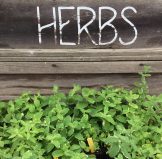
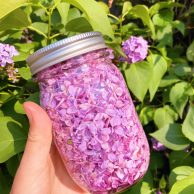
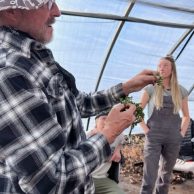
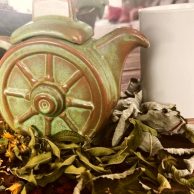
Herbal Teas are some of the best home-grown medicines! This time of year infusions of herbs from Harlequin’s Gardens plants you’ve grown can keep you well, and warm.
We’re Open Tues–Sun, 9-5, through October!
Memberships & Gift Certificates – available online
See our seasonal hours and address below • Read our latest e-newsletter!
Help Support Our Mission: GoFundMe

Herbal Tea
Herbal Teas are some of the best home-grown medicines! This time of year infusions of herbs from Harlequin’s Gardens plants you’ve grown can keep you well, and warm.

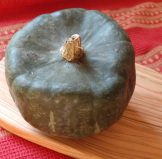
Buttercup, one of the sweetest squash with dry, golden flesh.
This past season Harlequin’s offered several delicious varieties of pumpkin and winter squash, from arguably the finest tasting pie pumpkin, Winter Luxury, to Buttercup, Butternut and Kabocha.. With cold weather on the way, this week is the perfect time to try a nourishing recipe with your harvests (just in time for Thanksgiving!).
Here’s a recipe from Boulder’s Mitten Lowe and Journey to Wellness for Apple Cider-Glazed Butternut Squash. It’s sure to keep you warm from the inside out. [Read More]

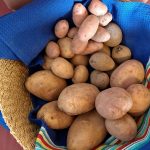
German Butterball, Nicola, Purple Majesty, Harvest Moon, Sangre (all certified seed potatoes from the San Luis Valley).
Potatoes should be in soon! Call before you come to be sure we have them!
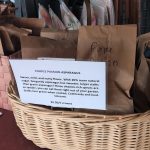
ONIONS – In Store Now!In bundles – Patterson, Redwing, Walla Walla. In store now!
In pots – Ailsa Craig, Red Long of Tropea, Red Marble and Gold Coin cipollini, Rossa di Milano, Walla Walla. In store now!
LEEKS: King Richard, Blue Solaise.
SHALLOTS: Crème Brulee, Zebrune.

Jersey Knight – All-male hybrid with big spears, doesn’t produce seeds so doesn’t become weedy. Best selection for dense clay soils. Very productive & disease resistant. Cold-hardy to Zone 2 (5 crowns per bag)
Purple Passion – Beautiful deep burgundy spears with high sugar content and antioxidants. Delicious, tender, less fibrous, great raw, turns green when cooked (5 crowns per bag).
for more descriptions, click here and scroll down to Asparagus, Onions and Potatoes!

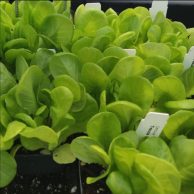
Spinach Start
Q: Can I plant now?
A: It depends!
Yay! Warm days remind us that the threat of frost will soon be gone! If you’re planting hardy perennials, shrubs, vines, grasses or trees, you’re good to go now (as long as your soil isn’t too wet to work). Our stock of seeds and starts for cool-season greens like arugula, spinach, chard, kale and lettuce are in and ready to plant. And you can get a head start on tomatoes!

We’re bringing you a fantastic selection this year!
ARTICHOKE: Imperial Star
ARUGULA: Wild, Astro (spring), Ice Bred (fall)
ASIAN GREENS: Tatsoi, Pak Choi, Mustards, Mizuna, Senposai, Shiso and more!
BROCCOLI: Fiesta, Nutribud, Aspabroc, Sorrento Broccoli Raab, Piracicaba
CAULIFLOWER: De Purple, Snow Crown
BRUSSEL SPROUTS: Speedia
CABBAGE: Red Acre, Red Express, All Seasons
CELERY: Ventura
CELERIAC: Brilliant
CUCUMBERS: Lemon, Marketmore 76, Armenian, Nat’l Pickling, Silver Slicer, Spacemaster 80, Shintokiwa, and more!

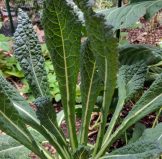
Lacinato Kale
KALE: True Siberian, Red Russian, Dinosaur/Lacinato, Dazzling Blue, White Russian, Baltisk Red, Dwarf Blue Curled, & more!
LETTUCE: Several varieties of each type – Leaf, Butterhead, Romaine, Oakleaf, Batavian, Dwarf, Mixed, Mesclun
RHUBARB: Glaskins Perpetual, Victoria, Canada Red
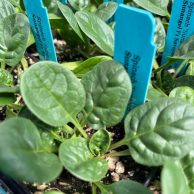
SPINACH: Caucasian Climbing Perennial (Hablitzia tamnoides), Bloomsdale, Giant Nobel, Lavewa, & more!
SWISS CHARD: Bright Lights, Seafoam, Fordhook Giant, Perpetual Spinach, Ruby Red Rhubarb, Rainbow
MELON: Minnesota Midget, Tuscany, Noir des Carmes
PUMPKIN: Casper, Cherokee Bush, Cinderella, Jarrahdale, Winter Luxury
SUMMER SQUASH: Black Beauty, Costata Romanesca, Dirani, Cocozelle, Jackpot, White Bush Lebanese, Tromboncino, Jaune et Verte Scallop, Yellow Summer
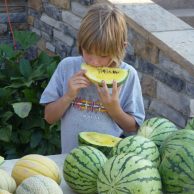
WATERMELON: Early Moonbeam, Golden Midget, Sweet Dakota Rose, Sugar Baby
WINTER SQUASH: Kabocha, Stella Blue, Spaghetti, Uncle David’s Buttercup, Tuffy Acorn, Table Queen Acorn, Honeyboat Delicata, Sweet Dumpling, Butter Baby Butternut and more!
PLUS: Amaranth, Bulbing Fennel, Collards, Endive, Escarole, Ground Cherry, Kohlrabi, Okra, Tomatillo, Radicchio, Watercress & more!
And LOTS of HERBS, both Culinary, Medicinal – Many varieties of THYME, LAVENDER, BASIL, MINT, ROSEMARY, SAGE, OREGANO, CHIVES, plus Parsley, French Tarragon, Cilantro, Dill, Fennel, Lemon Balm, Lemon Thyme, Lime Balm, Marjoram,, Lemon Grass, Vietnamese Coriander, Pineapple Sage, Lemon Verbena, Borage, Savory, Lovage, Cutting Celery, Catnip, Calendula, Aloe, Greek Mountain Tea, Comfrey, Echinacea , Feverfew, Lobelia, Valerian, Motherwort, Mullein, Sweet Leaf, Lomatium, Hyssop, Anise Hyssop, Plantain, Clary Sage, Skullcap, Arnica, Sheep Sorrel, Self-Heal, Rue, Mugwort, Wormwood, and more.
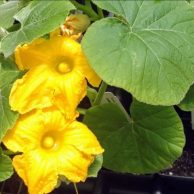
Go to www.HarlequinsGardens.com/Plants/edibles/Vegetables for excellent descriptions of the hundreds of varieties we offer!
We think we are so smart, in a clever way, but these plants have been breeding microbes for centuries which has resulted in wise evolutionary traits that they have developed.
Walter Goldstein, Mandaamin Institute

Our friend Clark has turned what used to be a family hobby into a full-time business. In his Longmont studio, he makes a delightful cast beeswax candles that come in a wonderful variety of shapes and sizes, including a number of designs that are cast in antique and modern European candle molds. In addition, we are offering Amber Lights hand-dipped beeswax taper candles and Hanukkah candles.
Amber Lights candles are highly decorative, wonderfully detailed, naturally endowed with a heavenly honey scent, and burn clean and smokeless.

Hanukkah begins Wednesday, December 14th. A set of dripless, smokeless, hand-dipped beeswax candles from Amber Lights contains all the candles you’ll need to light the Menorah through the entire 8-day holiday. And they smell wonderful! And they come in a lovely blue mesh bag. And they are Local. And if you have no use for Hanukkah candles, we have everything from birthday candles to 6″ pillars, bee-skeps to Buddha heads, Deco to dragons, reindeer to roses, all beautifully crafted from our friend Clark at Amber Lights.

Avian Designs – Longmont artist Amy Gates of Avian Designs enjoys combining her love of the earth and her creative side into making unique up-cycled leather and vintage tin jewelry. By using repurposed items like thrifted leather/suede jackets and vintage cookie tins, she is able to take something old and discarded and give it new life by making it into wearable art! Avian Designs donates 5% of all sales The Trevor Project, a non-profit organization which focuses on suicide prevention among LGBTQ+ youth.
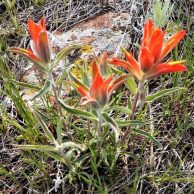
Harlequin’s Huge Selection of pollinator-supporting Native Perennials-including:Castilleja integra – Indian Paintbrush – Brilliant scarlet-orange early summer hummingbird magnet, challenging
Allium cernuum – Nodding Onion – 1’+ tall graceful, nodding scapes of light to deep pink flowers are bee-loved
Heterotheca pumila – Alpine Goldenaster – a rare Rocky Mt. subalpine/alpine wee mound dotted with golden daisies for the butterflies and bees
Hymenoxys argentea, H. scaposa – Perky Sue – Lemon yellow daisies dance above tight linear foliage clumps, xeric
Native Yarrow- clusters of white flowers for pollinators, strong spreading for natural lawn; herb-medicine, supports many native beneficials and pollinators
Lithospermum multiflorum – very pretty, small golden yellow trumpets on 18” shrublet for part shade; north or east exposure. Foothills native no other nursery carries

Scarlet Gilia
Scarlet Gilia- Ipomopsis aggregata- red trumpets on 2’-3’ stems call in the hummingbirds; very show in the garden
Native Campanula rotundifolia- sweet blue bells on 12”-16” stems for pollinators; tough in dry part shade
Sulfur Flower–Kannah Creek, Eriogonum umbellatum, E. jamesii: yellow pom-pom flowers are important to butterflies, best native ground cover
Asclepias incarnata & Asclepias tuberosa – Butterfly Weed, pretty flowers, 1’-2’ high, essential Monarch butterfly food
Native Bee-Balm –Monarda fistulosa: Showy purple blooms bring bees, hummers, butterflies; deer-resistant

Penstemon secundiflorus (Sidebells Penstemon)
Many Penstemons including:
P. virens: 2”x 8”, short spikes of blue flowers; shiny, dark evergreen leaves
Penstemon secundiflorus: violet-pink flowers, silvery foliage, long lived local wildflower and dozens of other species!
Many Columbines including: Rocky Mt., Denver Gold, Western Red, Barneby’s, and more!
Purple Prairie Clover – long lived xeric native loved by many bee species, bright purple-pink, nitrogen-fixing.
Gaillardia aristata- BlanketFlower – beautiful 2″ yellow daisies with notched petals, red centers, can bloom all summer, drought-tolerant. We have the local genotype
Liatris punctata-Gayfeather – butterfly essential late summer/fall, 1′ tall purple spikes, xeric

Oenothera caespitosa
Oenotheras-Evening Primroses – O. caespitosa (Tufted Evening Primrose) – gorgeous big fragrant white blossoms age pink
Chocolate Flower – 12″ x 24″ wide, yellow daisies with chocolate fragrance, very xeric, blooms all summer
Sphaeralcea munroana: Hardy, 18” vivid orange blooms all spring, bee-loved, low-water, silver leaves, rare
Erysimum wheeleri/Wheeler’s Wallflower: Tall, long-blooming biennial, vivid burnt-orange flowers, HG exclusive!
Engelmannia peristenia/Engelman Daisy: Plant Select, neat golden daisies all summer, 18”h low-water beauty
Townsendia hookeri & kin: Native ‘Easter Daisies” grow dry, begin bloom super-early in neat little clumps
Echinacea angustifolia/Narrow-leaf Coneflower: premier immune herb, large pink or white summer blooms on tall stems bring butterflies, finches
Agave Neomexicana ‘Big Blue’-bold, often blue broad blades with sharp spine at the end, evergreen, showy
Native Pussytoes, Aster, Skyrocket Ipomopsis, Blazing Star, Navajo Tea, Prairie Sundrops (Calylophus serrulatus) and many more!
Many Agastaches –Blue Fortune, A. rupestris, A. foeniculum, Coronado and ‘Ava’
Sage: culinary, Purple, Berggarten, Blue Hill, May Night, Caradonna, Furman’s Red, Mojave, S. azurea, S. argentea
Dianthus – Tuscan Honeymoon-grassy foliage, 2’-3’ stalks of pink flowers late summer; D. gratianopolitanus – very tough groundcover. very fragrant pink flowers, durable; D. Blue Hills – the bluest foliage, fragrant flowers, 12” diameter; D. Petraeus noeanus – Jasmine Dianthus, powerfully fragrant

Geranium ‘Rozanne’
Hardy Geraniums – Biokovo, Splendens, St. Ola, Crystal Rose, Cambridge, Ballerina, G. macrorrhizum, G.sanguineum
Echinacea purpurea, Magnus, White Swan, E. tennesseensis, E. pallida, E. paradoxa, E. angustifolia
Rosemary – Arp, Madeline Hill, Tuscan Blue, Prostrata
Harlequin’s Silver Germander (2024 Plant Select!) T. rotundifolium, T. chamaedrys
Many Lavenders – Royal Velvet, Grosso, Twickle Purple, Munstead, Hidcote, Thumbalina Leigh, Vera, Wee One
Ornamental Oregano – Kent’s Beauty, Amethyst Falls, etc, cascading groundcovers, long blooming, bee-loved.
Plus: Scabiosa Fama, Sedum nevii, Corsican Violet, Limonium gmelinii, Lallemantia canescens, Firefly Coralbells, various Iris, many sedums, several creeping Veronicas, Liatris, Plumbago, Amsonia and even Daphnes
Campanulas, Townsendias, Delospermas, , Physaria, Daphnes, Asphodeline, Aethionema, Hosta Venusta, Dwarf Iris, Erigerons, Erodiums and more

Papaver ‘Lauren’s Grape’
Snapdragon, Marigolds, Lauren’s Grape Poppy, Petunias, Datura, Pansies, Calif. Poppy, Nicotiana, Salvias, Honeywort and many more!
Don’t be fooled by the title; a lot of the area covered is in Colorado, including Denver, Boulder and Ft. Collins. This is a very good plant ID book from by Mary O’Brien and Karen Vail with interesting descriptions. In addition, it’s an excellent herbal, giving both medicinal and edible uses. Highlighted in yellow are important “cautions”. It is presented in a respectful way honoring nature as did the Ute Indians who pioneered the use of these plants. For example, did you know that Gambel Oak “…is a good back country first aid plant to know, using the leaves as a poultice or wash for insect bites and wounds, or chewing a piece of the bark for toothaches….” Good photos. These local gals really know their stuff and we highly recommend their book!
Still looking for the Perfect Gifts for Gardeners?
Gift Certificates and 2026 Memberships are sure to please this holiday season! We want to express our thanks and gratitude to all 2024 members, and to invite you to become a 2026 Member today.[Read More]

Eunjoo Kang is a master ceramicist. Her work is rooted in the traditions of Korean art, inspired by the natural world, and shaped by a love for storytelling. Kang explores human emotion, spirit, and memory through clay and often draws on the textures and forms of nature, as well as the subtle expressions of the human face and figure. She shares, “Through my art, I want to share a sense of wonder, simplicity, and warmth. I hope to connect with others in a way that goes beyond words”.
Her necklaces and earrings are sure to delight you!

Amethyst Clusters are said to calm the mind, to deepen spiritual connection, and even to strengthen the immune system. They are often used in Feng Shui to clear negative emotions. We think these hand-selected clusters look great on a windowsill among houseplants!

Jen Grant creates these cheerful and artful flags with her original designs. Display your affection for wildflowers, bees, birds, bicycles, etc. by garlanding a doorway, deck, porch, window or wall. She makes her original block-printed designs on cotton fabric in Lafayette, CO.
SOIL BIOLOGY
Big Foot Mycorrhizae – combines 4 species of mycorrhizae with biochar, worm castings, seaweed, and rock minerals to provide a strong population of plant allies to bring water and nutrients. NEW
Endo Mycorrhizae – water soluble symbiotic fungus, inoculate roots to bring water and nutrients. Easy to use and very effective. Good for shrubs and trees, veggies too; dissolve in water, wet roots
Myke Vegetable and Herb–enhances growth, development & production; wet roots and dust on the powder or sprinkle in seed row to improve germination

Susan at Garden Anatomy is a friend to Harlequin’s staffers. Her love of gardening blended with her desire for a beautiful, functional gardening toolbelt resulted in some of the prettiest toolbelts we’ve seen. We’re glad to bring them to you at this year’s market.

Eve’s friend Sue Hagedorn is a Longmont fiber artist. She has brought us a large assortment of beautiful indigo-dyed scarves and up-cycled clothing. Many of these one-of-a-kind garments are from high-quality fashion brands.
An Anchorage, AK native, she became interested in indigo dyeing at a workshop there and was drawn to its healing and quiet contemplative properties. She has explored the traditional Japanese art of Shibori (a method of folding and tying to produce dye-resist patterns), and dyeing with a variety of natural materials on natural fiber fabrics, table linens, clothing and paper of all kinds. Sue also teaches indigo dye workshops outdoors during the warm months.

Praying Mantis Egg Case
It’s the time of year when we’re itching to begin planting for the season and preparing for this year’s growth. But hold onto those shears! We know that regeneration is occurring in our soil, with microbes and overwintering insects. Delaying Spring cleanup for another few weeks will ensure a healthy, vibrant ecosystem that best supports your plants. Here are tips for you to best help this process take place, while still having an aesthetically pleasing garden. [Read More]
Circa 1857, this delicate-looking yet easy-growing North American native has composite 3″ globes of star-shaped, sparkling white flowers with pale lavender stamens tipped with purple anthers and sturdy stems.
Bloom time: May/June. 12″ to 16″ tall. Zone 4-8.
We are coming to the end of Harlequin’s 30th year in business and in service to the community. We are so grateful that you have supported us all these years. You have found us in our hidden location, told your friends about us, planted our native flora, xeriscape and pollinator-supporting selections and organic veggie starts, and supported your soil life with our help. This partnership over 30 years has made a difference in our local ecology and in people’s individual lives. Our dedication to organic gardening has been multiplied by thousands of you. [Read More]
In tandem with the close of October, our 2022 Fall Sale will end this Sunday at 5pm. Before then, be sure to take advantage of our Fall Sale Discounts, which can help you achieve your end-of-season gardening goals with plants and soil products that are 30% off! (Sale exceptions listed below.)
The TREES we sell are smaller than ball & burlap trees that are dug in the field, leaving at least 75% of their roots in the ground. Ours are grown in a container so they have a complete root system and begin growing immediately and are not stressed. Selected for resilience and success in Colorado and global warming and difficult conditions.
Russian Hawthorn

Very tough and xeric, grows 15’ high and wide, white flowers and red berries, loves Colorado
Rocky Mt. Maple
Native to our foothills, likes to grow in the protection of other trees, red fall color, 10’-15’
Gambel Oak and Wavyleaf Oak
Both natives that grow 10’-15’, with little water and poor soil, support birds
Hackberry
Good shade tree to replace an ash, a fast-growing hardwood, the most drought tolerant shade tree
White Mulberry
The hardiest mulberry, 25-30’ tall and wide, very xeric, white fruit is tasty and does not stain

Chokecherry. Credit: CO Springs Utilities Xeriscaping
Golden Rain Tree
25′ xeric tree with golden flowers in July, lantern-like pods, seeds abundantly
Chokecherry
Native, suckering tree to 15′-25′ with white flowers, edible fruit; great for birds and butterflies
Sucker Punch Chokecherry
Leaves start green then turn red all season, non-suckering, white flowers, berries
Silver Buffaloberry (Shepherdia)
10′ native tree with edible red fruit, silver leaves, very xeric, few thorns
Mayday Tree (Prunus padus)
20′-30′ with clusters of white flowers, then bird fruit, fast screen

Catalpa speciosa
Catalpa
40′-50′ with vertical habit, orchid-like flowers, huge round leaves, 12″ beans, xeric and special
Arizona Cypress
20′-30′ evergreen, blue foliage is fragrant, not scratchy, quite fast growing, bird favorite
Plus, Honeylocust, Flowering Crab Apples, Silver Maple, Bur Oak, Thornless Cockspur Hawthorn, Aspen, Ptelea (Wafer Ash), Kentucky Coffee Tree, Ohio Buckeye, Autumn Brilliance Serviceberry, Hot Wings Maple, Native Birch, and many more.
This is such a nice time of the year to putter in the garden! It’s also a good opportunity to look ahead and amend your planting beds and lawn for Spring 2023. Our Fall Sale Discounts can help you achieve your end-of-season gardening goals with plants and soil products that are 30% off! (Sale exceptions listed below.)
Spring is here and the time is right for dancing in the garden – to stay warm!
You can also work up a mild sweat by beginning your spring clean-up. If you have not yet sheared back your cool-season grasses, like Alkali Sacaton, Appalachian Sedge, June Grass, Korean Feather Grass, Karl Foerster’s Feather Reed grass and other Calamagrostis varieties, now is the time. And if you have any Clematis vines that are categorized in Pruning Group 3, February and March are the best times for cutting them back to 1 set of growth nodes above the ground.
We’re celebrating all month, and we’d love to encourage you to support pollinators in your gardens.
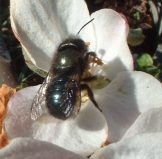
Pollinator Month is a special time for Harlequin’s Gardens – a time when we celebrate the hard work of bees (honeybees, solitary bees, bumblebees) wasps, ants, flies and bee flies, butterflies and moths, beetles, some bats and birds, and some mammals. They’re all around us, connecting the dots between flowers and food.
Come check out our special pollinator display, which is our whole facility! The descriptive signage on most of our plants is marked with bee, hummingbird, and butterfly icons, and you might notice that almost everything is important to bees, of which we have over 500 species here in Boulder County alone. Even our native bunch grasses can provide nesting sites for bumblebees in the dried leaves at the bottom. [Read More]

Photo credit: Plant Select®
Our shrubs are all given great care here at the nursery, but occasionally we find some that have a little damage or are sulking because they really want to get out of the pot and into the ground. To help them all find good homes where they will grow and prosper, we are bringing out these ‘seconds’ at substantially discounted prices. We will continue to bring out more as they sell.
Right now, we are offering: [Read More]

Our 2022 Big Fall Sale continues, with 30% off most plants!
Sept. 20 thru end of the season take 30% off perennials, shrubs, roses, and trees, and 30% off soil products in big bags, and Compost Tea. (No discount on fruit trees, veggies, bulbs, 2023 seeds, or Holiday Market Books).
In our experience, fall is the most successful time to establish most plants, especially when mycorrhizae are applied to the roots during planting (and we’re well stocked with several types of mycorrhizae!). We have a large and diverse selection of perennials, particularly in larger quart and gallon sizes, that are ready for planting. (Photo: Grass Calamagrostis brachytricha)
Daylilies are old favorites for good reasons. They are:
Low maintenance
Cold hardy (to USDA Zone 3)
Moderately drought-tolerant
Very attractive to butterflies and hummingbirds
Adaptable to a variety of soil conditions
Disease-free and pest-free
Graceful, eye-catching, and long-blooming
Available in a very wide range of colors and sizes
Rabbit-resistant
Fast-growing
Good for erosion control
Edible and tasty
And we still have some wonderful varieties in stock! And they are in bloom! [Read More]

Our Big Fall Sale continues with many fresh, new plants added. We are continually propagating and potting up plants, and some of them are just ready now, just in time to go on sale at 25% off!
Our 2022 Deep Discount Area opens today & our Big Fall Sale continues, with 25% off for everyone! Included in this week’s sale are:
Sept. 6 thru 11 Enjoy:

In this period of high heat, we need to take special care of ourselves and our plants. Just as it makes sense to drink more water in the heat, it makes sense to water plants more often than usual. We water twice as much in July as we do in other months. BUT REMEMBER that plant roots need air, too. And if the soil is continually wet, plant roots won’t be able to use the water, and may rot. The best approach is still to water deeply, but not too frequently.
Hardy Geraniums are some of the most versatile an adaptable perennials for our area! Available in many colors and habits, they can be useful in sun and shade, moist and dry, as individual specimens, companion plants and ground covers.
These are not to be confused with Pelargoniums, the popular house plant, container and bedding plant Zonal “Geraniums” and Ivy “Geraniums,” which are not cold-hardy outdoors in Colorado. The name “geranium” is derived from a Greek word meaning little crane, hence the common name “cranesbill” which refers to the appearance of the seed heads. [Read More]

Clematis ‘Ville de Lyon’
Yucca: glauca-local, stiff evergreen, sharp blades; Y. baccata-arching evergreen, dramatic blades, striking in winter
Rabbitbrush: tall blue & tall green 4’-6’; dwarf-2’-3’; yellow flowers late summer for pollinators, shear after flowering
Apache Plume: single, white flowers with pinkish seed plumes, 4’-6’ arching habit; spreading slowly, easy
Sumacs: Rocky Mt. 3’-6’’ more upright; Three Leaf 4’-5’spreading; both have red berries, red fall color
Sage: Artemisia Big Sage 6’-9’; Sand Sage 3’-5’; Artemisia cana 2’-4’; all with silver aromatic leaves
Mt. Mahogany: Curlleaf 12’-18’ evergreen; True Leaf 6’-9’ deciduous; Little Leaf 5’ evergreen; all for sun
Fernbush: 5’x5’ clusters of white flowers for pollinators and beneficial insects, can bloom twice
Lead Plant: 3’-4’ open form, spikes of purple flowers for pollinators, nitrogen fixing
Snowberry: 4’-5’ dense, spreading; tiny early flowers, showy white berries in fall; OK in very dry shade, part shade
Rock Spirea-Holodiscus: 3’-6’ white flowers in panicles dry to pink; reddish fall color
New Mexican Privet (Forestiera): 9’-12’ multistem tree, good screen, females have blue berries for the birds
Buffaloberry: 8’-12’ tree, silver leaves, tiny flowers for pollinators, females can have red edible berries
Chilopsis linearis-Desert Willow: 10-15’ tall, multi-trunked, orchid-like pink-purple flowers, xeric, beautiful
Quercus gambelii-Gambel Oak: 15-25’ often multi-trunked small tree, tolerates alkaline and dry soils
Quercus undulata-Wavy-leaf Oak: 15-25’ small tree, natural hybrid with variable leaf size and color, xeric
Serviceberry- Amelanchier alnifolia: 6’-12’, white flowers for pollinators, edible fruit for birds and people, red fall color
Boulder Raspberry: 4’-5’ arching shrub, white rose-like flowers, likes growing next to a big rock, fruit for birds
Western Sandcherry: 4’-6’, white fragrant flowers for pollinators, berries for birds, soft red fall color
Pawnee Buttes selection has the same flowers and fruit, but is only 1’-2’ high and 6’ wide and Boulder Creeping is more prostrate
Cheyenne Mockorange: 6’, white, very sweetly fragrant flowers; very hardy and tough; sun/ part shade
Native Currants-Gwen’s Buffalo & Crandall Clove: very fragrant yellow flowers for pollinators; dependable delicious larger berries for people and birds, attractive red/orange fall color 4’x4’; for your edible landscape; sun/pt. shade
Native Elderberry: clusters of white flowers, clusters of red berries for the birds 5’-10’; part shade
Creeping Mahonia: 6”-16”, evergreen, yellow flowers for pollinators, blue berries for birds; part shade
Mountain Ninebark-Physocarpus monogynus: 3’-4’ compact shrub, clusters of small flowers, orange-red fall color
Jamesii americana-Waxflower: 4’-6’ shrub; fragrant, waxy flowers white to blush pink, part-shade, some watering
Lilac, Cotoneaster (most), Nanking Cherry, Prunus tenella, Sumac, Smokebush, Blue Mist Spirea, Genista lydia, Philadelphus-Mikl’s Pick, Silver Butterfly Bush, Harison’s Yellow Rose, Siberian Pea Shrub
Honeysuckle, Trumpet Vine, Wisteria, Clematis, Euonymus, Ivy, Ampelopsis and MORE
No one can stop us from voting with our dollars. Green America
The Good News is that out of about 900,000 insect species currently living on our planet, only 1% to 3% are pests. We do not need systemic neonicotinoids (neonics) or any toxic pesticides to grow plants well. The solution is to employ human attention, biodiversity, nutrient-dense soils, application of nontoxic management, and tolerance.
The Bad News is that most people and most nurseries don’t know the good news. They believe the chemical companies when they tell us that we need to fear and attack insects and fungi as enemies. [Read More]

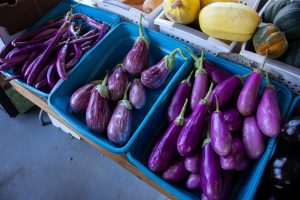
I don’t know about you, but I’ve had to forego some of my morning rituals to make time to reap the bounty from my garden these last couple of weeks. I fully expected the temperatures in the 90s and occasional triple digits to stall the production of my tomatoes, but somehow the blossom-drop and lack of fruit-set experienced in previous very hot summers never materialized, and now I’m bringing in armloads every few days! And how about them eggplants! Swiss Chard, Collards and Kale abound, and my Tromboncino climbing Zucchini is feeding the neighborhood.
I have two new tomato varieties to add to my list of top favorites: Tidy Treats and Tasmanian Chocolate (I’m a sucker for anything with chocolate in the name or ingredients list).
With great sadness, we share the news that the pioneering plantsman David Salman passed away on the fifth of June. David was a dedicated, passionate, and articulate educator and proponent of sustainable gardening, a plant explorer with a gift for selecting and introducing exceptional plants for western landscapes, and the founder of Santa Fe Greenhouses, High Country Gardens, and Waterwise Gardening.
Out of his serious concern for the planet, David had recently begun working on what he considered his ‘next act’ – helping to reverse climate change by enabling people to plant large numbers of trees, and especially shrubs. He wanted to identify the woody plants best adapted to conditions in the West and Southwest, and had solicited recommendations from Harlequin’s Gardens and others, with the aim of propagating and distributing on a large scale the most appropriate and successful plants for combatting climate change. David Salman’s legacy includes over 60 waterwise plant introductions. His contributions to gardening and gardeners in the West were transformational. He will be sorely missed.
The following tributes and obituaries for David are available: Nursery Management, AP News, and HaMakom. (Photo Credit: High Country Gardens.)
Bur Oak (Quercus macrocarpa) is a majestic, slow-growing tree reaching 60 to 70’ in height and spread, and is typically very long-lived (think 200, 300+ years!). It’s the sort of tree you plant for the benefit of the generations to come. Many oak species don’t thrive in Colorado’s alkaline soils, but Bur Oak is a happy exception. It is also drought-tolerant once established, even in dry clay, and can handle city conditions quite well. Bur Oak’s strong wood and strong, almost right-angled branch connections resist breakage in wind and snow. [Read More]
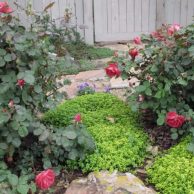
We are known far and wide for our selection of sustainable roses and for our expertise in helping people choose the best varieties for their gardens and landscapes. We sell roses on their own roots not grafted, which makes them more cold hardy, longer lived, with more flowers.
Below is a list of Roses we often have available.
We would like to invite you to visit the Boulder-Dushanbe Teahouse Rose Garden in downtown Boulder across from the city park. The unique treasure of an intricately handcrafted, traditional Tajik Teahouse was gifted to the city of Boulder by the citizens of Dushanbe, Tajikistan, one of Boulder’s Sister Cities, in 1988. In time, the design of the structure was amended to be able to house a restaurant business, construction was completed, and the Teahouse opened in spring of 1998. Both the inside and outside of this fabulous building are elaborately adorned with colorful carved, painted and sculpted elements, mostly traditional, plus some contemporary artistry.
[Read More]

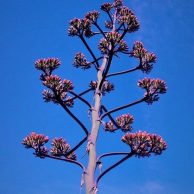
Agave parryi in snow
As temperatures fall and the shortest day of the year approaches, most of us are taking a break from the physical work of gardening. But some of us are already beginning the seed-sowing process, following seed germination protocols for pre-treatment – from stratifying (exposing seeds to controlled cold temperature to break dormancy), scarifying (carefully sanding hard outer seed coats) to soaking in hot water or hydrogen peroxide solution, etc. At Harlequin’s, many of our growing-houses are full of seed trays or beautiful plants we potted up in the fall for spring 2023.[Read More]

At this time of year, when the weather is hot and mostly dry, it can be easier to establish transplants that already have a larger, deeper root system. Another very important factor in successful transplanting in this heat and drought is the quality of the potting soil the plant was grown in. Harlequin’s Gardens doesn’t use a commercial, lightweight, soil-less mix, designed for using chemical fertilizers and for minimizing shipping costs. [Read More]
In late June Eve and Mikl attended two inspiring events that are related in that both organizations / institutions are concerned with researching, trialing, and introducing plants that are resilient in the face of the challenges presented by Climate Change, especially increasing heat and long-term drought. [Read More]

Our 2022 Big Fall Sale continues, with 30% off most plants!
Sept. 13 thru 18 take 30% off perennials, shrubs, and trees, and 20% off roses, soil products in big bags, books, and 20% off Compost Tea. (No discount on fruit trees, veggie starts, bulbs, and 2023 seeds).
We’ve added lots of timely COVER CROP SEEDS and BEEKEEPING SUPPLIES to our DEEP DISCOUNT offers!
In our experience, fall is the most successful time to establish most plants, especially when mycorrhizae are applied to the roots during planting (and we’re well stocked with several types of mycorrhizae!). We have a large and diverse selection of perennials, particularly in larger quart and gallon sizes, that are ready for planting. (Photo: Sedum “Matrona”)
A FEW of our FEATURED TOMATOESWe’re excited about these tomatoes for this growing season!
We trial tomatoes for adaptation to Boulder growing conditions, and great taste.
CARBON – New Again! 76 days, Indeterminate. OP
This taste-test winning, hard-to-find heirloom is one of the darkest ‘black’ tomatoes, with delicious, rich, smoky-sweet, complex flavor; pretty 8-14oz. purple-brown fruits are resistant to radial cracking. Big, 5-7’ productive, regular-leaf plants are healthy and tolerate heat and dry conditions.[Read More]

Bastan Pepper, courtesy Johnny’s Seeds
BASTAN F-1 ANCHO/POBLANO – New!
65 days green, 85 days ripe (brown) from transplant, Capsicum annuum, F-1 hybrid
An exceptionally early and adaptable poblano pepper, Bastan plants are extremely high-yielding and robust, and produce big, thick-walled, very dark green, smooth, 4-6”-long, mostly two-lobed peppers that are easy to peel. Fruits may be used at the green unripe or chocolate brown stages. Excellent fried, roasted, stuffed, in chile rellenos or green chile sauces. 1,000 – 2,500 SHU. Plants have an upright habit with excellent leaf cover and concentrated fruit set. Fully ripe poblano peppers are traditionally dried and called Ancho.
TAM JALAPENO – New! – 70-75 days from transplant, Hyb., Capsicum annuum, 3,000 – 5,000 Scoville Heat Units
If you love the flavor of Jalapenos but can’t take the heat, perhaps the Tam Jalapeno is for you. Developed by Texas A&M, it was bred to be highly productive, disease-resistant, widely adaptable, early-maturing, thick-walled, and have great Jalapeno flavor with a lower level of heat – only 1,000-1,500 SHUs, much milder than the typical Jalapeno (3,000-5,000 SHUs). TAM Jalapeño can be made even milder by removing the thin membrane that connects the seeds to the wall of the pepper. Plants grow 2-3 feet tall and should be staked. They produce 3”- long plump dark green peppers with smooth, glossy skin. If allowed to turn red, they will be hotter. TAMs are great for mild salsas and dips, delicious added to salads, tacos or pizza, and great for pickling, jelly, and cooking. Try stuffing them with a variety of fillings for appetizers. Top of Form
YANKEE BELL – New Again! –60 days green, 80 days red, OP, Capsicum annuum
A dependable open-pollinated sweet bell for Northern gardeners. Born on 3’ tall plants, the blocky 3-4 lobed fruits are medium sized and a bit smaller than hybrids but have good yields and better quality and uniformity than most OP bell peppers. Great for salads, stuffing, and cooking. Plants have stronger branches than other varieties.
CARIBBEAN HABANERO – New! – 90 days from transplant, Heirloom OP, Capsicum chinense, 400,000 Scoville Heat Units
Twice as hot as the common habanero! Its pungent, smokey, fruity flavor makes extra spicy salsas, marinades and some very intense hot sauces. The red pods are 2″ long and 1″ wide and grow on vigorous, bushy 3 – 4’ plants. It is so productive the plant may need support when loaded with fruit. We recommend wearing latex gloves and other protection when handling these peppers. With a heat level of 400,000 SHUs, these peppers are loaded with capsaicin which can cause irritation and pain when exposed to your eyes and even to your skin.

RETURNING FAVORITES: Anaheim, Early Jalapeno, Fish, Sheepnose Pimiento, Serrano Tampiqueno, Jimmy Nardello’s, King of the North, Marconi Red, Sweet Chocolate, Cubanelle and more!
We recently passed Boulder Valley’s “average last frost” date (May 9).With all this rain, it sure feels like Spring! Lots of gardeners are asking if it’s safe to prune now, especially roses and shrubs. The answer is YES! But…..
Pay attention to the characteristics of the particular shrubs and roses you’re thinking of pruning. [Read More]

Rock Garden Iris
It’s probably safe to assume you’re as anxious as we are to get our hands in the dirt, and happily, Harlequin’s Gardens is opening for our 31st season this Thursday March 2nd. We’re so looking forward to seeing you all again! We’ll have everything you need to get started for the season. Here’s what we’ll have available for you on March 2nd.

Our youngest gardener Baby Bonnie, with her Mother and Grandmother
This Sunday, May 8th we celebrate Mother’s Day! There are several different claims to the inception of the Mothers’ Day or Mother’s Day holiday in the US, inspired by ideas of helping less fortunate mothers, reducing infant and maternal mortality, voicing opposition to wars, and honoring motherhood. All of these share the common core idea of honoring Nurturers.
So even if you’ve never functioned as the mother of human children, you can still be a Plant Mom. When we prepare our soil, plant our seeds, keep them moist until they germinate, and give them the care they need until they are grown-up enough to fend for themselves (or require less attention), we are Mothering them. By planting for pollinators and native life-forms of all kinds, we are nurturing our ecosystem and helping to bring it back to balance and health.
This week, we invite you to visit us and choose some new plants to nurture and mother. And honor the Mothers in your life with the plants, garden items, books, classes or healthy products they’d love. We have a beautiful line of glazed pots for patios, entryways and balconies. Our organic pepper, tomato, and herb starts are pouring in, as are many new perennials and shrubs, roses, vines, grasses, and annuals, all neonic-free. We also have plenty of fruit trees and berry bushes, and seeds for delicious summer crops like beans, basil, cucumber, zucchini, pumpkin, and melon, and glorious pollinator-supporting flowers like Lace Flower, Poppy, Zinnia, Sunflower, Nasturtium, Gloriosa Daisy, Cosmos, Morning Glory, and many, many more!
We have a limited number of choice Peonies in 2-gallon pots, ready to make a long-lived presence in your garden! These varieties are different from the ones we will have in stock in a couple of weeks, which will be in 1-gallon pots.
Peonies are classic garden plants that add a lot of charm and beauty to the garden, increasing in size and beauty for many decades. Their gorgeous, fragrant blooms and lush foliage have made them popular for many years. When a peony is finished blooming, the attractive foliage mound makes a great seasonal ‘shrub’. And, of course, the sensuous flowers make stunning bouquets. Cut them when the buds have swelled and are beginning to open slightly. [Read More]
Okay, you prepared your soil and planted your vegetable garden with all kinds of wonderfully flavorful, nutritious foods, you’re watering and watching them grow, and wondering ….. When can I start to eat them, how do I harvest them, and how do I get the most out of these plantings? Here are some tips on vegetable crops harvest timing and techniques that may not be self-evident. Even if you’re a seasoned gardener, you may not be aware of some of these procedures! [Read More]

Our friend Mitten Lowe at Journey to Wellness is a fan of bone broth (with actual bones, as well as one that’s vegan) whenever the season changes. What’s more gratifying than taking fresh vegetables and herbs you’ve grown, or bought by supporting our local farmers, and simmering them for a fragrant, nutrient-dense health and spirit builder when the temperatures plummet?
photo courtesy: Garden in the Kitchen
This mineral-rich, vegan broth offers many of the benefits of traditional bone broth! As we slow down, herbs and plants you grow from Harlequin’s Gardens can nourish you this winter. Many thanks to Mitten Lowe at Journey to Wellness for the recipe.
Sign-up for our weekly e-newsletters to receive empowering gardening tips, ecological insights, and to keep up on happenings at Harlequin’s Gardens — such as flash sales and “just in” plants. We never share customer’s addresses!
JANUARY-FEBRUARY HOURS:
Thursday-Saturday, 10AM-4PM
MARCH HOURS:
Thursday-Sunday, 9AM-5PM
APRIL-OCTOBER HOURS:
Tuesday-Sunday, 9AM-5PM
Closing end of Oct.
Mondays, CLOSED