
 TREES & SHRUBS: To avoid breakage from heavy snow, periodically put on your boots, heavy coat, and a hat with a brim, and gently shake snow off trees and shrubs that are already in leaf.
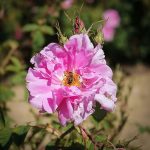
ROSES: If you have not already pruned them, now is the time to remove canes that are dead,
damaged, crossing and rubbing, or growing out of bounds. Make clean cuts with a good, sharp
pair of clippers. Avoid cutting back roses that only bloom in spring until after they’ve bloomed.[Read More]
Blog
Tomatoes Worth Waiting for!
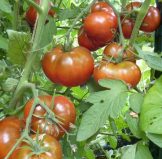 Tomatoes: We’ve always started bringing out our outstanding selection of tomato varieties in the second week of April, but a little glitch with our new grower has caused a slight delay…we expect them to arrive starting the week of April 21st. So please hang in there with us – our exceptional, locally adapted varieties are truly worth waiting for!
Anasazi
Aurora det.
[Read More]
More vegetables for your Summer Garden!
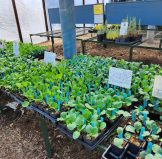
Planting a vegetable garden provides access to fresher, more nutritious, and organic produce while also cutting down on grocery bills. It acts as a therapeutic, stress-relieving activity that offers exercise and sunshine, alongside positive environmental impacts like lowering your carbon footprint and supporting local pollinators.
The list of magnificently MASA started veggies is updated to incude:
Arugula – Astro
Arugula – Surrey
Broccoli – Happy Rich
Broccoli – Nutribud
Broccoli – Spring Raab
Broccoli – Umpqua
Cabbage (Green) – Tendersweet
Cabbage (Green) – Tiara
Cabbage (Red) – Amarant
Chard – Bali Red
Chard – Bright Lights
Chard – Fordhook
Collard Greens – Cash Crop
Collard Greens – Flash
Kale (Curly) – Rainbow
Kale (Curly) – Redbor
Kale (Lacinato) – Black Magic
Kale (Lacinato) – Darkibor
Kale (Lacinato) – Mamba
Lettuce (Butterhead) – Australe
Lettuce (Butterhead) – Nancy
Lettuce (Green Leaf) – Green Pack
Lettuce (Little Gem) – Spretnak
Lettuce (Oak Leaf) – Oscarde
Lettuce (Red Butter) – Alkindus
Lettuce (Red Leaf) – Hyper Red
Lettuce (Red Leaf) – Ruby Sky
Lettuce (Red Romain) – CalShot
Lettuce (Romain) – Solid Green
Onion (Cippolini) – Gold Coin
Onion (Grilling) – Red Bottle
Onion (Keeper) – Front Range Globe
Onion (Keeper) – Rosa Milano
Onion (Keeper) – Valencia
Pac Choi – Little Shanghai
Pac Choi – Mei Quing
Pac Choi – Tatsoi
Pac Choi – Win Win Choi
Radicchio – Indigo
Spinach – Hammerhead
Spinach – Kolibri
Spinach – Rangitoto
Dill – Bouquet
Cilantro – Calypso
Acer Tataricum – ‘Hot Wings’- Tartarian Maple

‘Hot WIngs’ Tartarian Maple
Looking for an attractive, tough, adaptable, cold-hardy, water-wise small tree with bright and unique seasonal interest? This very special selection of TatarianMaple fits the bill beautifully. Discovered as a chance seedling by the horticulturists at Fort Collins Wholesale Nursery, this tree stood out from all the other Tatarian maples for six weeks every summer with its breath-taking scarlet red samaras (wing-like seeds) contrasting with the rich green foliage giving it an appearance of being in bloom. Growers also noticed that Tatarian Maple was much more tolerant of our alkaline soils than other cold-hardy ornamental maples.
Fruit Trees!
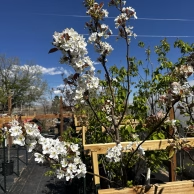
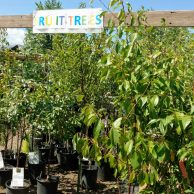 “Even if I knew that tomorrow the world would go to pieces, I would still plant my apple tree.” This famous quote, often attributed to Martin Luther, symbolizes hope, faith, and the importance of stewardship. It highlights that planting a tree is a proactive, hopeful act for the future, regardless of current circumstances.
If you are wondering what the best fruit trees are to plant in your yard, join Mikl Brawner’s class this coming Saturday, Best Fruit Trees for Colorado REGISTER HERE
Serviceberry
 Indigenous scientist and author Robin Wall Kimmerer tells us that the serviceberry’s relationship with the natural world is an embodiment of interconnectedness and gratitude. The tree distributes its wealth of berries to meet the needs of its natural community, and this ensures its own survival.
This is the ethic of reciprocity that that lies at the heart of the gift economy, in which wealth and security come from the quality of our relationships, not from the illusion of self-sufficiency.
New Perennials, Fruit trees and Berry buses are Just in – and Ready to be Planted!
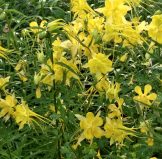
Aquilegia chrysantha
Blossoms are blooming, fruit trees are full of promise, perennial flowers (both natives and non-natives) and vines are emerging from their seasonal slumber. Some new perennial arrivals that are available include:
Natives:
Aquilegia chrysantha, Yellow Columbine
Aquilegia barnebyi, Barneby’s Columbine
Native and Waterwise Shrubs in Full Bloom -Ready to Plant
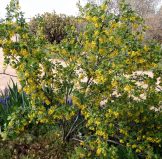
Ribes aureum, Golden Currant
You have likely been seeing delightfully spectacular shows of blooms around the Front Range these past couple of weeks. There are currently many gorgeous spring blooming shrubs to choose from at Harlequin’s -your trusted source for native and waterwise shrubs. In stock and ready to plant are:
Amelanchier alnifolia, Saskatoon serviceberry
Amelanchier regent, ‘Regent’ serviceberry
Artemesia ludoviciana, White sagebrush
Water-wise Shrubs Available Now
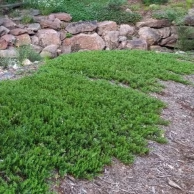 Our healthy, overwintered and water-wise shrubs are waking up! Choose from hardy Manzanita, Banana Yucca, Creeping Mahonia and Western Sagebrush.
- Arcostaphylos x coloradensis, Mock Bearberry Manzanita (pictured here) is an outstanding selection of a native broadleaf evergreen shrub. Needs good drainage, and prefers afternoon shade. 10-18″ high x 26-60″ wide. Deer resistant, provides winter interest, supports pollinators. Up to 8125′. From Plant Select.
- Arctostaphylos x coloradoensis ‘Chieftain’ adda a beautiful structural element to landscapes and introduce a more natural look to our man-made urban environments. Plant them around large pine trees, over retaining walls and as foundation plantings around homes and businesses. The green, rounded leaves last all year, including through the winter! These shrubs grow to a mature height of around two feet tall.
Perfect Houseplants for Valentine’s Day!
 Who doesn’t love houseplants? Here a few that make perfect gifts.
Ceropegia woodii ‘Variegata’ (Variegated String of Hearts). The heart shaped leaves boast greens, creams, and blushy pinks. While this plant may look delicate, it’s hardy, needing bright indirect light, and little water. Let it dry out completely between waterings. This variegated version of the “String of Hearts” vine displays beautifully cascading in a hanging basket. Its petite heart-shaped leaves boast greens, creams, and blush pinks, along with small mauve pipe-shaped flowers. While this wonderful Valentine’s day gift looks delicate, the care is quite easy. It requires bright indirect light and because String of Hearts is a succulent, let it dry out completely between waterings, generally about 2-3 weeks during the growing season and every 4 weeks during the dormant season. Make sure the pot has plenty of drainage so the roots don’t rot.
Stromanthe ‘Triostar’ (Triostar Stromanthe). This striking tropical plant’s long leaves are green and cream, with magenta undersides. The leaves change position throughout the day. They prefer to have more consistent water, generally water thoroughly when the top inch or two of soil is dry. An occasional misting benefits this plant as it helps mimics its natural jungle-like habitat.
 Ficus ‘Ruby’ (Ruby Rubber Tree). This pink-tinged variety of the standard Rubber Tree adds an interesting splash of color to any space. They typically grow with multiple stems each with multi-colored leathery leaves, with the newest growth showing the most intense red/pink coloring. The Ruby Rubber Tree prefers bright indirect light with moderate moisture. Generally, they prefer a thorough watering when the top 2 inches of soil is dry.
Roses that Thrive!
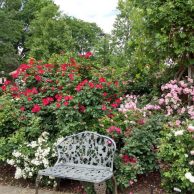
Roses primarily symbolize love, passion, admiration, and beauty, with specific meanings varying by color and culture. At Harlequin’s we take pride in our excellent selection as well as the confidence that you will take home a healthy and robust rose for your garden. We currently have a spectacular selection in a rainbow of colors. Listed by Name, Height, Color, and Fragrance.
AC Navy Lady– 2-3′, Dark red, Light
Autumn Sunblaze– 1-2′, Orange blend, None
Awakening– 10’+, Light Pink, Moderate
Whiskbroom Parsley
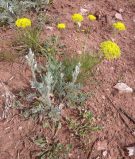
Whiskbroom Parsley
In spite of the drought, rambles in local open space parks reveal the early signs of spring. Now showing at a park near you, a conspicuous star is Whiskbroom Parsley (Harbouria trachypleura), a genus with just a single species. Native to Colorado, Wyoming and New Mexico, we’ve encountered it from the lower foothills to subalpine locations, on dry, sunny, rocky slopes, but it is even more at home in moist meadows, grasslands and under trees.
Many ‘wild parsley’ species are highly toxic, but this one is edible and was commonly used in culinary and medicinal ways by native Americans. The very fine, bright green dill-like foliage is surprising for a dryland plant, and the umbels (heads) of tiny, bright yellow flowers are an important nectar source for many native pollinators and beneficial insects. This plant is not in commerce, as it spends years developing its deep soil-stabilizing taproot before producing much top-growth, let alone flowering. Enjoy it in the wild!
Dahlias for Color and Beauty!
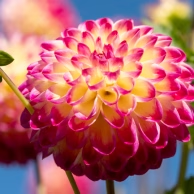
Hapet Daydream Dahlia
Colorado gardens provide just the right amount of heat and sun that our locally-sourced dahlias need for spectacular summer shows. Our selection of tubers is especially strong this year!
Choose from: Bracken Palomino, Brookside Snowball, Hapet Daydream (pictured above), Kara Sangria, Mondriaan, MM Buttercream, Mikayla Miranda, PG Woodhouse, Robann Creamsicle, Tanita, Orange Symphony.
Descriptions:
Bracken Palamino -Large 6-8″ Orange Sherbet blooms. 5′ tall.
Brookside Snowball – 4″ pure White blooms, 4′ tall.
Hapet Daydream – 3-4″ wide ball form, blend of Pink, Yellow and White.
Kara Sangria – Brilliant combination of Salmon, Pink and vibrant Yellow in a cactus form, 4′ tall.
Houseplants for Winter Health!
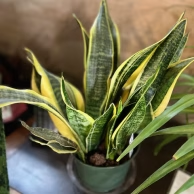
Snake Plant, Sansevieria spp.
When the world outside turns dormant, houseplants become essential indoor companions Bringing greenery into your home during the winter offers several science-backed benefits:
- Natural Humidifiers: Central heating systems can drop indoor humidity to as low as 10%. Plants like ferns release moisture through transpiration, which helps combat dry skin, sore throats, and respiratory irritation.
- Mental Health Support: The presence of greenery is a powerful antidote to “winter blues”. Tending to plants serves as a mindful ritual that reduces cortisol levels.
- Improved Air Quality: Since windows stay shut in the winter, indoor air pollutants can accumulate. Hardier winter-friendly plants like Snake Plant (pictured here) and ZZ Plant help filter out common toxins while replenishing oxygen levels.
- Enhanced Focus: Studies suggest that being around indoor plants can boost concentration and memory retention by up to 20%!
This week we have a wonderful selection. Here are a few of our favorites:
Protecting Trees and Shrubs in Winter
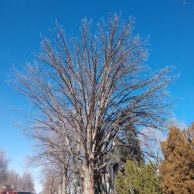
Another January day in the 50s? The buds are swelling, crocus are blooming. Only one other recorded winter was this warm and dry. Will these extreme conditions be harmful to our trees and shrubs? We don’t need to panic; our care can help.
Trees and shrubs do have energy reserves; they have evolved to be capable of living through difficult conditions. Many shrubs need less water and can regrow from their roots. It is normal for buds to be swelling somewhat in January. Trees and shrubs are making leaf buds all winter so that when the day length and warmth of spring arrive, the leaves can unfurl and start photosynthesizing. And if temperatures drop dramatically or suddenly and kill buds, a healthy tree has “back-up” buds and enough energy to develop a new set of buds. However, multiple successive seasons of stressful conditions can cause serious damage or death. Here’s how we can help trees get through difficult times:
Rising Grocery Costs Got you Down? Plant These Veggies for Storage, and Savings
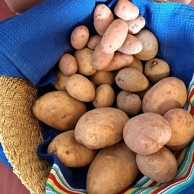 Grocery prices are projected to rise even more this summer. You can save, by planting your own veggies for storage. These delicious, hardy varieties are some of the longest-storing, and can be enjoyed for most of the winter, and even into spring.
Potatoes: While all the potatoes we offer (usually available in March) are delicious and hardy, these are the best ‘keepers’: HARVEST MOON -85-100 days. Round tuber with purple skin and deep yellow flesh. Firm texture after cooking, with a nutty taste. Good for roasting, baking, soups, and chips; NICOLA – 85 – 105 days. Early. Thin skinned, yellow inside and out. Good for winter storage; SANGRE – 80-90 days. Midseason. Beautiful red skinned variety with shallow eyes and medium-sized oblong tubers. Originally released by Colorado State University in 1982, Sangre ranks high in taste tests with creamy white flesh that is especially delicious boiled or baked.
Take your Gardening to the Next Level with Essential Self-Care Practices!
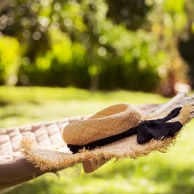 The benefits of gardening on mental and physical well-being are renowned. But here across the Front Range gardening isn’t just laying around in the hammock! (although there is that, too.) For gardening to truly increase your quality of life, a bit of pre-season preparation pays off.
Skin Care: Stock your cabinet with special skin-saving products now. Our continued dedication and commitment to sustainability extends to what you put onto your body. This season, our excellent selection of body care products that are completely non-toxic and chemical-free. We offer our favorite small-batch, local artisan-crafted products including soaps, lotions, specialty herbal salves, facial toner, lip balms, and our exclusive, famous Dr. Brawner’s Aftershave! [Read More]
May Day Week Celebration and Sale!
 At Harlequin’s Gardens, we love to celebrate May Day. It is an ancient festival welcoming Spring and celebrating the beauty, fertility, and abundance of the earth.
At our May Day Festivals, we bring you beautiful, authentic music and dance that you’re unlikely to hear elsewhere, all from top-notch, talented local players including the Maroon Bells Morris Dancer, Benjamin J. Allen, Nicolette Andres, and Tea at Six!
[Read More]
Celebrate Earth Day and Arbor Day, by Mikl Brawner
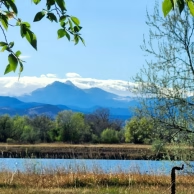 Officially, Earth Day is April 22nd and Arbor Day is April 24th, but since the Earth is our Mother, on whom we depend for our Life, we must protect and support her every day. And Trees are our lungs, providing oxygen, our shelter from heat, and primary support for soil biology, so we need to plant them and continue to care for them. Progress may be slow, but humans are evolving to see individual trees and individual people as partners in communities.
[Read More]
Harlequin’s is Like a Farm. by Mikl Brawner
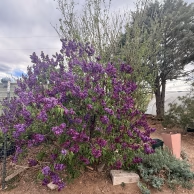 Update: Our GoFundMe appeal has brought in important support for Harlequin’s Gardens, and we deeply appreciate your generosity. We are a little over half-way to our goal of $35,000. We are working to make this a successful year in spite of challenges. Harlequin’s Gardens is not just a store; we are a lot like a farm. We grow thousands of plants with challenges of supply, heat, cold, drought and wind, not to mention rising costs. [Read More]
Celebrate the Good! by Mikl Brawner
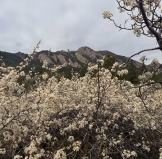 Welcome to a Glorious Early Spring. It’s warm; everything is growing and there are masses of blossoms and fragrance. Please, do enjoy. Our tax dollars are funding wars our Congress did not approve and more than a majority do not want. This is not representative government. What can we do? We have to celebrate The Good, even while enduring the unbearable. We can grow healthy food and both eat it and share it.
We See it Blooming! by Mikl Brawner
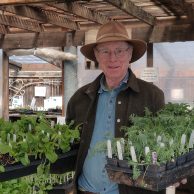
Thank you for the donations coming in to our GoFundMe appeal; it is so important now, and we are so grateful. You are confirming that the values we represent and work for every day are important to you. You recognize what the community would be missing without Harlequin’s Gardens. Of course we already know this. We would not be here without your support. We started promoting and selling native and water-wise plants 35 years ago.
Cheerful Spring! by Mikl Brawner
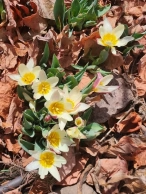
How are we supposed to live our normal lives, going to the grocery store, preparing our garden, when our own government is causing so much death and suffering? It is obvious that our lives will also suffer as a result. We cannot ignore this and we can do little about it right now. Yet we cannot freeze up; we have to go forward. We can support change and we can radiate love and kindness in our lives. Being in Nature and gardening has always been healing for people in painful circumstances. Caring for our children, our loved-ones, our neighbors, our pets and plants, is life-affirming and good medicine. In spite of everything, Life is good. And when we support Life, we are sharing in genuine goodness, and it feels good.
Seeds to Sow Now, Soils and More, by Eve Reshetnik Brawner
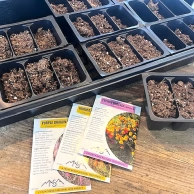
Now that we’ve arrived in early March, seed-planting time is here! We’ve got a great selection of vegetable, herb, flower, cover crop and native grass seeds, plus the durable tools, seed-starting and potting soils, perlite, and all the other seed-starting supplies you need. And we have the mild temperatures that make gardening easy; now we just need to add soil fertility amendments and water!
Seed-Starting Supplies and Seeds are In!
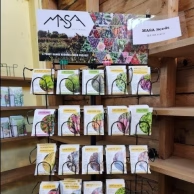
You may have heard about bio-regional seed and plant adaptation, and you’ll be hearing a lot more about it in the future! This movement, led across the Front Range by MASA Seed Foundation, supports gardening with seeds and starts that have been grown and carefully selected for multiple years in our Boulder County environment. Plants from these seeds have adapted to our specific, challenging growing conditions, and they thrive vigorously here.
They are demonstrably better able to handle heat and drought, and still perform. They’ll increase your gardening success!
Harlequin’s Gardens now carries an expanded selection of MASA seeds, and we plan, in a few months, to bring you vegetable starts grown by MASA from their bio-regionally-adapted seeds! Our favorites include:
Carrots: Kuroda Orange and Purple Dragon. These germinate quickly and successfully, unlike seeds from wetter places. And they’re delicious!
Our Favorite Ergonomic Tools to Make Gardening Easier!
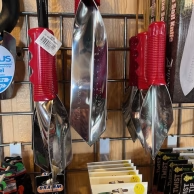
Mikl highly recommends these excellent weeding and planting tools, and staff concurs – these tools outlast all others!
This week we are highlighting Wilcox Tools: Iowa-made, stainless steel trowels and weeders; it won’t bend or rust, made to last a life-time, with a life-time guarantee. They are sharp, so they can cut through hard Colorado soils and dig around rocks. And they are economical.
The 10” trowel is Mikl’s favorite weeder for getting very close to a plant with the least root disturbance; our sharpest digger, won’t bend; great design[Read More]
Eve’s Downsizing Garage Sale of Treasures!
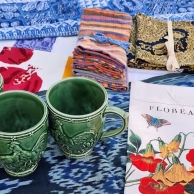 Sat./Sun. Nov. 8 & 9
9:30am to 3:00 pm
Not to be Missed!
Find artisan jewelry, stylish shoes, clothing and accessories, local artisan and other special art and craft pieces, antiques, linens, kitchen stuff, CDs, books.
You never know what you’ll discover from Eve’s personal collection! Eve has spent her life as a treasure hunter, seeking beauty, quality, authenticity and value, in every realm, from experiences to plants to art to earrings! Bring your friends!
CASH ONLY![Read More]
Planting Seeds, by Eve Reshetnik Brawner
I confess. I am definitely a plant hoarder. Every year, I amass a formidable collection of plant starts, and then spend evenings through the season walking arou
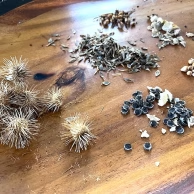
Welcome to Harlequin’s Gardens 34th year! As gardeners, we demonstrate that we are optimists. We dedicate time, money, effort and hope in the belief that this will result in at least some measure of successful growth. We can never expect that everything will go as we hoped and planned, but at the very least, we will have learned something. The more we know going into the gardening season, the more our optimism will ‘bear fruit’.
[Read More]
October is my time to Plant, by Eve Reshetnik Brawner
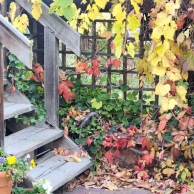 I confess. I am definitely a plant hoarder. Every year, I amass a formidable collection of plant starts, and then spend evenings through the season walking around my garden, little pots in hand, trying to find a few square inches where I can fit them in. Then I make tags and put them in the spots I’ve found (or created by taking some other plant out). If the critters don’t pull them out, most of those tags wait months for the magical moment when the weather is mild enough for me to plant them – October at last![Read More]
October is for Sowing Seeds!
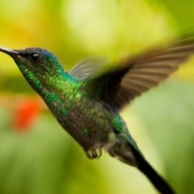 All summer and fall, Mikl and I have been collecting seeds from our own gardens and from wildlands where we have collecting permits, and at this point, most of that collecting is done. After spending last Sunday cataloging our seed collections, I’m delighted to report that so far, we have collected at least 85 species, most of them local natives. We can’t sell you the seeds we collect (the USDA won’t allow it), and besides, we need them for growing our plants for you. But we have excellent wildflower seed mixes from BBB Seeds in Boulder.
Get Ready to Plant the Best Garlic!
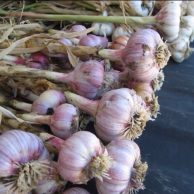 I’ve been shopping at my local Farmers Market on Saturday mornings, and have been really impressed with some of the gorgeous, large vegetables some of my favorite farms have grown this year. Most notable were the huge fennel bulbs and the stunning, large, firm heads of purple radicchio. But the garlic bulbs I found at the market have been, to be blunt, puny. And most are sold without variety names. Some were not properly cured. Small bulbs with small cloves are just fine for use in the kitchen for the next 3 to 5 months, but they are not suitable for planting.
 Curing Winter Squash for Storage

Butternut Squash
We’ve tried a number of ways to store squash, and we’ve been informed over the years by our friends at Seed Savers. If you’ve been canning, chopping and freezing, and cooking things down into sauce this harvest season, you’ll love the ease of storing winter squash whole.
First, be sure the squash are ripe. Each variety differs regarding color and sheen as indicators of ripeness, but as a rule we harvest when the thick stem connecting the fruit to the vine has dried. Cut the stem, leaving at least 1″ and up to 3″ of the stem attached. Be sure to harvest before the first hard frost – if you can’t harvest until after a frost, don’t try to cure and store the squash. Rather, either dice and freeze for later, or bake or make soup and freeze that for later.
Curing is a process that sets up the squash for several months’ of storage by allowing the skin, or shell, to harden. After harvest, elevate the squash off the ground, keeping room between fruits for air to circulate, and leave in a bright, sunny space that isn’t warm or hot for approximately two weeks. You’ll know when they are cured when they pass the ‘fingernail test’ – press your fingernail gently into the shell, and if the skin bruises or breaks, it’s not cured yet! A fully cured squash won’t even dent.
Storage instructions do sound a bit like the porridge in the Goldilocks story – the place you store the squash can’t be too hot or too cold. It needs to be just right! That means not colder than 50 degrees and not warmer than about 65 degrees. The warmer the temperature, the sooner you’ll need to use the squash. Find a cool spot in a closet, the back of a cupboard, a basement, or a garage (if it is temperature controlled). Wrap each squash in paper or straw and place in a box or on a shelf, leaving room for airflow. The paper or straw protects the squash and absorbs any moisture. If the squash does freeze, keep it frozen until you’re ready to use it. Inspect once a week, and use any damaged squash first. Here’s advice from Seed Savers:
- “Any damaged squash should be used as soon as possible.
- Delicatas, Acorns, and Buttercups should be used within a month or two.
- Hubbards, Pie squash, and pumpkins can last up to four months.
- Butternuts last the longest in storage and can take you right into spring.”
And if you don’t have the appropriate space, you can always preserve your squash by dicing and freezing the flesh.
Seed Saving – Seeds last up to a year in your squash – so whenever you use your squash you can scrape out the seeds, rinse and dry, and plant in the spring. Just be aware that squash is a notorious cross-pollinator, and if you grew several kinds you will not necessarily grow a fruit exactly like the one you harvested!
And yes, pumpkins ARE winter squashes. Save them using these same instructions.
Chocolate Flower and other Long Bloomers
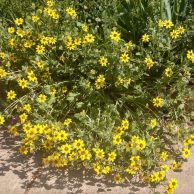
Berlandiera lyrata is an amazing blooming champion. Native to south-eastern Colorado as well as the SW region, Berlandiera really does emit a strong aroma of chocolate or carob all morning.
I love the succession of ephemeral flowers in my garden: the spring-blooming bulbs that begin the wake-up call to the garden and pollinators, the delicate pasque flowers (Pulsatilla, primroses (Primula), Jacob’s ladder (Polemonium), bluebells (Mertensia), voluptuous peonies and many more.
The Sustainable Gardening Movement is Making Change

You, as a Harlequin’s Gardens community member, have made a tangible difference by choosing neonic-free plants and non-toxic pest management, choosing native and waterwise plants, building soil health, supporting local ecology, creating bird and pollinator habitat, and all while getting outside and beautifying your outdoor space! You deserve our gratitude and applause!
Harlequin’s Gardens will start our 34th season in 2026, and we couldn’t be prouder that your work, and ours, is making change.
A Trip to Kendrick Lake Park and DBG at Summer’s End, by Eve Reshetnik Brawner

Dalea candida, White Prairie Clover
On Saturday morning, I headed down to Kendrick Lake Park in Lakewood to participate in our local rock garden society’s annual fundraiser, the members’ sale. I always donate some plants, and I always come home with some, too, though I vow not to! It’s also a great time to catch up with friends and fellow members of the Rocky Mountain chapter of NARGS (N. American Rock Garden Society)[Read More]
Even Deeper Discounts on Great Trees!
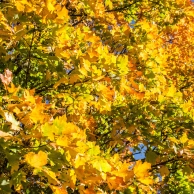
Silver Maple in Fall Color
We need to clear space as our big nursery is on a very little acreage, so we are offering rock bottom prices on some of the best trees for the Front Range. They are large and healthy!
We have the following:
5 Acer saccharinum – Silver Maple in #7 pots @ $50 ea.
4 Miscellaneous trees in #5 pots @ $10 ea.
1 Acer tataricum ‘Hot Wings’– Hot Wings Tatarian Maple in #5 pots @ $50
1 Ulmus davidii – David Elm in #10 pots $25
3 Syringa reticulata – Japanese Tree Lilac in #10 pots @ $50 ea.
1 Acer ginnala – Ginnala Maple in #10 pot @$50
2 Caragana arborescens – Siberian Peashrub in #15 @$75 ea.[Read More]
Terrific Trees for Colorado – on Sale!
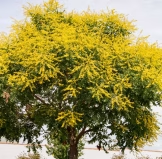
It’s risky to plant B&B (Ball & Burlap) trees this late in the season. But it’s a great time to plant our Container-Grown trees (like the Golden Rain Tree above)! Why the difference?
A container grown tree has a complete, healthy root system that’s able to start growing in your landscape as soon as it is planted. A B&B tree has been dug from the field where, unfortunately, about 60 to 90% of its roots have been left behind. This means the tree will struggle, needing a lot more water and physical support to establish. A container-grown tree will ‘catch up’ to or surpass a B&B tree in size in just a few years.
CLOSE-OUT SALE on beautiful Patio Trees in classy, outdoor ceramic pots, AND select trees.
A Hardy Geranium Shows its True Colors
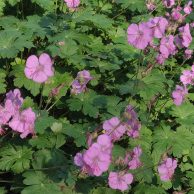
Among our top favorite groundcover plants for low-water, partly-shaded gardens are Cambridge Geranium (Geranium x cantabrigiense) and its best cultivars. They excel as low-maintenance colorful, long-blooming and long-lived, low-growing, spreading evergreen carpets under trees and in east and north exposures.
Right now we have plenty of cultivars ‘Biokovo’(palest blush), ‘Westray’ (pink), ‘St. Ola’ (white flowers from red buds) and ‘Crystal Rose’(unique vivid pink).
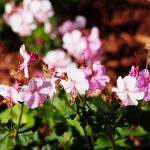
Geranium cantabrigiense ‘Biokovo’
Rarely exceeding 12” tall, they provide dense masses of bloom over attractive mid-green foliage that emits a spicy woodland fragrant when rubbed. A second season of color comes in fall and winter, when the foliage turns shades of red and orange.
Cambridge Geraniums are happy in most soil types, including clay, and thrive in USDA zones 4 through 7. They can also be grown in sunnier exposures with more water, and in full shade with less flowering.
Terrific Bulbs, now 30% off!
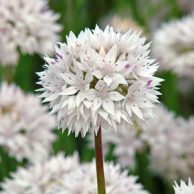
Allium ‘Graceful Beauty’
We still have some terrific bulbs that want to go home with you, so we’re discounting them by 30%!
Bulb-planting time is here! Spring-blooming bulbs feed early spring pollinators, and help us cheer up as winter recedes. Remember, nearly all the varieties we choose should last for years, even decades in your garden, and most will naturalize, forming larger clumps with a longer succession of blooms every year! And we always favor tough and reliable flowers with fragrance, unique and artistic form and coloration, and minimal care needs. Planting holes are easy to dig with one of our long-nosed trowels or with a cordless drill and an auger bit. Mark the spot with a discreet name-tag or record it on a garden map.
SMALL BULBS
Allium amplectens ‘Graceful Beauty’: 3” fragrant white globes w/mauve anthers on 1’ stems, NW native
Anemone blanda ‘Blue Shades’: long-blooming 1”+ blue daisies on low spring groundcover
Chionodoxa forbesii (Blue Glory of the Snow): brightens any spot in sun or shade
Corydalis ‘Beth Evans’: great early bloomer for shade, maidenhair fern-like foliage crowned with a mass of coral pink
Ixiolirion tataricum: late spring, elegant 1’ blue-purple and low-water
Muscari azureum: gorgeous early azure blue naturalizer
Scilla sibirica: True blue starry blooms naturalize in beds, lawns, meadows, 3” tall
Tritelia (Brodeia) ‘Rudy’: striking, graceful naturalizing California wildflower, late-spring
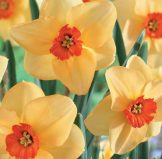
Narcissus ‘Altruist’
DAFFODILS – deer and rabbit resistant!
Narcissus ‘Altruist‘: Striking deep orange cup and unique tawny yellow perianth, fragrant
N. ‘Barrett Browning’: Brilliant scarlet cup and crisp white perianth, long-lived naturalizer
N. ‘Cornish King’: Very early, wide lemon frilled cup on white perianth, long-lived naturalizer
N. ‘Delibes’: Short yellow frilled cup edged in vivid orange, yellow perianth
N. ‘Double Poets’: Double the fragrance of standard Pheasant’s Eye!
N ‘Ferris Wheel’: Large frilled orange cup above yellow perianth
N. ‘Golden Echo’: Vigorous Jonquil, several fragrant blooms per stem, long gold trumpet, creamy perianth
N. ‘Jamestown’
N. ‘Mother & Child mix’
N. ‘Mount Hood’: Classic large white trumpet daffodil, lightly fragrant, tall and tough
N. ‘Pheasant’s Eye’: Very fragrant wildflower, late-season, white with small red-edged cup
N. ‘Yazz’: Lovely soft buff trumpet, cream perianth, several per stem, fragrant
and many beautiful tulips are still available!
Don’t forget to pick up some bone meal – this amendment helps all bulbs get established.
Bulbs for Spring Flowering – “Staff Picks”
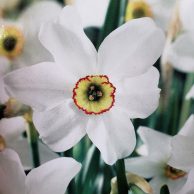
Pheasant’s Eye Daffodil
Our staff have been restocking bulbs, and a few favorites have emerged! Mid–October to mid-November is the right time to plant them. Come in this weekend as they’re going fast! We have a curated collection of flowering Allium, Narcissus (daffodils), Crocus, Tulips, and more!
Our staff have been restocking bulbs, and a few favorites have emerged! Mid–October to mid-November is the right time to plant them. Come in this weekend as they’re going fast! We have a curated collection of flowering Allium, Narcissus (daffodils), Crocus, Tulips, and more!
These Narcissi (daffodils) like full to partial sun, and well-drained soils. They are very deer and rodent resistant!
Narcissus poeticus v. recurvus ’Pheasant’s Eye’– (pictured here) is a very fragrant, late-spring blooming daffodil, very close to its wild ancestor. This storied plant is also known as the Poet’s Daffodil, famous in ancient Greek literature and among the first cultivated daffodils! Pheasant’s Eye is known for its sweet scent and vigorous, spreading habit. This long-lived heirloom reliably multiplies and produces numerous blooms year after year.
Bulbs to Plant Now – “Staff Picks”
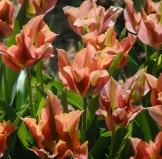 Our staff have been restocking bulbs, and a few favorites have emerged! Mid–October to mid-November is the right time to plant them. Come in this weekend as they’re going fast! We have a curated collection of flowering Allium, Narcissus (daffodils), Crocus, Tulips, and more!
These tulips like full to partial sun, and well-drained soils.
Tulipa viridiflora ‘Artist’ – (pictured here) is a late-spring blooming tulip known for its unique “painterly” blooms with golden-orange petals, soft green feathering, and rosy undertones. This compact variety grows about 12″ tall and is a distinctive choice for borders, pots, and stunning bouquets! Introduced in 1947, it is still considered one of the best of its kind and has been recognized by the Royal Horticultural Society.
Bulbs to Plant Now, for October Blooms! – Updated for 2026
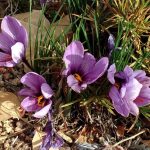
Saffron Crocus
Autumn brings surprise treats for gardeners and pollinators alike, in the form of fall-planted, fall-blooming bulbs! Hardy varieties like ‘Waterlily’ Colchicum, Saffron Crocus and Autumn Crocus should be planted NOW to start richly colored colonies of these hardy fall bloomers that will grow larger and longer-blooming each year! You will love their surprise appearance just when you thought there’d be no more flowers, and so will your local pollinators!
These healthy, hardy bulbs are here just in time for planting so they will bloom this fall.
Waterlily Colchicum blooms are big (4”+) and showy, and each bulb will produce a whole bouquet over several weeks in October. And deer, rabbits and other rodents leave them alone.
Purple Autumn Crocus (C. speciosa) usually bloom in October, too, followed into November by Saffron Crocus (C. sativa), with their famously fragrant, edible and striking scarlet stigmas. All three bloom without foliage, which makes its solo appearance in spring.
Both of these Crocus species are perfect for planting among groundcovers like Plumbago, Creeping Sedum varieties, creeping Veronica varieties, Potentilla, Snow-in-Summer, and any others that are not too dense.
Water lily
Don’t forget to pick up some bone meal – this amendment helps all bulbs get established.
(Correction: The photo in the Mailchimp version of this article is actually Saffron Crocus.)
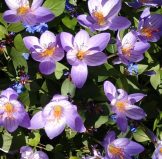
Autumn Crocus
Trees and Shrubs on Deep Discount This Weekend!
Ligustrum vulgare ‘Cheyenne’ Cheyenne Privet Regular $52, On Sale $35
The most cold hardy privet, the least likely to die back in cold winters. Tall shrub 8-10′. Stand alone, or plant 3′ apart to make a shorter hedge. White flowers attract butterflies and bees. The blue-black berries are poisonous to people and animals, but eaten by birds. Makes a dense screen. Low to moderate water needs. Zone 3, 8500′

Pink Velvet Honeysuckle
Lonicera Korolkowii ‘Pink Velvet’ Pink Velvet Honeysuckle Reg $36, On Sale $25
A large, tough shrub with rose pink flowers and some red berries. Grows 8-10′ tall with blue-green foliage. Cold-tolerant to zone 3. Fairly fast-growing and water-wise. Very attractive to bees and butterflies.
Physocarpus ‘Copper’ Copper Ninebark Reg $55, On Sale $25
Tall shrub to 8′ with gorgeous copper-colored foliage turning maroon in summer. The showy white/pink flowers look great against the copper foliage. Best color in sun with once a week deep watering.
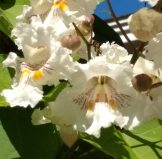
Western Catalpa
Catalpa Western Catalpa Reg $85, On Sale $45
Successful big tree to 40-50′. Showy clusters of beautiful white flowers and huge, roundish leaves. Often a big vertical shade tree. Water-wise and tough.
Cotoneaster racemiflora soongorica Redbead Cotoneaster Reg $35, On Sale $25
Big, tough, and beautiful shrub to 6-9′. White flowers in the spring, then red berries eaten by birds in the summer. Drought-tolerant, dense screen or windbreak. Very attractive. Hardy to Zone 3.

Autumn Brilliance fall color
Amelanchier grandiflora ‘Autumn Brilliance’ Autumn Brilliance Serviceberry. Reg $160, On Sale $55.
Small tree/ large shrub 12-15′ with beautiful white flowers in spring, delicious small berries in summer, and brilliant red to orange fall color. The nectar-rich flowers are a favorite of birds. hardy to zone 3. Is good growing in full sun to part shade with deep watering once/ twice a week.
Get to Know Even More Great Trees!
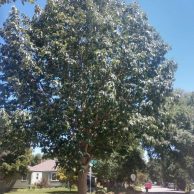
Chinkapin Oak
Quercus muehlenbergii – Chinkapin Oak
40-50’h x 40-50’w Cold-hardy to USDA zone 5
This handsome spreading oak has proved very successful locally, grows faster than other oaks, tolerates our alkaline soils, and resists oak gall insects. It makes an excellent, long-lived shade tree with strong branching. The attractive foliage has yellow to russet fall color.
Quercus undulata – Wavyleaf Oak
8-15’h x 8-10’w Hardy to USDA zone 4, 9,000’ elevation
A drought-tolerant Southwest (including CO) native oak with small leaves varying in shape,[Read More]
Get to Know a Few More Great Trees!

Chicago Hardy Fig
Sorbus amurensis – Amur Mountain Ash
20-30’h x 15-25’w Hardy to USDA zone 3
Clusters of showy white flowers in mid-spring are followed by bright red-orange berries that persist through winter and are enjoyed by birds. Attractive dark green pinnate foliage turns purple, red and orange in fall. Plant in full to partial sun. Avoid planting in a heavily watered lawn. Water once a week, deeply. Native to Korea, China, Russia.
Get to Know These Great Trees!

Aspen leaves
Populus tremuloides ‘Erecta’ – Columnar Swedish Aspen
30-40’h x 10-15’w
One of the narrowest of hardy trees, great for small spaces and as a screen or lining a drive. Its white bark is stunning and the leaves with scalloped edges turn shades of orange and yellow in autumn and tremble with the faintest breeze. An underused ‘architectural’ tree and striking exclamation point in the landscape. Supports butterflies and birds. Exceptionally cold-hardy to USDA Zone 2, 10,500’. Water deeply once a week (not lawn watering).[Read More]
New Plants This Weekend!
Here’s some of the new plants available this weekend (7/25/25)
Artemisia ludiviciana, Silver Sage, Native
Asclepias tuberosa, Butterfly Milkweed, Native
Echinacea pallida, Pale Purple Coneflower, Native
Heliomeris multiflora, Showy Goldeneye, Native
Hymenoxys hoopesii, Owl’s Claws, Native
Liatris pycnostachya, Prairie Gayfeather, Native
Mirabilis multiflora, Desert Four-o’clock, Native
Oenothera macrocarpa, Missouri Evening Primrose, Native
Ratibida pinnata, Grey-Headed Coneflower, Native
Rudbeckia occidentalis, Western Coneflower, Native
Solidago ‘Fireworks’, Native
Solidago gigantea, Native
Solidago ptarmicoides, Native
Solidago rigida, Native
Symphyotrichum oblongifolium, Aromatic Aster, Native
Thermopsis rhombifolia, Golden Banner, Native
Tradescantia occidentalis, Western Spiderflower, Native
Vernonia fasciculata, Native
Allium senescens ‘Blue Twister’
Delopserma: Alan’s Apricot, Carlisle Pink Firespinner, Granita Orange, Lesotho Pink
Iris versicolor, Harlequin Blue Flag
Monarda didyma ‘Jacob Cline’
Penstemon hirsutus, Hairy Beardtongue
Phlomis cachmeriana, Kashmir Sage
Rheum rabarbarum, Glaski’s Perpetual Rhubarb
Sedum: reflexum ‘Blue Spruce’, rupestre ‘Angelina’, sediforme ‘Turqoise Tails’
Sisyrinchium campestre, Prairie Blue-eyed Grass
Veronica liwanensis, Turkish Speedwell
A Trip Back to Spring
 By Eve Reshetnik Brawner
On Saturday, I had the great fortune to participate in a botanical field trip to Wyoming with a small group of rock gardeners – members of the Rocky Mountain chapter of the North
American Rock Garden Society. The exploration was led by the incomparable, world-renowned rock gardener and plantsman, Panayoti Kelaidis, whose knowledge of the high steppe region and alpine plants is encyclopedic.
[Read More]
Planning for Spring, Think Bulbs!
 A cornucopia of stunning, hardy bulbs will be arriving in August and early September at Harlequin’s, so get ready! Now is a great time to peruse our list (at the link below) and to look at your garden to identify areas where you can add fall-planted bulbs for (mostly) spring blooms (a few special Crocus and Colchicum bloom later in the fall!). Consider the gentle drama of a drift of mixed daffodils (Narcissus) that bloom from early to late spring[Read More]
Japanese Beetle Management/Tolerance
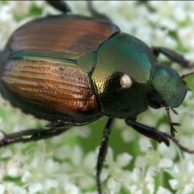
Japanese Beetle is an invasive insect pest that feeds on over 300 different plants. It emerges from a grub stage in the ground in late June, peaks around mid-July and continues until early September. There are no natural enemies for Japanese Beetle in the US, and no one seems to have a successful strategy for eliminating them. We recommend a cumulative approach which combine to be helpful. [Read More]