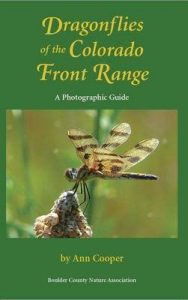
Dragonflies of the Colorado Front Range by Ann Cooper of the Boulder County Nature Association
Dainty but deadly, these shimmering beauties dart over ponds, streams and clearings on the hunt for prey. Showcasing 45 dragonflies and 28 damselflies, the guide covers the most common species found in the region. Accompanying over 90 brilliant photographs are descriptions of habitat, appearance, length, behavior, similar species, flight time and interesting facts for each species. Also included are tips on watching, identifying and photographing these tiny jewels. An excellent field guide for beginners and seasoned naturalists that belongs in every hiker’s backpack or back pocket!

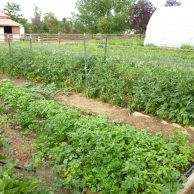 Every 5 years or so Congress has the opportunity to transform our food system by revising a piece of legislation known as the Farm Bill, which covers everything from supporting farmers to ensuring food security for all. Politicians and local and national advocacy organizations are working to determine how nearly a billion dollars a year will be spent. You can help!
 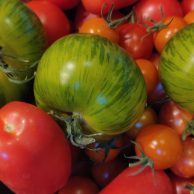 A Few New & ‘New Again’ TOMATOES:
  Two quotations greet me every morning, posted on our bathroom mirror: “Tell me. What is it you plan to do with your one wild and precious life?” (poet Mary Oliver) and “I wake up each morning torn between a desire to save the world and a desire to savor the world. This makes it very hard to plan the day.” (author/editor E. B. White). The first inspires me to define my priorities, while the second, which perfectly describes my daily dilemma, allows me a little slack and sense of humor in the midst of my personal chaos and the chaos of life on Earth in this time. Perhaps you can take some inspiration and comfort from them, too.
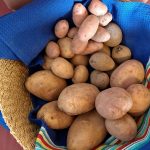
 ONIONS – In Store Now!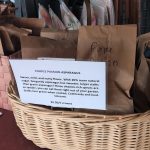
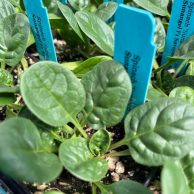
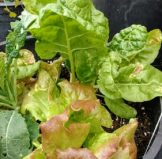
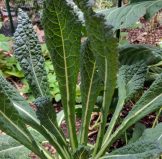
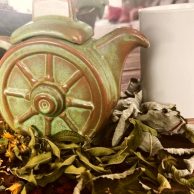
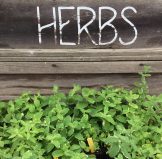 And LOTS of HERBS, both Culinary, Medicinal – Many varieties of THYME, LAVENDER, BASIL, MINT, ROSEMARY, SAGE, OREGANO, CHIVES, plus Parsley, French Tarragon, Cilantro, Dill, Fennel, Lemon Balm, Lemon Thyme, Lime Balm, Marjoram,, Lemon Grass, Vietnamese Coriander, Pineapple Sage, Lemon Verbena, Borage, Savory, Lovage, Cutting Celery, Catnip, Calendula, Aloe, Greek Mountain Tea, Comfrey, Echinacea , Feverfew, Lobelia, Valerian, Motherwort, Mullein, Sweet Leaf, Lomatium, Hyssop, Anise Hyssop, Plantain, Clary Sage, Skullcap, Arnica, Sheep Sorrel, Self-Heal, Rue, Mugwort, Wormwood, and more.
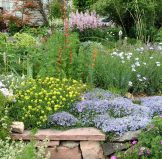 Harlequin’s Huge Selection of pollinator-supporting Native Perennials-including: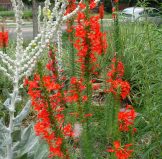
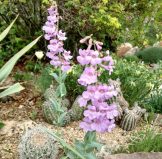
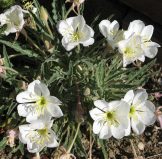
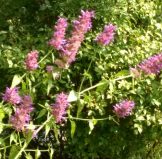 Many Agastaches –Blue Fortune, A. rupestris, A. foeniculum, Coronado and ‘Ava’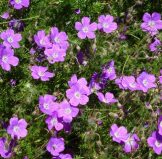
 Don’t be fooled by the title; a lot of the area covered is in Colorado, including Denver, Boulder and Ft. Collins. This is a very good plant ID book from by Mary O’Brien and Karen Vail with interesting descriptions. In addition, it’s an excellent herbal, giving both medicinal and edible uses. Highlighted in yellow are important “cautions”. It is presented in a respectful way honoring nature as did the Ute Indians who pioneered the use of these plants. For example, did you know that Gambel Oak “…is a good back country first aid plant to know, using the leaves as a poultice or wash for insect bites and wounds, or chewing a piece of the bark for toothaches….” Good photos. These local gals really know their stuff and we highly recommend their book!
  Still looking for the Perfect Gifts for Gardeners?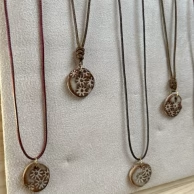

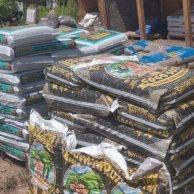 SOIL BIOLOGY
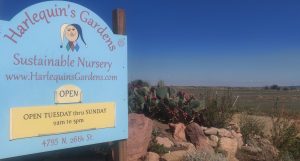 We are coming to the end of Harlequin’s 30th year in business and in service to the community. We are so grateful that you have supported us all these years. You have found us in our hidden location, told your friends about us, planted our native flora, xeriscape and pollinator-supporting selections and organic veggie starts, and supported your soil life with our help. This partnership over 30 years has made a difference in our local ecology and in people’s individual lives. Our dedication to organic gardening has been multiplied by thousands of you.
 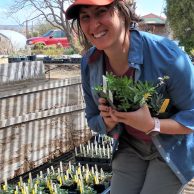 In tandem with the close of October, our 2022 Fall Sale will end this Sunday at 5pm. Before then, be sure to take advantage of our Fall Sale Discounts, which can help you achieve your end-of-season gardening goals with plants and soil products that are 30% off! (Sale exceptions listed below.)
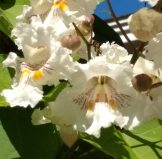
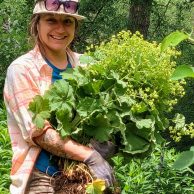 This is such a nice time of the year to putter in the garden! It’s also a good opportunity to look ahead and amend your planting beds and lawn for Spring 2023. Our Fall Sale Discounts can help you achieve your end-of-season gardening goals with plants and soil products that are 30% off! (Sale exceptions listed below.)
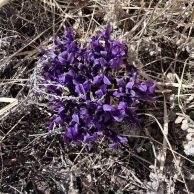 Spring is here and the time is right for dancing in the garden – to stay warm!
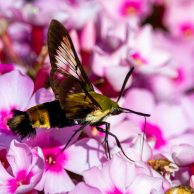 We’re celebrating all month, and we’d love to encourage you to support pollinators in your gardens.
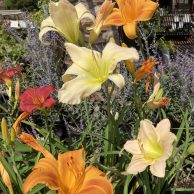 Daylilies are old favorites for good reasons. They are:
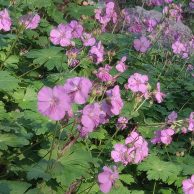 Hardy Geraniums are some of the most versatile an adaptable perennials for our area! Available in many colors and habits, they can be useful in sun and shade, moist and dry, as individual specimens, companion plants and ground covers.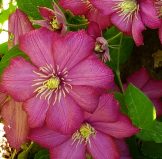
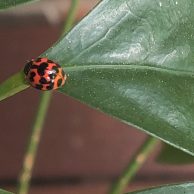 The Good News is that out of about 900,000 insect species currently living on our planet, only 1% to 3% are pests. We do not need systemic neonicotinoids (neonics) or any toxic pesticides to grow plants well. The solution is to employ human attention, biodiversity, nutrient-dense soils, application of nontoxic management, and tolerance.
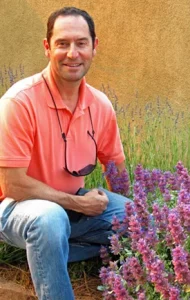 With great sadness, we share the news that the pioneering plantsman David Salman passed away on the fifth of June. David was a dedicated, passionate, and articulate educator and proponent of sustainable gardening, a plant explorer with a gift for selecting and introducing exceptional plants for western landscapes, and the founder of Santa Fe Greenhouses, High Country Gardens, and Waterwise Gardening.
 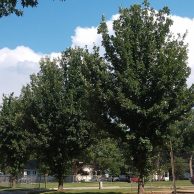 Bur Oak (Quercus macrocarpa) is a majestic, slow-growing tree reaching 60 to 70’ in height and spread, and is typically very long-lived (think 200, 300+ years!). It’s the sort of tree you plant for the benefit of the generations to come. Many oak species don’t thrive in Colorado’s alkaline soils, but Bur Oak is a happy exception. It is also drought-tolerant once established, even in dry clay, and can handle city conditions quite well. Bur Oak’s strong wood and strong, almost right-angled branch connections resist breakage in wind and snow.
 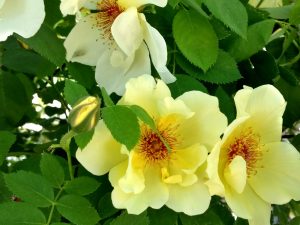 We are known far and wide for our selection of
 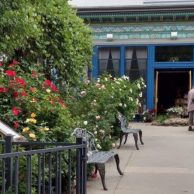 We would like to invite you to visit the Boulder-Dushanbe Teahouse Rose Garden in downtown Boulder across from the city park. The unique treasure of an intricately handcrafted, traditional Tajik Teahouse was gifted to the city of Boulder by the citizens of Dushanbe, Tajikistan, one of Boulder’s Sister Cities, in 1988. In time, the design of the structure was amended to be able to house a restaurant business, construction was completed, and the Teahouse opened in spring of 1998. Both the inside and outside of this fabulous building are elaborately adorned with colorful carved, painted and sculpted elements, mostly traditional, plus some contemporary artistry.
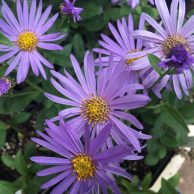
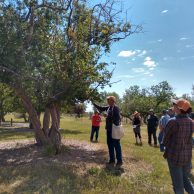 In late June Eve and Mikl attended two inspiring events that are related in that both organizations / institutions are concerned with researching, trialing, and introducing plants that are resilient in the face of the challenges presented by Climate Change, especially increasing heat and long-term drought.
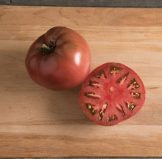 This taste-test winning, hard-to-find heirloom is one of the darkest ‘black’ tomatoes, with delicious, rich, smoky-sweet, complex flavor; pretty 8-14oz. purple-brown fruits are resistant to radial cracking. Big, 5-7’ productive, regular-leaf plants are healthy and tolerate heat and dry conditions.
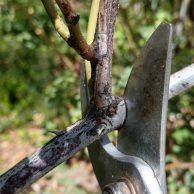 We recently passed Boulder Valley’s “average last frost” date (May 9).With all this rain, it sure feels like Spring! Lots of gardeners are asking if it’s safe to prune now, especially roses and shrubs. The answer is YES! But…..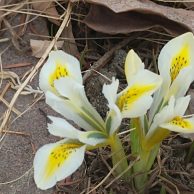
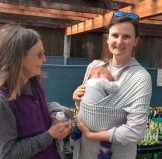
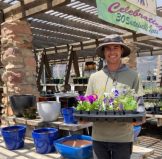 This week, we invite you to visit us and choose some new plants to nurture and mother. And honor the Mothers in your life with the plants, garden items, books, classes or healthy products they’d love. We have a beautiful line of glazed pots for patios, entryways and balconies. Our organic pepper, tomato, and herb starts are pouring in, as are many new perennials and shrubs, roses, vines, grasses, and annuals, all neonic-free. We also have plenty of fruit trees and berry bushes, and seeds for delicious summer crops like beans, basil, cucumber, zucchini, pumpkin, and melon, and glorious pollinator-supporting flowers like Lace Flower, Poppy, Zinnia, Sunflower, Nasturtium, Gloriosa Daisy, Cosmos, Morning Glory, and many, many more!