

Salvia Windwalker ‘Ruby Red’, courtesy Plant Select
Create a Hummingbird Haven
If your garden is missing that unmistakable buzz, planting Salvias will fill the void!
Not only do Salvia species and cultivars contain nectar that draws hummingbirds like a magnet, but they also feed a wide spectrum of native bees and butterflies, as well as honeybees.
In addition, Salvias (sages) provide spectacular, saturated color for long periods of time. Our perennial varieties bloom either continuously[Read More]
 So many very special experiences!
  When we garden with a mission of sustainability, driven by our conviction that plant (and all) life depends on vibrant soil health, we don’t always realize that we’re part of an alternative lineage grounded in an understanding that everything is deeply connected.
 This is your best chance for big savings on healthy, highly desirable, container-grown trees that are very successful in our challenging Colorado conditions! We grew these healthy ‘seconds’ ourselves since they were little babies, in our own soil formulas and without any chemicals, in #5 (5-gallon) pots and larger. The only difference between these and their full-price counterparts is that the sale plants are a little shorter or slightly less full.
 Rosa nutkana
 I recently attended a public conversation on the subject of ‘Avant Gardening’ at the Longmont Museum. Host Emily Maeda, co-owner of Tree of Life Landscaping, conversed with accomplished front range horticulturists and landscape designers Bryan Fischer and Kevin Phillip Williams about what constitutes the current avant-garde in gardening. I didn’t really feel that their discussion was conclusive, but the question has been in my thoughts. I now realize that in my mind, the definitive answer is habitat gardening.
 We are grateful to have one day to acknowledge the value of the Earth. Wendell Berry said, “Earth is what we all have in common.” Pope Francis said we all have a shared responsibility for protecting the Earth, our common home, and he urged us to care for the environment. It’s pretty obvious, isn’t it?
 PEPPER


 Townsendia hookeri, pictured above, is already supporting butterflies! Also known as the Easter Daisy, it blooms for a long time – often through May. This Rocky Mountain native is drought-tolerant, is found in gravelly areas and grasslands, can withstand freezing conditions and snow, and thrives in crevice gardens. This particular one bloomed this weekend in Eve’s garden in Longmont!
 This Thursday, at 3:01AM RMT, is the Spring Equinox. When you wake up Friday, Spring will be here. For gardeners, this moment when night and day, light and darkness, are exactly in balance marks the beginning of our season of hope, and lengthening days. It’s when we spend our time looking closely for the signs of new growth, and beauty. We find it in the hellebores flowering among last season’s leaves (pictured above), the crocus and early species iris, the earliest daffodils, and fragrant hyacinths.

 Welcome to Harlequin’s Gardens’ 33rd year! We care about your gardening success, your health, and our planet. We have spent the winter planning, planting, ordering, cleaning, repairing and getting ready to host you, and we have seeds, seed-starting supplies, gardening tools, books, soils and soil-nourishing amendments, and a great line-up of empowering classes!


 Sunny days in March offer the perfect opportunities to prepare your soil for planting. What do our soils need that they don’t already have? – oxygen-air and biology-carbon. Increasing the air and carbon in our soils support soil life which in turn supports plant life. Our tight clay soils that tend to exclude oxygen and are deficient in organic matter can use some help.
 Fire is on our minds. How to prevent it. How to curtail or control it. How to live with it. How to use it constructively. We remember the early winter Marshall Fire at the end of 2021 with feelings of grief and
 Time flies, don’t you think? Do you remember when people throughout the “developed world” anxiously awaited the arrival of the new millennium, worried by predictions that Y2K would bring a collapse of technical systems – the internet, banking, stock trading, communications – and throw everything else into chaos? And there was nothing we could do about it? It didn’t take long to see that the world as we knew it did not fall apart. Twenty-five years later, perhaps you’ve been nervously awaiting the advent of 2025 and are scared of what the new year, on many fronts, could bring. Completely understandable!
 With the disruption and confusion over our national health care system this month, we’re more committed than ever to sharing information on how to create your own home ‘farm-acy’. Watch our class schedule for expanded home herb garden and herbal healing classes during the growing season.
 Sometimes we overdo heavier food and drink during the holidays, and our stomach suffers.
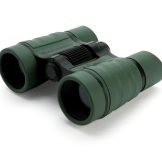 Look at the world beyond the limits of your eyes with these 4x magnification binoculars that are lightweight and designed for small hands. The attached neck strap keeps the binoculars handy and can be stored in the handy carrying case when not in use.
 Pruning is the art and science of removing or shortening branches of a tree or shrub. If done correctly, it can prevent breakage, increase beauty and increase flowering and fruiting. To learn how to make a healthy cut, study the Shigo method of pruning, or come to one of Mikl’s pruning classes.
 If you’re baking a delicious pumpkin pie, or making a warming squash soup, don’t throw away the seeds.
 Are you ready to add new plants to your indoor garden this season? Our selection is excellent, with plants to suit a variety of light conditions. Did you know that winter is the dormant season for most of the non-blooming tropical plants that we grow as houseplants? We’ve assembled some tips to help them thrive in our dry indoor conditions.
 by Dan Brawner
 Here we are in the season of giving generously. Not all of us can afford to give lavishly, but even the humble gift of seeds can create enormous abundance. We’re talking about both literal and figurative seeds here.
 The more challenging life becomes, the more I remind myself of what’s good and beautiful and wondrous and nourishing in life, what I can be deeply grateful for and what I will stick my neck out to protect. The list is long!
 Eve’s “Embarrassment of Riches” Garage Sale Is Delayed
 At this time of year, many of you probably share with me the bittersweet feeling of closure drawing near. It’s been another immensely rewarding growing season at Harlequin’s, and we are so grateful to have had the opportunity to introduce hundreds of new Colorado gardeners to appropriate and successful materials and methods, as well as helping so many longtime, like-minded sustainable gardeners. For 32 years we have been providing pollinator-safe Colorado-appropriate plants, products, information and advice based on our ongoing research and long experience, and we look forward to carrying this service well into the future. Thank you all for your support! But we’ve extended our season and we’re not done yet!
  This week’s warm weather aside, December is the time we cozy up indoors to dream about next season’s garden, and to decide what new techniques to try and which plants to grow. Winter is for gardening books, and we have quite a few in stock that we’d like to suggest for you. Whether you have a book club or just a comfortable chair to curl up into, these titles are sure to fire your imagination.

 I have a passion for seeds, for the elegant and endlessly diverse designs of their natural packaging, their fascinating distribution and germination strategies, and for the astonishing emergence of exuberant life from even the most minute speck of a seed. I once grew a Eucalyptus gunnii tree from seed the size of a dust mote. It grew, outdoors (in Eugene, Oregon) for several years, reaching 16’ tall until an unusually heavy snowstorm broke all the branches off. And in its native Tasmania it could have reached 135 feet! In addition to collecting seeds from plants in the wild and in my pollinator garden at home, I collect seeds at this time of year from my vegetable garden to enable Harlequin’s Gardens to offer unique and commercially unavailable varieties of tomatoes (“Anasazi”) and peppers (Lanterna Piccante), wild perennial arugula, and perennial Caucasian Spinach vine.


 In the late 1800s Colorado was one of the top apple-growing states in the country. Many of these ancient apple trees still exist, and together with trees planted this century, are producing more fruit than homeowners alone can harvest.
 Sometimes we are running so fast that we forget to slow down and see what’s ready to come out for sale. This week we are happily surprised to see that we have fresh stock of lots of premium native shrubs that we grew in convenient, affordable 2-gallon pots. We’re making them available at regular price (not discounted for our fall sale) – read more below.
 One of the beautiful alternatives to a standard, water-thirsty, solid green, mowed Kentucky Bluegrass lawn is a naturalistic meadow composed of low-water clumping grasses and wildflowers.
 We cut, dig and store our dahlia tubers just after the first frost. Our friends at Arrowhead Dahlias have easy instructions.
 We still have Lavender (Munstead, Buena Vista, Hidcote and Grosso), and if you want to plant them this season, get them this week on sale for 20% off! Any plants left after that will be potted up for next year. Because it is evergreen, newly planted lavender is more sensitive to hard frost than many other hardy perennials, so to give them a chance to establish before very cold weather arrives, plant them NOW. If you garden at an elevation higher than 6,000’, we recommend waiting to plant lavender next spring.
 Designing a garden or planting bed can be a daunting project without the knowledge of where to start. These steps can help you develop a successful planting design for your garden the first time around. And if you’ve taken these steps, we can give you optimal assistance when you come to Harlequin’s for your plants, soils and products. Please note that larger spaces, new builds or landscapes that need full renovations will need more preliminary work to determine placement of areas for people moving through the yard, retaining or screening views, hardscape design (patios & walkways) and other important planning steps.