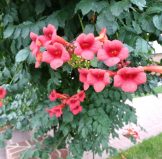
 We cut, dig and store our dahlia tubers just after the first frost. Our friends at Arrowhead Dahlias have easy instructions.
Dahlia tubers will not survive if they freeze, so they must be dug in cold climates like ours.
You can divide in spring or fall – it takes practice and patience, but it is well worth the trouble.[Read More]
 Designing a garden or planting bed can be a daunting project without the knowledge of where to start. These steps can help you develop a successful planting design for your garden the first time around. And if you’ve taken these steps, we can give you optimal assistance when you come to Harlequin’s for your plants, soils and products. Please note that larger spaces, new builds or landscapes that need full renovations will need more preliminary work to determine placement of areas for people moving through the yard, retaining or screening views, hardscape design (patios & walkways) and other important planning steps.
 We’ve got both Hard-neck and Soft-neck varieties! Get your garlic ‘seed’ bulbs NOW for planting from mid-October to mid-November!
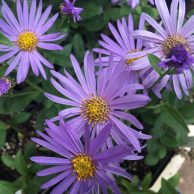 The end of summer doesn’t mean the end to color in the garden, on the contrary, you can plan and plant now for a vibrant wave of color, and habitat for our insects and birds, that continues all the way to hard frost! From native and water-wise perennials and shrubs, to trees (including fruit trees) and grasses, the selection is vast.
 We’re seeing cherries everywhere we go this summer! There were so many on the trees in the Harlequin’s Wholesale area that our Retail Manager Beth just had to make a pie for our co-workers.
 We
We  Fire-wise landscaping should focus on creating a ‘defensible space’ around your home. In “Firewise Plant Materials,” a fact-sheet for the CO Cooperative Extension, F. C. Dennis defines this: “Defensible space is the area between a structure and an oncoming wildfire where nearby vegetation has been modified to reduce a wildfire’s intensity,” and therefore, reduces risk to property.
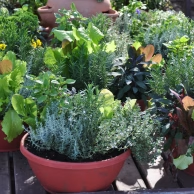
 It’s not ideal, but sometimes you have to plant in the middle of a heatwave. Fortunately, it can be done successfully, even here in the high, windy and dry zone. High temperatures, wind and strong sunlight cause water to evaporate from plant leaves faster than the roots can take up water.
 Right now, we have our biggest selection of highly desirable plants for the season. Some of them are unusual and available in limited quantities. This includes a number of very choice native perennials that are very hard to find and will sell out fast, like: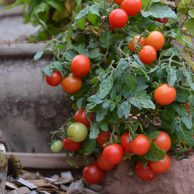
 So many very special experiences!
 It’s time to plant!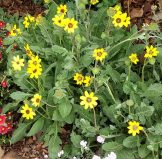

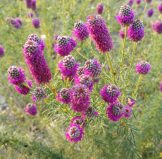


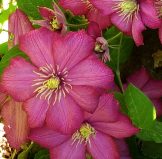
 XERISCAPE TREES AND SHRUBS for SUN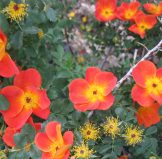
 Our compost tea will be ready this week, hopefully by Friday. Our tea has always been good, but this year we are working on making it even better. Please let us know if you can see good results from using it, and if it seems to be more effective.
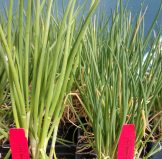
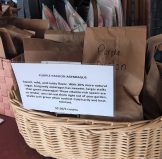
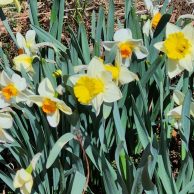 Dear Friends and Fellow Gardeners,
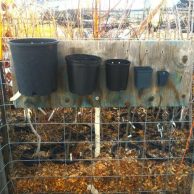 At Harlequin’s Gardens, we’ve been reusing and recycling black plastic nursery pots since day one. It is very important to us that we minimize our plastic waste. We have always encouraged our customers to bring back to us the nursery pots that came with the plants you purchased from us, and you have responded with enthusiasm, which we appreciate!
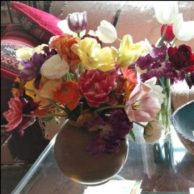 In our culture today, Valentine’s Day immediately brings to mind Romantic Love, Flowers, Gift-giving and Chocolate. And though this very old Saint’s Day has now been commercialized to the Nth degree, it’s still one of the happier occasions we celebrate, so why not enjoy it in our own way? Romance, Love, flowers, gifts and chocolate are all very positive and uplifting. And we have some recommendations for all of those categories except Romance (you’re on your own there!).
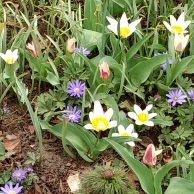
 Well, that was a false alarm!
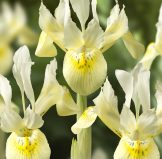 We go the extra mile to bring you special bulbs that other nurseries just don’t offer. Many of them are delightful smaller beauties at home in the front of the border, under deciduous trees and shrubs, and in the rockery. They are selling quickly, so be sure to come in to be sure of the best selection. Here is a list, and descriptions, of the fall and spring-blooming treasures for your home garden!
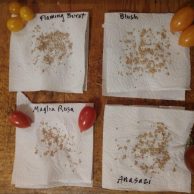 SAVING YOUR TOMATO SEEDS

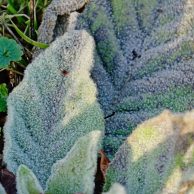
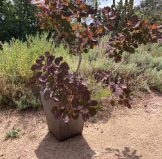

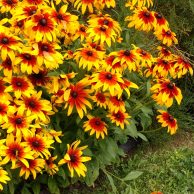 Fall is among the best times to plant perennials. While we may begin to wilt from late summer heat, many plants rise to the occasion and burst into bloom! As days begin to grow shorter, perennials spend the next few months developing root systems or taproots that delve well below the hot, dry surface soil. Pollinators depend on finding pollen and nectar sources through the entire summer, so it’s important to include late-summer and autumn bloomers in your garden.