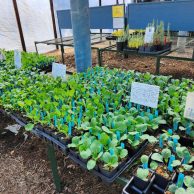
Cold-Season Vegetable Starts – March
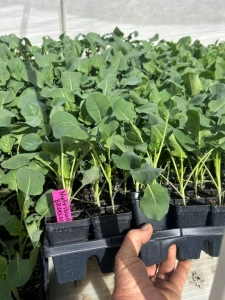
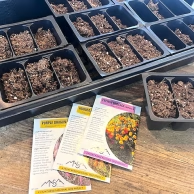
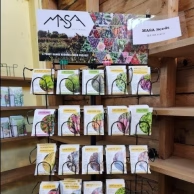
We’re very excited this week to debut spring vegetable starts that MASA has grown for us! These bioregionally-adapted varieties are so robust and full of vitality, and so irresistible! They are also selected for resilience in our wide weather swings. If you can water your garden, these plants will give you a bountiful head-start on home-grown, delicious, nutritious, greens! We’ll be bringing in more each week.
Arugula Astro
Broccoli Nutribud
Broccoli Umpqua
Cabbage, red Amarant
Cabbage, green Tendersweet
Cabbage, green Tiara
Chard Bali Red
Chard Bright Lights
Chard Fordhook
Collards, Flash
Kale, curly purple Redbor
Kale, lacinato Black Magic
Kale, curly DarkiborCo
Lettuce, butter Adriana
Lettuce, Romaine Forellenschluss
Lettuce, dwf Rom. Spretnak
Lettuce, red leaf Hyper Red Rumpled
Lettuce, green leaf Winter Density
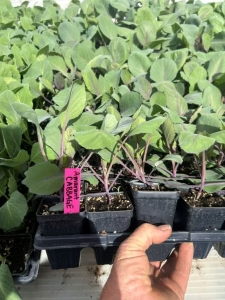
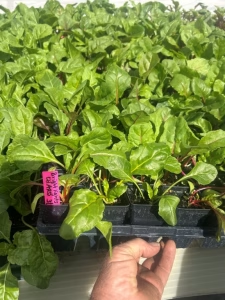
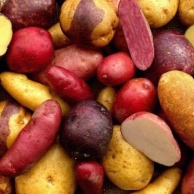 The old timers say that when the dandelions are blooming – that’s the sign to start planting potatoes. Now is a great time to plant!
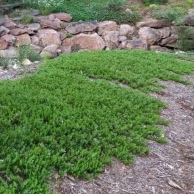 Our healthy, overwintered and water-wise shrubs are waking up! Choose from hardy Manzanita, B
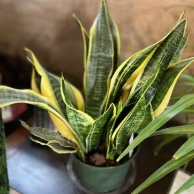
 Who doesn’t love houseplants? Here a few that make perfect gifts.
 Ficus ‘Ruby’ (Ruby Rubber Tree). This pink-tinged variety of the standard Rubber Tree adds an interesting splash of color to any space. They typically grow with multiple stems each with multi-colored leathery leaves, with the newest growth showing the most intense red/pink coloring. The Ruby Rubber Tree prefers bright indirect light with moderate moisture. Generally, they prefer a thorough watering when the top 2 inches of soil is dry.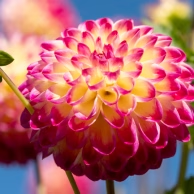
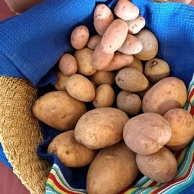 Grocery prices are projected to rise even more this summer. You can save, by planting your own veggies for storage. These delicious, hardy varieties are some of the longest-storing, and can be enjoyed for most of the winter, and even into spring.
 The benefits of gardening on mental and physical well-being are renowned. But here across the Front Range gardening isn’t just laying around in the hammock! (although there is that, too.) For gardening to truly increase your quality of life, a bit of pre-season preparation pays off.
 Sat./Sun. Nov. 8 & 9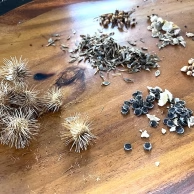
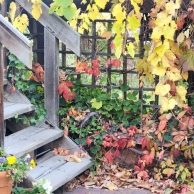 I confess. I am definitely a plant hoarder. Every year, I amass a formidable collection of plant starts, and then spend evenings through the season walking around my garden, little pots in hand, trying to find a few square inches where I can fit them in. Then I make tags and put them in the spots I’ve found (or created by taking some other plant out). If the critters don’t pull them out, most of those tags wait months for the magical moment when the weather is mild enough for me to plant them – October at last!
 All summer and fall, Mikl and I have been collecting seeds from our own gardens and from wildlands where we have collecting permits, and at this point, most of that collecting is done. After spending last Sunday cataloging our seed collections, I’m delighted to report that so far, we have collected at least 85 species, most of them local natives. We can’t sell you the seeds we collect (the USDA won’t allow it), and besides, we need them for growing our plants for you. But we have excellent wildflower seed mixes from BBB Seeds in Boulder.
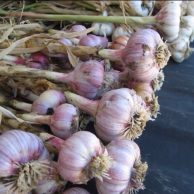 I’ve been shopping at my local Farmers Market on Saturday mornings, and have been really impressed with some of the gorgeous, large vegetables some of my favorite farms have grown this year. Most notable were the huge fennel bulbs and the stunning, large, firm heads of purple radicchio. But the garlic bulbs I found at the market have been, to be blunt, puny. And most are sold without variety names. Some were not properly cured. Small bulbs with small cloves are just fine for use in the kitchen for the next 3 to 5 months, but they are not suitable for planting.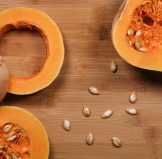
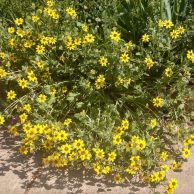


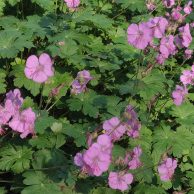
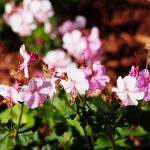
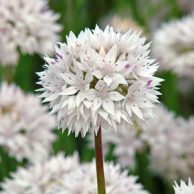
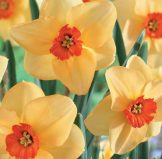
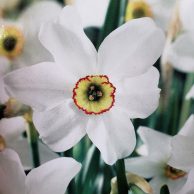
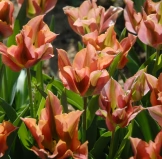 Our staff have been restocking bulbs, and a few favorites have emerged! Mid–October to mid-November is the right time to plant them. Come in this weekend as they’re going fast! We have a curated collection of flowering Allium, Narcissus (daffodils), Crocus, Tulips, and more!




 By Eve Reshetnik Brawner
 A cornucopia of stunning, hardy bulbs will be arriving in August and early September at Harlequin’s, so get ready! Now is a great time to peruse our list (at the link below) and to look at your garden to identify areas where you can add fall-planted bulbs for (mostly) spring blooms (a few special Crocus and Colchicum bloom later in the fall!). Consider the gentle drama of a drift of mixed daffodils (Narcissus) that bloom from early to late spring


 On Monday, we had the great pleasure and honor of receiving a busload of several dozen public garden professionals from American Public Garden Association member institutions around the US and Canada. They represented prestigious arboretums and public gardens like the historic Vizcaya estate in Miami FL and Lotusland in Santa Barbara CA, and gardens from Guelph to Pennsylvania to Phoenix. . They had come to Denver for APGA’s annual conference, which began with for a tour of public gardens, hosted by Denver Botanic Gardens’ senior curator and director of outreach, Panayoti Kelaidis. Panayoti arranged a brilliant itinerary, including both the Hardy Roses Demonstration Garden at the Boulder Dushanbe Teahouse, and Harlequin’s Gardens Nursery!
 I’ve often talked to you about native and water-wise plants, but I am still referred to as ‘the Rose Lady’ at Harlequin’s. I still love roses, and still grow some choice favorites for their fragrance, beauty and ease. Some of them have been in my garden far longer than I have – Banshee and Desiree Parmentier, and a few others that are particularly fragrant thrive and require with little care – Darlow’s Enigma, Stanwell Perpetual, Scotsbriar, Sharifa Asma and The Prince. They are all on their own roots – not grafted – and that’s a big reason they are still alive, robust and beautiful!
 Spring rains have awakened a wonderful show of wildflowers on the Front Range this year. And along with all the smaller species, we see that our local Yucca glauca is having a boom bloom year. The flower stalks are pushing upward and will soon be blooming profusely, looking like big white candles dotting the landscape. The large bell-shaped, lily-like, fragrant flowers are creamy white to pale green and hang downward from a central stalk. They have thick, waxy petals that conserve moisture for a long bloom time.
 The gardening movement that places soil health at the center of plant health has been where Harlequin’s Gardens has experimented, succeeded and educated for the past 33 years.
 Solidago ptarmicoides
 Just because it’s July doesn’t mean vegetable planting season is over! This is the month to ensure an abundant fall harvest.
 This season’s early rains, followed by heat, have resulted in an herbal harvest bonanza! If you’re finding you have more herbs than you can use fresh, here are four easy ways to taste a bit of summer freshness all year round. We’re saving dill, basil, cilantro, parsley, oregano, lemon balm and mint this month!
