
Hardy Geraniums are one of most versatile an adaptable perennials for our area. Available in many colors and habits, they can be useful in sun and shade, moist and dry, as a single specimen, as companion plants and as ground covers. These are not to be confused with the Pelargoniums which are the house plant, container and bedding plant “geraniums” which are not hardy outdoor plants in Colorado. The name “geranium” is derived from a Greek word meaning little crane, hens the common name “cranesbill” which refers to the appearance of the seed heads. The majority of the species of geraniums are native to the northern and mountain regions of Eurasia and North and South America although some are found in South Africa, India, Indonesia etc. Most grow in grasslands, meadows, roadsides and open woodlands. Therefore the natural habitat for most hardy geraniums seems to be sunny and moist or part-shade and moist or dry.[Read More]
Blog
Japanese Beetle is Here
Japanese Beetle is one of the most damaging insect pests in the Eastern and Midwestern US, but until recently, Coloradans were spared that challenge. It entered the US in 1916, but took until 2003 before a population was established in Colorado. This first infestation was in the Palisade area on the Western Slope. Even though eradication efforts were mostly successful there, established populations have been found since 2005 in Pueblo, southern Denver, Englewood, at DU and at Denver Botanic Gardens. Populations are being seen now in Boulder and Jefferson County.[Read More]
Heat-Tolerant Plants
Most of our native plains plants and shrubs including:
Sumacs
Penstemons
Rabbitbrushes
Desert Four O’Clock
Saltbrush
Heterotheca
Artemisias (Sages)
Thelesperma
Gambel Oak
Sulfur Flower (Eriogonums)[Read More]
Small Shrubs that Fit In
There has been a lot of interest at our nursery, and in current plant-breeding programs for smaller shrubs. Most of the old-time favorite shrubs are very large. Most lilacs, viburnums, honeysuckles, forsythias, privets, elderberries, serviceberries, butterfly bushes and hibiscus are 6’-12’ high and often as wide. These are great to provide screening and big masses of color along fences or the back of the border.[Read More]
Managing Grasshoppers without Poisons
Nolo Bait is not a poison. It is a parasite that only affects grasshoppers and Mormon Crickets. It will not harm people, pets, wildlife or beneficial insects. It is most effective on small grasshoppers. In 3-4 weeks up to 50% of the grasshopper population will die. In addition, their eggs will be infected for the following season, and because grasshoppers are cannibalistic, they spread the disease. Put out shallow trays of the bran bait in small quantities. Wind, rain and contact with soil organisms can reduce bait available to grasshoppers.
Ducks, chickens, turkeys and guinea fowl can significantly reduce grasshopper populations. They must be fenced and put inside a safe structure every night to protect them from predators. They will also eat some plants, like vegetables.[Read More]
Managing Weeds Organically
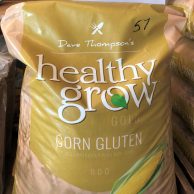
This is the perfect time to apply Corn Gluten to prevent new weeds.
There are simple steps you can take now to keep your garden organically weed-free all season long
Smoketree
Cotinus, known as Smoketree, is a genus of woody plants appreciated for their “smoky” flower plumes and for their leaf color, especially in autumn. Michael Dirr in his famous Manual of Woody Landscape Plants says “…it may be the best of all American shrub/trees for intensity of color.” Two species and many selections and hybrids offer leaf colors ranging from rich blue-green, maroon red, purple-red and yellow-gold; and the fall colors are even more vibrant. With the current passion for new plants, it is curious that Smoketree is not seen more often in our western landscapes.[Read More]
Lavandula – The Lavenders
Lavenders are great xeriscape perennials for Colorado, which bloom in the heat and dry of July and August. They are native to the rocky hillsides of the Mediterranean region. Here as well, they like good drainage, full sun, our alkaline soil and dry, loamy humus. Lavenders are aromatic herbs with gray foliage, the leaves as well as the flowers being strongly fragrant.[Read More]
Roses that Survive and Thrive in Colorado
After last November’s 77 degree cold plunge to 13 degrees below zero, most roses suffered die-back, some died to the ground and some died completely. But there were roses that had only minimal damage and some that will bounce back with a good show of vigorous growth and generous flowering this year. Here are some observations and conclusions about growing sustainable roses in Colorado.
Roses are cane shrubs, similar to blackberries and raspberries. Their wood has a pithy center and is not as hard or as strong as a lilac. Consequently roses are more vulnerable to insects, diseases, desiccation and cold, but another consequence is that they can grow and regrow much faster than woody shrubs like lilac and viburnum.[Read More]
Lawn Alternatives and Groundcovers
In our American communities, one of the responsibilities of home-ownership is to keep the ground covered. Bare earth, like weeds, indicates lack of care. So then, how do we cover the ground? The cheapest, fastest, and easiest way is to roll out bluegrass sod. “Instant” landscapes can be accomplished with a supervised construction crew that knows little about plants. And as long as water was plentiful, bluegrass was the unquestioned solution.[Read More]
Sungari Redbead Cotoneaster
The 2017 Plant Select shrub introduction is a woody plant with a tongue-twister of a name, a long history of survival at the old Cheyenne Horticultural Station, and has a heart-warming story of two great local plantsmen who brought it out of obscurity into Colorado gardens.
Cotoneaster racemiflora soongorica or Sungari Redbead Cotoneaster is a very tough and beautiful shrub, having survived over 40 years of neglect at the closed and unwatered Cheyenne High Plains Horticultural Research Station. It grows 6′-8′ high and wide with arching branches. The dark green leaves that are gray-white underneath, are attractive in themselves, and the flattened clusters of white, Hawthorn-like flowers are some of the showiest of all cotoneasters. They attract bees and other pollinators. Following the flowers are showy red fruits, a quarter of an inch or more in diameter. These berries are not messy and are popular with garden birds. They cluster along the thin branches, appearing as ropes of beads — hence the common name.[Read More]
Pest Management for Bees
Overview: The Good News: 100,000 insect species; only 200 pests. We do not need neonics or any toxic pesticide to grow plants well. The solution is human attention, biodiversity, nutrient-dense soils, application of nontoxic management, and tolerance.
The Bad News: Most people and most nurseries don’t know the good news. They believe the chemical companies that we need to fear and attack insects and fungi as enemies.
More Good News: The concern of ordinary citizens who call nurseries and businesses and ask them if they are using systemic neonic poisons in their plants, is having a powerful effect. These companies now know we care and will buy plants that are neonic-free if we can. This could get them to change.[Read More]
Pruning Article for Boulder Home and Garden
For many people, pruning is the maintenance job they most fear and dread. And it is good to be wary, because a tree that is badly pruned can dominate a landscape with its ugliness for years, can be more prone to breakage and disease, and can have a much shorter life.
Tree and shrub pruning have four basic aspects: the practical or aesthetic interests of the owners, the biology of how trees “heal”, the physics of what makes a branch strong or weak, and the art of how to create beautiful forms.[Read More]
Pyrethrum Insecticides: Are they Safe?
Pyrethrum is one of the best known botanical insecticides, effective against a wide variety of insect pests and generally considered safe to use. Is it really safe? To answer any question about pyrethrum it must first be explained that what is referred to as “pyrethrum” can be many different products. There is pyrethrum, the raw flowers; pyrethrins,the extracts from the flowers; and pyrethroids, synthetic pyrethrum. In addition many other insecticides and enhancers are often added to formulations which are called “pyrethrum”.[Read More]
Bees, Neonics and the Organic Way
Pesticides were never a good idea. They were designed to make money from petroleum, not to benefit the public good. Pesticides, fungicides and herbicides are poisons that were developed to kill life. Not only has this approach poisoned our earth and ourselves, it has failed to control Nature. Our soils are less productive, and weeds and pests have adapted by becoming resistant. Stronger poisons are not the answer.
In the last 20 years, the new “nicotine” pesticides (neonicotinoids) have become the industry standards because they are less toxic to people and animals than the old organophophate pesticides, and that is good. But the neonicotinoids (neonics) are even more toxic to insects; they last 3 months to 5 years; all parts of the plants are poison, and the poison goes into our water.[Read More]
Boulder Dushanbe Teahouse Rose Garden
 Boulder Valley Rose Society
Hardy Roses Demonstration Garden
1770 13th St. Boulder, Colorado
This garden, planted in 1998, is both the Hardy Rose Demonstration Garden of the Boulder Valley Rose Society and an environment that delights the senses and calms the spirit, such as you might find at a teahouse in Tajikistan.
Designed by Eve Reshetnik-Brawner and Mikl Brawner, the garden includes 43 varieties of roses of many types, including Old Garden roses, Species roses, Canadian, Modern Shrub and David Austin’s English roses. These roses were chosen for their Old World Character, cold hardiness and disease-resistance. In addition, these roses are not grafted, but grown on their “own roots” which makes them tougher and longer-lived. These qualities have allowed the Boulder Valley Rose Society to maintain this rose garden without the use of chemical fertilizers, fungicides and pesticides. These roses are examples of how successful roses can be in Colorado.[Read More]
We Have Soil Products for You!
It’s time to prepare your soil!
Thank you to all those who helped us with a successful opening day, last Friday!
And a big thanks to those who braved the elements later in the weekend
to stop by! Throughout the month of March we’ll be open four days a
week from 9 AM to 5 PM on Thursdays, Fridays, Saturdays and Sundays.
March is a great time to focus on soil enrichment and we’re
stocked with great products that will help you prepare for the season
ahead. You’ll recognize many products which we’ve stocked for
years and we’re also trying out some new and exciting items. As always,
we welcome your feedback on them all!
Classes

This weekend we’re featuring three great classes. We start on Saturday, March 9 at 10 AM, with two of our favorite Permaculturists, Tara Rae Kent and Daniela Escudero sharing some important principles to create more resilient and regenerative systems in our own gardens in their “Intro to Permaculture” class. Free Admission!

Stick around on March 9 because at 1:00 we have a one-time-only presentation on “Cover Crops: Why, How and Which” with Clark Harshbarger.
Clark who is employed with the USDA-NRCS as a soil scientist and
recently as director of Regenerative Farming at MAD Agriculture, will
soon be moving to eastern US. For this special presentation we are
renting a larger space next door at the Boulder Circus Center. This special class is only $20. (See the list of cover crop seeds that we’re offering, below.)
Finally on Sunday, at 1:00 pm, Mikl with share how to address “Fireblight” issues, which were a hardship for many gardeners last year. See below for more details and call 303-939-9403 to reserve your seat!
MARCH CLASS LIST
Call 303-939-9403 to reserve your seat!
Our weekends are loaded with great classes you won’t want to miss! Our customers tell us that our classes have given them tremendous value, with practical and current information from local experts who
have spent years honing their skills in Colorado and will help guide
you to success. We are charging $15 (unless otherwise stated) for our
classes to support our speakers and Harlequin’s educational direction. It is best to pre-register for these classes both in case they fill up, or too few people register and we have to cancel. Pre-payment assures your place in the class. You can register at the nursery, by mail, or by calling 303-939-9403.
We are unable to take class registration by email at this time. Most
of our classes run from one-and-a-half to two hours in length, and
sometimes longer for hands-on classes, or if there are a large number of
questions. See the complete March Class listing below, or on our website.
Sat, Mar 9 at 10 AM
Introduction to Permaculture with Tara Rae Kent & Daniela Escudero

Permaculture is a design science that is informed by cycles and patterns in nature. This helps us create more resilient and regenerative systems, whether those systems are gardens, farms, businesses, or events. We
will explore the ethics that guide a permaculture design and the
principles that help a design take form, as well as real life examples
and projects that are a part of our lives. The class will
include: 1) an introduction and exploration of the Permaculture Ethics
and Principles, 2) real life, active and diverse examples of
permaculture designs, and 3) a tour of Harlequin’s Garden’s Permaculture
Design. Free admission!
Sat, Mar 9 at 1 PM
Cover Crops for Gardeners: Why, How & Which with Clark Harshbarger
In
the current soil revolution, we are learning how to nurture and care
for our soils and the soil life that is the true source of soil
fertility. Cover crops are becoming recognized as one of the keys to soil fertility and soil health.
When our annual crops die in the fall, if we do not replace those crops
with living plants, then the microbes that depend on the nutrients
“leaked” into the soil from plant roots, will die or decrease. Besides
that, cover crops are a method to use photosynthesis to grow organic
matter and nutrients including nitrogen to add to the soil, so we have
to buy fewer amendments. In addition, many cover crops support beneficial insects which help control pest insects, and they reduce erosion.
But which cover crops do well in Colorado and when do we plant them and
when should we cut them, and how do we prevent them from becoming weeds
or competitors? And how best to combine them? Harlequin’s Gardens has been looking for someone to teach us these things, who really knows how to do it in our local conditions. And this year we found the right person. So this is a great opportunity that will not be available next year, because Clark Harshbarger will
be moving to eastern US. For the last two decades, Clark was employed
with the USDA-NRCS as a soil scientist and recently as director of
Regenerative Farming at MAD Agriculture.
We have rented a bigger space than our classroom, but people will have to register ahead of time to make sure they get a seat. Clark’s class will be held at the Boulder Circus Center, next door to Harlequin’s Gardens, south in the big metal building in the Trixie Room. Register by phone at 303-939-9403. This will be a 2 hour class and we will be charging only $20.
Sun, Mar 10 at 1 PM
Fireblight: Pruning, Nutrition & Culture with Mikl Brawner

Last year was the worst year for this bad bacterial disease of apples and pears. Mikl has had over 40 years of experience with fireblight, and will teach and demonstrate proper pruning, and explain how to bring a tree back to health even if a lot of the tree is blighted. Class cost: $15
Sat, Mar 16 at 10 AM
Getting Started in Vegetable Gardening with Mimi Yanus
If you are new to Colorado, new to vegetable gardening, or
have been unhappy with the results of your earlier attempts, this class
is for you. Learn from Mimi what you need to know to make your
new organic vegetable garden successful and bountiful, even in Colorado
conditions! Class cost: $15. (This class will be repeated on Saturday,
April 6th at 10 am.)
Sat, Mar 16 at 1 PM
Mason Beekeeping with Tom Theobald


The
importance of our native ‘solitary’ bee species to the pollination of
our crops, flowers, and native plants is receiving increased attention.
For over 30 years, Tom Theobald of Niwot Honey Farm has been propagating one of the most ‘useful’ species, Mason Bees (Blue Orchard Bees),
and will teach how to attract and care for these gentle native
pollinators. Mason Bees are not a replacement for honeybees, but they are excellent pollinators of the early fruits – cherries, apples, etc. They
stay close to home, don’t sting, don’t require the year-round
commitment of a colony of honeybees and provide a great way to introduce
children to the world of pollinators. Harlequin’s Gardens will have
filled straws (containing male and female adult bees in hibernation) for
sale for $12 a straw.
IMPORTANT: You must RESERVE your Mason Bee straws IN
ADVANCE by calling Harlequin’s Gardens at 303-939-9403. Pre-payment of
mason bee straws is required. Class cost: $15. (Note: this class is a repeat of Tom’s March 2 class.)
Sun, Mar 17 at 1 PM
Dwarf Conifers for Gardens and Landscapes with Kirk Fieseler
A renowned expert in conifers at Laporte Avenue Nursery in Fort Collins, Kirk Fieseler will discuss dwarf conifers for small landscapes and rock gardens. Learn the origins and propagation techniques for dwarf conifers as well as how to grow them in containers and in the garden. Kirk will talk about the most successful species for our climate and soils. Class cost: $15. (Pictured right: Farmy, P. edulis. Photo by Kirk Fieseler.)
Wed, Mar 20 – First Day of Spring
Sat, Mar 23 at 1 PM
Get Equipped for Beekeeping with Kristina Williams


For beginning and established beekeepers, alike! Kristina will demonstrate how to build and crosswire frames. Learn the lingo of beekeeping supplies and take a tour of our Bee Barn. Harlequin’s
Gardens is upgrading frames and foundation to be as strong as they can
be and still use beeswax. Our resident entomologist and Bee Barn Babe,
Kristina Williams, will share her vast knowledge with you! Free Admission! (Photo credit, right: Red Hot Pepper)
Sun, Mar 24 at 1 PM
Building Topsoil & Fertility with Mikl Brawner

Mikl will discuss how to support soil life, enrich poor soils, and improve plant health and nutrition from the bottom up: composts, fertilizers, mulching, worms, deficiencies, and tilth. Class cost: $15
Sun, Mar 31 at 1 PM
Cold Hardy Cacti and Succulents with Kelly Grummons

We are proud to present acclaimed CO horticulturist Kelly Grummons, director of Prairie Storm Nursery, a business that includes ColdHardyCactus.com and DogTuffGrass.com! An
expert in selection and propagation of rare and unique plants for
Colorado, Kelly will discuss a variety of exceptional new winter hardy
cacti, agaves, yuccas, and outdoor succulents, and include choosing
appropriate sites, soil prep, fertilizing, and ongoing care. Class cost:
$20. (Photo credit, left: ColdHardCactus.com)
Products for Building and Supporting Healthy Soils

Harlequin’s Gardens has been studying soil health for many years now, because
soil health is needed for plant health, for plant resistance to pests
and diseases and for nutritional value of plants. We believe
that a strong Soil Life with all the beneficial fungi, bacteria,
earthworm etc. is the goal to digest the nutrients in the soil and make
them into plant-available forms.
Our soils also are deficient in organic matter and available nutrients. Colorado
soils do have nutrients, but many are not in a form that’s available to
plants. So, Harlequin’s has sourced most of our soil-building products
from businesses as local as possible, almost all from Colorado. Local
products use our local wastes (like landscape wastes, beer wastes, food
wastes, beetle-kill pine, mushroom waste, dairy cow manure, chicken
manure). This supports local businesses to recycle and because trucking
distances are greatly reduced, we are cutting down on carbon emissions.
Putting these organic wastes into the soil also sequesters carbon. And
because carbon is one of Life’s main building blocks, these products
help build fertility.
This year we have many returning products and some new products that we’d like to tell you about.
Humate
This is a mined carbon concentrate that multiplies microorganisms and has the effect of making nutrients in the soil available. We have been using this for years in our potting mixes.
Corn Gluten
A non-toxic, weed-and-feed with 9% nitrogen. It
inhibits seed germination, but is harmless to plants with root systems,
people, worms, and microorganisms. The effect can last up to 6 months
and is especially useful in lawns. Apply in September/October, and again
in late February/March to prevent the majority of existing weed seeds
from germinating.
Alpha One
100% organic fertilizer for vegetables and ornamentals. Contains:
7% Nitrogen, 2% Phosphorus, 2% Potash, 1% Iron, 1% Sulphur, with a pH
of 6.2. Formulated in Loveland for Colorado Soils.
Richlawn 5-3-2 Fertilizer
A 100% organic product comprised of dehydrated poultry waste.
It is listed by OMRI for organic use and is ideal for lawns, trees,
shrubs, annuals, perennials, vegetables and roses. One bag covers 2,000
sq. ft. of turf.
EcoGro Compost
A Class 1 Compost made from leaves, grass, chipped branches, and beer wastes. It
has a healthy population of microorganisms and diverse nutrients. It
is very stable and will not burn or steal nitrogen. It is fine
textured, low in salts with some woody particles. The pH is 8.3; the
NPK 1-1-1.
Eko Compost
Made from forest and recycled wood products composted with poultry manure. Use
Eko Compost in vegetable and flower gardens, on lawns, trees, shrubs.
to Improve soil’s physical, chemical, and biological health.
Eko Lawn Topdressing
Finely screened compost perfect for top dressing lawns after aeration. Holds moisture next to the roots increasing drought tolerance. Supports microorganisms.
Symbiosis Potting Soil – NEW!

Symbiosis Potting Soil is a plant-based compost, made
from coconut coir, perlite, azomite minerals, calphos, rock dust, kelp
meal, oyster shell, dolomite lime, earthworm castings, mycorrhizae and
Alaska humus.
Fort Vee Potting Mix – NEW!
This compost-based potting mix is best for starting seeds and transplanting seedlings and houseplants. It
is composed of composted manure and plant material, peat moss, crushed
granite and basalt, blood meal, kelp meal, bone meal, gypsum,
vermiculite, coconut coir and biodynamic preparations. It’s best to wet
before use. Used very successfully last year at Kilt Farm.
Ocean Forest Potting Soil
A nutrient-rich soil for planting seedlings. It
performed well in our tests. Contains: composted bark, sphagnum peat,
fish emulsion, crab, earthworm castings, loam, perlite, bat guano,
granite dust, kelp meal.
EcoPett
A natural pine coop bedding (or cat litter!). Contains
recycled beetle-kill pine and activated carbon, making it very
absorbent, with powerful odor control. It outperforms and outlasts hay
and wood shavings. Expands up to 5X when wet. Reduces cleaning by 50%.
Not a soil amendment, but a local, recycled beetle-kill pine product to
help care for your poultry and other small animals.
Products Coming Soon!
Harlequin’s Fertility Mix

A
mix of Biosol Certified Organic 6-1-1 Fertilizer, humate, molasses,
endomycorrhizae, and calcium. Increases root mass, top growth, soil
life, and productivity naturally. This is not just a fertilizer. The combination of ingredients and mycorrhizae act synergistically to support fertility. It has received rave reviews! Try it and let us know your experience.
Rocky Mt. Minerals
From Salida, this broad spectrum of many different minerals that support
plant strength and immune function, including 11% Calcium, 6% Sulfur
plus magnesium, iron, and many others. The big difference with this
product is that its geothermal source makes these minerals much more available.
Mushroom Compost
From a local mushroom farm. Dark, rich humus that feeds soil life, improves soil structure & aeration, saves water. Great soil amendment for veggies, perennials, roses & shrubs. Also, a superb mulch for roses.
Dairy Cow Manure Compost
Nutrient-rich compost made from manure of dairy cows – NOT fed hormones and only given antibiotics when sick. (No rBGH given.)
Coco Loco Potting Soil
A superior coir-based potting media produced from coconut husks, making
it one of nature’s most abundant renewable resources. This mix also
contains earthworm castings, bat guano, kelp meal and oyster shell. It
resists compaction, easily rewets, and absorbs evenly for excellent
aeration and maximum drainage.
Biochar
A highly adsorbent, specially-produced charcoal applied to soil as a means to increase soil fertility and agricultural yields and sequester carbon.
Related New Products
Two great publications by the highly respected Bio-Integral Resource Center (BIRC), who
specializes in finding non-toxic and least-toxic, integrated pest
management (IPM) solutions to urban and agricultural pest problems.
“Alternatives to Glyphosate” – NEW!
Glyphosate is the main ingredient in Roundup herbicide, and a probable
carcinogen. This resource is derived from the latest scientific
research.
“IPM for Cannabis Pests” – NEW!
Registered insecticides are illegal and toxic pesticides make no sense.
Insect Saver – NEW!
Having trouble with insects in your house? Catch
wasps, bees, moths, flies, spiders, beetles, even earwigs, one-handed,
swiftly, easily, without hurting them! Observe the insect through the
clear container, then open it to release them outside. This is the German-made Schutzgreifer that
we have been searching for. We had purchased a couple of these nifty
devices and used them for years, but couldn’t find a supplier. Now we
have them and you can too! They operate one-handed, like scissors: simply open, place over the insect and gently close. Even works on drapes and upholstery.
Cover Crop Seeds – NEW!
We’ve expanded our offerings of cover crops to better meet your gardening needs.
- Fall / Winter Cover Crop Mix
- Spring / Summer Cover Crop Mix
- Ephraim Crested Wheatgrass
- Blue Grama
- Hairy Vetch
- Red Clover
- Austrian Winter Peas
- Daikon Radish
- Dwarf Essex Rapeseed
- Annual Sunflower
- Quatro Sheep Fescue
- Morgan Spring Oats (organic)
- Spring Triticale
- Buckwheat (organic)
- Organic Spring Cover Crop Mix
- Harlequin’s Gardens Mountain Native Mix
- Harlequin’s Gardens Foothills native Mix
- Harlequin’s Gardens Xeric Mix
Referrals
Know anyone that would also enjoy receiving our blogs? If so, forward this blog to them and they can click here to subscribe.
Social Media
Please follow us on Facebook, Instagram and Twitter for the most up-to-date information and photos! We’re looking forward to seeing you this week! In March we are open every Thursday-Sunday, 9-5.
A Favorite Basil Pesto Recipe

Sweet Basil
Basil can still be planted this season, and you’ll harvest enough for many recipes. This Pesto Recipe is from Mary Lou Carlson as adapted by Carol Gerlitz (originally in Fine Cooking magazine, June/July 2001)
Yields about 1½ cups
- 3 cups packed basil leaves (about 6-7 ounces of leaves)
- ¼ cup ice water
- 1 clove garlic, peeled and smashed
- ½ cup + 2 tbsp. pine nuts
- ¼ cup grated Parmesan cheese
- ½ tsp. salt
- 3/8 tsp. black pepper
- ½ cup extra-virgin olive oil
- Bring 2 quarts water seasoned with 1 tablespoon salt to a rolling boil. Prepare an ice bath by combining ice and water in a large bowl. (Be sure you freeze a lot of ice cubes ahead of time for this.)