
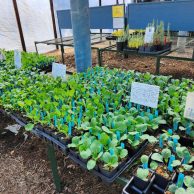
Cold-Season Vegetable Starts – March
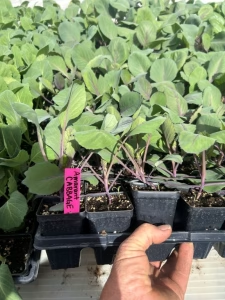
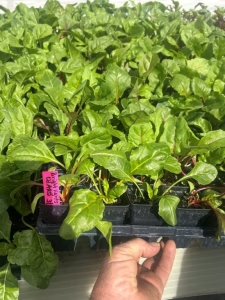
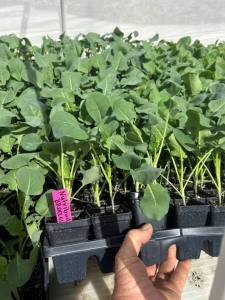
We’re very excited this week to debut spring vegetable starts that MASA has grown for us! These bioregionally-adapted varieties are so robust and full of vitality, and so irresistible! They are also selected for resilience in our wide weather swings. If you can water your garden, these plants will give you a bountiful head-start on home-grown, delicious, nutritious, greens! We’ll be bringing in more each week.
Arugula Astro
Broccoli Nutribud
Broccoli Umpqua
Cabbage, red Amarant
Cabbage, green Tendersweet
Cabbage, green Tiara
Chard Bali Red
Chard Bright Lights
Chard Fordhook
Collards, Flash
Kale, curly purple Redbor
Kale, lacinato Black Magic
Kale, curly DarkiborCo
Lettuce, butter Adriana
Lettuce, Romaine Forellenschluss
Lettuce, dwf Rom. Spretnak
Lettuce, red leaf Hyper Red Rumpled
Lettuce, green leaf Winter Density
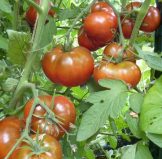 Tomatoes: We’ve always started bringing out our outstanding selection of tomato varieties in the second week of April, but a little glitch with our new grower has caused a slight delay…we expect them to arrive starting the week of April 21st. So please hang in there with us – our exceptional, locally adapted varieties are truly worth waiting for!
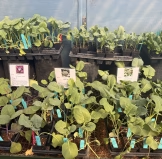 Planting time is upon us! We still have great seed potatoes but they’re selling fast! The same goes for asparagus crowns and onion plant bundles. And oh my, do we have spring vegetable starts! Robust lettuce (7 varieties!), Pak Choi, Baby Pak Choi, Tatsoi, both Nutribud and Umpqua broccoli, 3 varieties of cabbage, 3 of Swiss Chard, 5 kale varieties, plus escarole, collard greens, arugula, cilantro and bulbing fennel, with radicchio and others coming later this week! We’ve also restocked our seed selections!
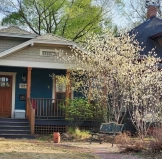 Indigenous scientist and author Robin Wall Kimmerer tells us that the serviceberry’s relationship with the natural world is an embodiment of interconnectedness and gratitude. The tree distributes its wealth of berries to meet the needs of its natural community, and this ensures its own survival.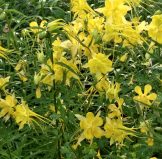
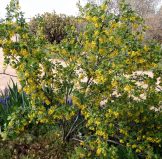
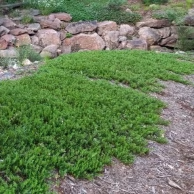 Our healthy, overwintered and water-wise shrubs are waking up! Choose from hardy Manzanita, B
 Who doesn’t love houseplants? Here a few that make perfect gifts.
 Ficus ‘Ruby’ (Ruby Rubber Tree). This pink-tinged variety of the standard Rubber Tree adds an interesting splash of color to any space. They typically grow with multiple stems each with multi-colored leathery leaves, with the newest growth showing the most intense red/pink coloring. The Ruby Rubber Tree prefers bright indirect light with moderate moisture. Generally, they prefer a thorough watering when the top 2 inches of soil is dry.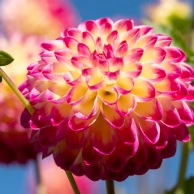
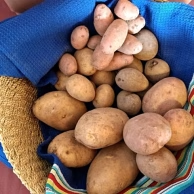 Grocery prices are projected to rise even more this summer. You can save, by planting your own veggies for storage. These delicious, hardy varieties are some of the longest-storing, and can be enjoyed for most of the winter, and even into spring.
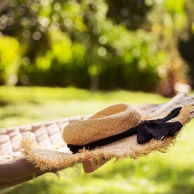 The benefits of gardening on mental and physical well-being are renowned. But here across the Front Range gardening isn’t just laying around in the hammock! (although there is that, too.) For gardening to truly increase your quality of life, a bit of pre-season preparation pays off.
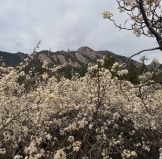 Welcome to a Glorious Early Spring. It’s warm; everything is growing and there are masses of blossoms and fragrance. Please, do enjoy. Our tax dollars are funding wars our Congress did not approve and more than a majority do not want. This is not representative government. What can we do? We have to celebrate The Good, even while enduring the unbearable. We can grow healthy food and both eat it and share it.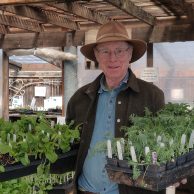
 By Eve Reshetnik Brawner
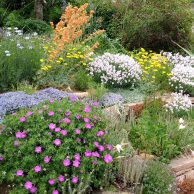 Come, on, now – confess! We know you’re thinking about your upcoming garden, probably poring over glossy, color seed and plant catalogs and websites, some of them looking so luscious and tempting that we call them ‘garden porn’. We’ve all indulged in this guilty pleasure. But when it comes to choosing the most appropriate and successful seeds and plants for your garden, the best place to shop is close to home, down a quiet gravel road, next to the Boulder Circus Center.
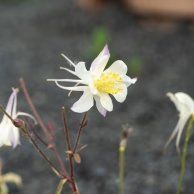 A seed doesn’t need to be enchanted by a sorcerer to be magic. Every viable (fully developed and not damaged) seed is, to my mind, magical. That a Eucalyptus seed the size of a speck of dust provides the spark of life to create a tree hundreds of feet tall seems like the stuff of fairy tales. Plants have devised an astounding array of ingenious designs for their seeds, how they are housed, and methods for their dispersal in the right place and time and conditions.
 Here in the Northern hemisphere, the shortest day and longest night of the year falls on Sunday, December 21st. After that, our daylight hours grow longer, lighting the path to Spring. For millennia, humans have noticed and tracked this cycle, and celebrated the return of the light. We can take heart and inspiration from this cosmic phenomenon and light the way in this dark time by growing our connections to the earth, its inhabitants, and its wonders.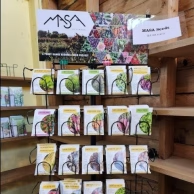
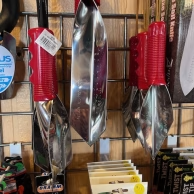
 Stumped for Gift Ideas? We Can Help!
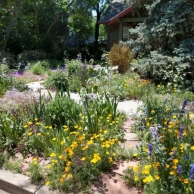
 I recently attended a public conversation on the subject of ‘Avant Gardening’ at the Longmont Museum. Host Emily Maeda, co-owner of Tree of Life Landscaping, conversed with accomplished front range horticulturists and landscape designers Bryan Fischer and Kevin Phillip Williams about what constitutes the current avant-garde in gardening. I didn’t really feel that their discussion was conclusive, but the question has been in my thoughts. I now realize that in my mind, the definitive answer is habitat gardening.
 We are grateful to have one day to acknowledge the value of the Earth. Wendell Berry said, “Earth is what we all have in common.” Pope Francis said we all have a shared responsibility for protecting the Earth, our common home, and he urged us to care for the environment. It’s pretty obvious, isn’t it?
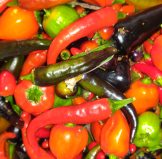 PEPPER

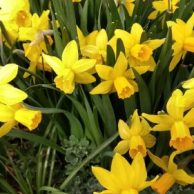

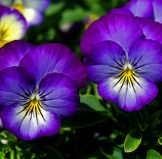
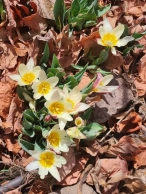
 Townsendia hookeri, pictured above, is already supporting butterflies! Also known as the Easter Daisy, it blooms for a long time – often through May. This Rocky Mountain native is drought-tolerant, is found in gravelly areas and grasslands, can withstand freezing conditions and snow, and thrives in crevice gardens. This particular one bloomed this weekend in Eve’s garden in Longmont!
 This Thursday, at 3:01AM RMT, is the Spring Equinox. When you wake up Friday, Spring will be here. For gardeners, this moment when night and day, light and darkness, are exactly in balance marks the beginning of our season of hope, and lengthening days. It’s when we spend our time looking closely for the signs of new growth, and beauty. We find it in the hellebores flowering among last season’s leaves (pictured above), the crocus and early species iris, the earliest daffodils, and fragrant hyacinths.

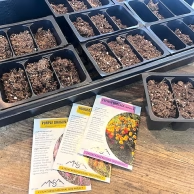
 Welcome to Harlequin’s Gardens’ 33rd year! We care about your gardening success, your health, and our planet. We have spent the winter planning, planting, ordering, cleaning, repairing and getting ready to host you, and we have seeds, seed-starting supplies, gardening tools, books, soils and soil-nourishing amendments, and a great line-up of empowering classes!


 Fire is on our minds. How to prevent it. How to curtail or control it. How to live with it. How to use it constructively. We remember the early winter Marshall Fire at the end of 2021 with feelings of grief and
 Time flies, don’t you think? Do you remember when people throughout the “developed world” anxiously awaited the arrival of the new millennium, worried by predictions that Y2K would bring a collapse of technical systems – the internet, banking, stock trading, communications – and throw everything else into chaos? And there was nothing we could do about it? It didn’t take long to see that the world as we knew it did not fall apart. Twenty-five years later, perhaps you’ve been nervously awaiting the advent of 2025 and are scared of what the new year, on many fronts, could bring. Completely understandable!
 Pruning is the art and science of removing or shortening branches of a tree or shrub. If done correctly, it can prevent breakage, increase beauty and increase flowering and fruiting. To learn how to make a healthy cut, study the Shigo method of pruning, or come to one of Mikl’s pruning classes.
 If you’re baking a delicious pumpkin pie, or making a warming squash soup, don’t throw away the seeds.
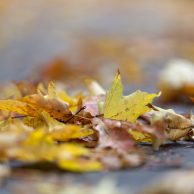 by Dan Brawner
 Here we are in the season of giving generously. Not all of us can afford to give lavishly, but even the humble gift of seeds can create enormous abundance. We’re talking about both literal and figurative seeds here.
 The more challenging life becomes, the more I remind myself of what’s good and beautiful and wondrous and nourishing in life, what I can be deeply grateful for and what I will stick my neck out to protect. The list is long!
 Eve’s “Embarrassment of Riches” Garage Sale Is Delayed