
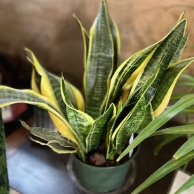
Snake Plant, Sansevieria spp.
When the world outside turns dormant, houseplants become essential indoor companions Bringing greenery into your home during the winter offers several science-backed benefits:
- Natural Humidifiers: Central heating systems can drop indoor humidity to as low as 10%. Plants like ferns release moisture through transpiration, which helps combat dry skin, sore throats, and respiratory irritation.
- Mental Health Support: The presence of greenery is a powerful antidote to “winter blues”. Tending to plants serves as a mindful ritual that reduces cortisol levels.
- Improved Air Quality: Since windows stay shut in the winter, indoor air pollutants can accumulate. Hardier winter-friendly plants like Snake Plant (pictured here) and ZZ Plant help filter out common toxins while replenishing oxygen levels.
- Enhanced Focus: Studies suggest that being around indoor plants can boost concentration and memory retention by up to 20%!
This week we have a wonderful selection. Here are a few of our favorites:
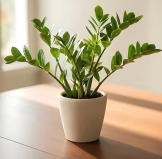
ZZ Plant, Zamioculcas zamiifolia
ZZ Plant (Zamioculcas zamiifolia) is another very accommodating, easy-care houseplant for busy people. The beautiful, erect, pinnately-compound foliage is highly glossy, and can be green, black, or variegated. Best grown in bright, indirect light, such as an east-facing room. Storing water in its large, fleshy potato-like tuber, the plant can survive neglect and a lengthy time between waterings. Provide a potting mix that drains well. Also known as Zanzibar Gem, Zuzu Plant, Aroid Palm, Eternity Plant and Emerald Palm, the ZZ Plant is the only species in its genus, and is a member of the Araceae family, with subtle flowers shaped somewhat like a calla lily.
Snake Plant (Sanseveria sp.) is a distinctive, vertical accent plant with stiff succulent sword-like leaves that can reach up to 5′ tall (depending on variety) and it thrives where most other houseplants do not – in low-light corners (though it also thrives with bright indirect light). The foliage can be almost white to deep black-green, with many beautiful variegation patterns. A great favorite with busy people, this adaptable plant only needs watering when the soil is completely dry, about every 2 weeks, or even less often. And it’s a great plant for bedrooms, as it has the remarkable ability to absorb CO2 in the dark, and release oxygen into the room instead!
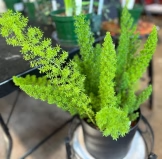
Foxtail Fern, Asparagus densiflorus
Ferns: Foxtail Fern (Asparagus densiflorus) – Foxtail ferns are low-maintenance plants known for their fine-textured, dense, bright green, arching fronds that resemble the bushy tail of a fox. Despite their name, they’re not true ferns but members of the asparagus family. Often grown in hanging planters, Foxtail Ferns should be planted in a coir or peat-based potting mix, kept moist, with regular watering spring through fall, and somewhat less water in winter. An occasional spraying with a fine mist of water will help keep the fine foliage plump, green and pest-free. An excellent choice for a humid room like a kitchen or bathroom, provided there is bright, indirect light (filtered with curtains if at a west window), and space to spread out. Keep out of the reach of cats and dogs, for whom it is toxic.