
• Skip to primary navigation
  • Skip to main content
  • Skip to primary sidebar
  • Skip to footer
Harlequins Gardens

Harlequins Gardens

Boulder's specialist in well-adapted plants

We’re Open Tues–Sun, 9-5, through October!

Memberships & Gift Certificates – available online
See our seasonal hours and address below • Read our latest e-newsletter!

Help Support Our Mission: GoFundMe

  • Home
  • About
    • About Us
    • Staff
    • Display Gardens
    • Why the Name “Harlequin’s” Gardens?
    • Support Our Mission
    • Sustainability
    • Policy on Pesticides Including Neonicotinoids
    • Careers
  • What We Offer
    • Products
    • Plants
    • Gift Certificates
    • Membership
  • Plants
    • Annuals
    • Bulbs
    • Fruits
    • Groundcovers
    • Herbs
    • Natives
    • Ornamental Grasses
    • Perennials
      • Plants for Pollinators List
    • Roses
    • Vegetables
      • Tomato Starts
      • Pepper Starts
      • Other Vegetable Starts
      • Fall Vegetable Starts
      • Garlic
    • Xeriscape
  • Resources
    • Recommended Gardeners & Landscapers
    • Mikl’s Articles
    • Plant and Cultivation Information
    • Newsletters
    • Links
  • Garden Tours
  • Events
  • Classes
  • Blog
  • Wholesale
    • Wholesale Sales
    • Who Qualifies
    • Wholesale Pricing & Sizes
    • Wholesale Terms and Conditions
  • Contact
Home | Plants | Fruits

Fruits

Grow Your Own Berries

July 21, 2026

Triple Crown Blackberry

Among the fruits we eat, berries are closer to wild foods and are therefore much higher in antioxidants and phytonutrients that strongly support our immune systems and general health. Berries are also kid-height and kids don’t need encouragement to pick them once they know when they are ripe!

Most berries are unavailable in grocery stores and are very seldom found at farmer’s markets. The few berries that can be found, blueberries, strawberries, raspberries and blackberries, are picked unripe, shipped hundreds or thousands of miles, and are most often lacking in the flavor and freshness of homegrown fruits. These days, many are even grown in greenhouses, or even hydroponically, where the fruits don’t receive the natural stimuli for producing phytonutrients.

Most berries are pretty easy to grow. Currants and gooseberries are moderate-sized shrubs, and grow best in partial shade in Colorado, with soil improved with one third compost to two thirds your regular clay soil. Water deeply twice a week the first year, and usually once a week deeply once the plants are mature. The fruits of our native currants (Ribes aureum and Ribes odoratum), particularly the selections ‘Crandall’ and ‘Gwen’s Buffalo’, are sweet and flavorful when fully ripe, and relished by children of all ages. European currants and gooseberries are favorites for making pies and preserves, with the addition of sugar.

Elderberries have been grown for their medicinal and culinary uses, as well as their beauty and rapid growth, for centuries. They grow to 8-10 feet tall and wide and need two different varieties of the same species for pollination (for example: plant one Sambucus nigra ‘Mikl’s’ and one S. nigra ‘Marge’ near one another to get fruit. They can even be planted together in one hole if you have a small space. Elderberries also thrive in part shade or morning sun and afternoon shade, and soil and watering recommendations are the same as for currants. In addition to elderberry syrup, you can
make elderberry brandy with the flowers or the berries, as well as elderberry flower pancakes, and all kinds of baked goods and preserves.

Raspberries are suckering plants that make colonies and can be planted in rows and staked to wires between free posts. Ours are either ever-bearing varieties, bearing in summer on old canes and again in fall on new canes, or Primocane varieties, bearing fruit on the current year’s canes in the fall. They have prickly stems, but the berries are easy to reach for harvest without injury. There is nothing like a fully ripe, fresh raspberry! Our varieties are ‘primocane’, meaning that they bear fruit on new (the current year’s) growth. We recommend mowing them down in autumn, even if the variety is “everbearing”. Part shade is ideal for raspberries, but full sun is okay, too. All are best fertilized with half to one cup of organic fertilizer every September, and mulched to make good crops.

Our varieties are ‘primocane’, meaning that they bear fruit on new (the current year’s) growth. We recommend mowing them down in autumn, even if the variety is “everbearing”. Part shade is ideal for raspberries. All are best fertilized with half to one cup of organic fertilizer every September, and mulched to make good crops.

Our Blackberries are thornless (and you wouldn’t want them any other way!). The canes can be tied to a trellis or fence, and soil and fertilizer recommendations are the same as those for raspberries.’ Triple Crown’ produces large, delicious berries that begin ripening in late July or early August on second-year canes. We have never found store-bought blackberries that were worth paying for.

Currently in stock: 

‘Triple Crown’ Blackberry – This productive plant yields large, juicy, black berries that offers copious crops on vigorous canes. Named for its three attributes: flavor, productivity, and vigor. Thornless semi-erect canes need support, especially under heavy fruit load. Self pollinating and disease resistant. Ripens begins in late July/early August. Hands-down winner of a public taste-test conducted by Boulder County extension service at Longmont Farmer’s Market. Hardy to USDA zone 5.

‘Pixwell Gooseberry’ – Prolific large oval berries that are light green, turning rosy pink when ripe. Fruit is prized for pies and preserves, more than for fresh eating. Best in part shade if summers are hot. Mildew and drought resistant. Hardy to USDA zone 3.

‘Hinnomaki’ Red Gooseberry – A medium-sized red gooseberry with outstanding flavor. The skin is tangy and the flesh is sweet. Great for fresh eating or pies. This very productive, upright bush has good resistance to mildew. Hardy to zone 2. Does well in sun to part shade.

Cutleaf Black Elderberry – Sambucus nigra v laciniata- A fast growing deciduous shrub known for its fern-like green foliage and white, citrus-scented flowers. It offers high wildlife value, providing edible black berries in late summer.  It thrives in full sun to part shade.  Plant with another S. nigra variety for successful fruiting.  Makes great elderberry syrup.  Hardy to USDA zone 3.

‘Marge’ Black Elderberry – Sambucus nigra- A cross of the American black elderberry with the European black elderberry which gives us large berries and all of the characteristics of the European varieties. ‘Marge’ is said to be self-pollinating so only one plant is needed for fruit production.  Flowers form on the previous year’s woody growth so fruit will begin to form the second year after planting. Very productive.  Hardy to USDA zone 3.

‘Mikl’s’ Black Elderberry – Sambucus nigra – Highly regarded as a medicinal plant for immune system support, Mikl’s has large showy clusters of white flowers followed by clusters of small, purple-black berries that can be used for jams and jellies or in tinctures and syrups. Plant another black elderberry for pollination. This one comes from a plant in Mikl’s garden. Hardy in Boulder the last 35 years.

‘Johns’ Elderberry – Sambucus canadensis – Produces more fruit and earlier than other elderberries. Very large clusters of medium sized berries which are especially good for pies, jellies and elixirs.  Needs a pollenizer, any other sambucus canadensis selection.  Hardy to USDA zone 3.

‘Imperial White’ Currant – Ribes sativum – Pearly white translucent fruit has a pink blush with a flavor that is milder and sweeter than its red counterparts. Delicious fresh or for jams and jellies. Vigorous and hardy to USDA zone 3.

‘Heritage’ Red Raspberry – Rubus idaeus – Fall-fruiting heirloom. A tough and easy variety that is productive and good flavored. Mow to the ground in late Fall or February-mid March and remove all debris. Bushy habit requires no staking.  Hardy to USDA zone 4.

‘Anne’ Raspberry – Rubus idaeus – Tested in Colorado.  Produces large, super sweet berries, and considered the best tasting among the yellow varieties. Canes are long and vigorous. Mow to the ground in late fall or February – mid-March and remove the debris. Ripens from August to frost.

Black-fruiting Nanking Cherry – Prunus tomentosa ‘Nigra’ – A beautiful shrub that has both ornamental and edible qualities. The deep purple fruits have a sweet taste and a juicy texture. Plant with another Nanking Cherry selection for successful fruiting. Hardy to USDA zone 3.


Mouthwatering STRAWBERRIES on Sale THIS WEEK for 20% off!

June 30, 2026

When you buy fresh strawberries at the grocery store, are they ripe? No. Delicious? No. Expensive? Yes. Enough said.
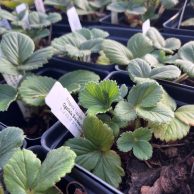
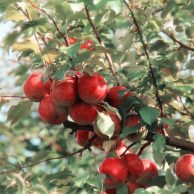
Earliglow: Many people miss out on the best-tasting strawberries because they are “June bearing.” Why buy ‘Earliglow’ Strawberry when it only fruits in June? Because the flavor is fabulous and because it produces a lot all through the month, so even a small patch can produce enough berries for bowls or strawberry shortcakes you will remember. A bigger patch yields enough for preserves, too. “Earliglow is prized for its rich, classic heirloom sweetness, glossy red skin and firm texture. Highly vigorous and cold-hardy, this variety is exceptionally beginner-friendly and renowned for producing abundant runners (more plants). It is perfect for fresh eating, freezing and jams. It is also disease resistant.

Ogallala: A vigorous, very cold-hardy, ‘everbearing’ strawberry that “combines the sweet, intense flavor of the Rocky Mt. wild strawberry with the large size of traditional garden varieties.” (McKay Nursery) It was bred at the Cheyenne Horticultural Station to withstand drought, zone 3 cold, heat and exposure. It has a long season and is high yielding. A small patch can provide delicious grazing, offering a few ripe fruits just about
every day from June to September.

For a limited time, these two strawberry varieties are available at 20% off the regular price. ENJOY!

2024 Vegetable Starts

March 5, 2024

HARLEQUIN’S GARDENS 2024 TOMATO STARTS

“Anasazi”
Aunt Ruby’s German Green
Beam’s Yellow Pear
Better Boy hyb.
Big Rainbow
Black from Tula
Black Krim
Brown Sugar
Black Sea Man
Blush
Burrell’s Special
Bush Early Girl
Carbon
Carmello hyb.
Cascade Village Blue
Cherokee Purple
Chianti Rose
Chocolate Cherry
Cosmonaut Volkov
Early Girl Hyb.
Flaming Burst
Floradade
Garden Peach
Glacier
Gold Medal
Gold Nugget
Green Zebra
Isis Candy cherry
Japanese Blk Trifele/Black Truffle
Jaune Flamme
Juliet hyb
Large Red Cherry
Maglia Rosa
Martino’s Roma
Matt’s Wild Cherry
Mexico Midget
Moskvitch
Mountain Delight Hyb
Native Sun
Orange King
Paul Robeson
Peacevine cherry
Pink Berkeley Tie-Dye
Pink Brandywine, Sudduth Strain
Pink Bumblebee
Principe Borghese
Pruden’s Purple
Red Robin
San Marzano  II
Sasha’s Altai
Striped German
Stupice
Sun Gold hyb
Sunrise Sauce
Super Sioux
SuperSweet 100  hyb
Sweetie
Tasmanian Chocolate
Taxi
Thessaloniki
Tidy Treats hyb

HARLEQUIN’S GARDENS  2024  PEPPER STARTS

SPICY PEPPERS

Anaheim
Adaptive Early Thai
Aji Cristal
Ancho Poblano ‘Bastan F1’
Big Jim Anaheim
Chimayo
Czech Black OG
Early Jalapeno
Fish
Hot Red Cherry
Hungarian Hot Wax
Jalapeno TAM (milder)
Korean
Lemon Spice Jalapeno
Long Red Narrow Cayenne
Caribbean Red Habanero
NuMex 6-4 (milder Anaheim)
NuMex Sandia
Pasilla Bajio
Mosco (Pueblo) Mirasol
Purple Tiger
Santa Fe Grande
Serrano Tampiqueno
SWEET and MILD PEPPERS


Aurora

Biquinho, red
Italian Pepperoncini
Lanterna Piccante
Shishito
Aconcagua
Buran
California Wonder
Cambuci
Cubanelle
Golden Treasure
Gypsy Queens
Habanada
Healthy
Jimmy Nardello’s
King of the North
Carmen F-1
Marconi Red
Mini Belle
Purple Beauty
Sheepnose Pimento
Sweet Chocolate
Sweet Pickle
Sweet Red Cherry
Yankee Bell

Strawberry Fields Forever!

March 5, 2024

We’re pleased to bring you a wonderful selection of Colorado-adapted strawberries with real strawberry flavor! You can choose Ogallala, Earliglow, Ft. Laramie, and Yellow Wonder Alpine. March is the perfect time to prepare your bed for planting these delicious fruits that will come back for several years. [Read More]

Fruit for Colorado

March 24, 2022

One of our specialties is fruiting plants that are adapted to Colorado conditions. All the apples we carry are resistant to fireblight and good tasting. And the cherries we sell are all proven successful in Colorado. Our grapes are the hardiest of any you will find, delicious fresh, in juice and a few are good for wine. And we have productive & good tasting currants, gooseberries, blackberries, strawberries, raspberries including: [Read More]

Fruit Available 2021

September 20, 2019

APPLE

  • Freedom
  • Haralred
  • Haralson
  • Hazen
  • Honey Gold
  • Liberty
  • Norland
  • Rhuby
  • Snow Sweet
  • Sweet Sixteen
  • Zestar
  • Dolgo (edible crab apple)

APRICOT

  • Debbie’s Gold
  • Pioneer

CHERRY (shrub)

  • Crimson Passion
  • Orient

CHERRY (tree)

  • Juliet
  • Montmorency
  • North Star
  • Romeo

CHOKECHERRY

  • A. melanocarpa – ‘Iroquois Beuaty’

CURRANTS

  • Alagan (R. nigrum)
  • Blanca (R. sativum)
  • Clove Currant (R. odoratum)
  • Crandall (R. odoratum)
  • Golden Currant (R. aureum)
  • Gwen’s Buffalo (R. aureum)
  • Red Lake (R. sativum)
  • Titania

ELDERBERRY

  • S. canadensis ‘Adam’s’
  • S. canadensis ‘Nova’
  • S. canadensis ‘York’
  • S. canadensis ‘John’s’
  • S. nigra ‘Madonna’
  • S. nigra ‘Marge’
  • S. nigra ‘Mikl’s’
  • S. nigra ‘Samdal’
  • S. nigra ‘Scott’
  • S. nigra ‘Thundercloud’

GOJI BERRY

  • Phoenix Tears

GOOSEBERRY

  • Captivator
  • Hinnomaki Red
  • Invicta
  • Jostaberry
  • Orus#8
  • Red Jacket (Comanche)
  • Tastiberry

MULBERRY

  • M. alba ‘Morden’
  • M. alba ‘Tatarica’

PEACH

  • Peach – ‘Reliance’

PEARS

  • Ayers
  • Loma
  • Nova
  • Parker
  • Patten
  • Southworth
  • Summer Crisp (Asian)

PLUM

  • Alderman
  • Damson
  • La Crescent
  • Mount Royal
  • Northern Blue
  • Stanley
  • Superior
  • Toka
  • Vermont

SERVICEBERRY

  • Autumn Brilliance
  • Princess Diana
  • Prince William
  • Regent

STRAWBERRY

  • Alexandria’s
  • Earliglow
  • Eversweet
  • Ogallala
  • Ozark Beauty
  • Quinalt
  • Wild (Fragaria virginiana)


Fruit Varieties Available in June/July 2021

APPLE

  • Cortland
  • Fameuse
  • Honeycrisp
  • Red Baron

BLACKBERRY

  • Triple Crown (Thornless)

CURRANTS

  • Black Velvet (Gooseberry)
  • Champagne Pink
  • Hinnomaki (Gooseberry)
  • Imperial White
  • Rovada Red
  • Triple Crown

ELDERBERRY

  • Adam’s (S. canadensis)
  • John’s (S. canadensis)
  • Cheyenne (S. nigra)
  • Laciniata (S. nigra)
  • Mikl’s (S. nigra)

GRAPE

  • Concord
  • Concord Seedless
  • St. Croix
  • Swenson’s Red

HOPS

  • Cascade
  • Willamette

PEACH

  • Contender
  • Red Haven

PEAR

  • Frederika
  • Hudar
  • Loving
  • Manning-Miller
  • Savignac
  • Tyson

PLUM

  • Green Gage
  • Yellow egg
  • Italian

RASPBERRY

  • Royalty Purple
  • Caroline Red
  • Heritage Red
  • Anne Yellow
  • Polana

OTHER

  • Asparagus – Jersey Knight
  • Asparagus – Purple Passion
  • Goji Berry (Phoenix Tears)
  • Horseradish
  • Hazelbert
  • Rhubarb – Crimson Red
  • Strawberry – ‘Earliglow’

sidebar

Blog Sidebar

Sign-up for E-Newsletters!

Sign-up for our weekly e-newsletters to receive empowering gardening tips, ecological insights, and to keep up on happenings at Harlequin’s Gardens — such as flash sales and “just in” plants. We never share customer’s addresses!

We do not ship plants!

Our plants are for sale ONLY at our Boulder location. We DO NOT ship plants or any other products.  Come visit us!

Hours by Season

MARCH HOURS
Thursday-Sunday, 9AM-5PM

STARTING APRIL 1
Tuesday-Sunday, 9AM-5PM


Footer

Contact Us

303-939-9403 (Retail)
staff@harlequinsgardens.com

4795 North 26th St
Boulder, CO 80301

Sign-up for E-Newsletters!

Sign-up for our weekly e-newsletters to receive empowering gardening tips, ecological insights, and to keep up on happenings at Harlequin’s Gardens — such as flash sales and “just in” plants. We never share customer’s addresses!

Map

Our Hours

JANUARY-FEBRUARY HOURS:
Thursday-Saturday, 10AM-4PM

MARCH HOURS:
Thursday-Sunday, 9AM-5PM

APRIL-OCTOBER HOURS:
Tuesday-Sunday, 9AM-5PM
Closing end of Oct.

Mondays, CLOSED

The plants we grow are organically grown. All the plants we sell are free of bee-killing neonicotinoid pesticides.