We are in the last week of Pollinator Month. We still have a lot of good pollinator perennials and shrubs. Our pollinator garden is looking beautiful and many plants have labels. This garden was given a boost last spring by a grant from People and Pollinators Action Network, plus a lot of Harlequin’s plants. Last Saturday Mikl led a tour of the garden for the Garden Conservancy a national nonprofit working to share and celebrate America’s gardens.
Natives
Whiskbroom Parsley
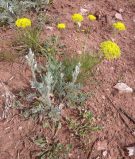
Whiskbroom Parsley
In spite of the drought, rambles in local open space parks reveal the early signs of spring. Now showing at a park near you, a conspicuous star is Whiskbroom Parsley (Harbouria trachypleura), a genus with just a single species. Native to Colorado, Wyoming and New Mexico, we’ve encountered it from the lower foothills to subalpine locations, on dry, sunny, rocky slopes, but it is even more at home in moist meadows, grasslands and under trees.
Many ‘wild parsley’ species are highly toxic, but this one is edible and was commonly used in culinary and medicinal ways by native Americans. The very fine, bright green dill-like foliage is surprising for a dryland plant, and the umbels (heads) of tiny, bright yellow flowers are an important nectar source for many native pollinators and beneficial insects. This plant is not in commerce, as it spends years developing its deep soil-stabilizing taproot before producing much top-growth, let alone flowering. Enjoy it in the wild!